![[logo] HealthTree Foundation](https://static.healthtree.org/icons/icon_spinner.svg)
![[logo] HealthTree Foundation](https://static.healthtree.org/logo_icon_only.svg)
Becoming a Caregiver: Heather and Archie's Multiple Myeloma Story


Each year, about 36,000 people will be diagnosed with multiple myeloma in the United States, representing 1% to 2% of all cancers. Multiple myeloma is individual and complex. Each patient is unique and so is their cancer.
Your journey matters. HealthTree shares patient stories to give different perspectives on blood cancer and its treatment. As a foundation, our mission is to provide education, advance research, and improve care for people with blood cancer and their loved ones.
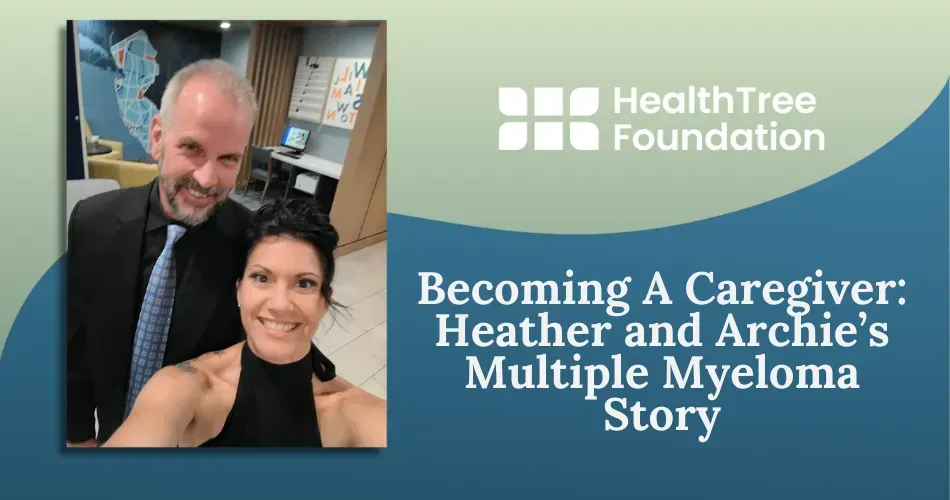
Archie and Heather Jardine lived in Mount Laurel, New Jersey for 13 years. Archie was the Chief Financial Officer for the racing and gaming commission for 36 years before retiring at age 61. Heather and Archie enjoyed day trips to Long Beach Island, spending evenings in their backyard around the firepit, and spending time with their grandchildren and families.
In 2023, Archie was diagnosed with a solitary plasmacytoma in his colon. This is a rare, localized tumor made of abnormal plasma cells, which are a type of white blood cell. In 2023, after surgery, he had a clean bone marrow biopsy and PET scan. But by January 2024, pain started in his back and continued to get worse. He began losing weight and activity became difficult because of his pain.
Archie's myeloma diagnosis
An x-ray was ordered and results showed fluid in his lungs. By March 2024, Archie was in a tremendous amount of pain and went to the Emergency Room. "His blood pressure was through the roof, and his kidney function was almost non-existent," Heather shared with HealthTree. The doctors also found that Archie had many lesions from his skull down through his spine, ribs, and pelvis.
"Two of his lesions were big enough that they required radiation. One was behind his ear and pressing on his facial nerve. The other was in his thoracic spine, which caused compression fractures and for Archie to lose 4 inches in height," she said. Archie began traditional chemotherapy in the hospital, where he stayed for 16 days.
In June, Archie was again hospitalized for pneumonia and cytomegalovirus (CMV). CMV is a common virus that Archie's suppressed immune system could not fight. These affected his lungs and his hospital stay was 14 days and continued with oxygen at home.
Archie's myeloma treatment experience
Heather was able to take 12 weeks of family leave to become Archie's constant caregiver. Archie focused on his treatments, and together they worked as a team to manage his health and lines of treatment.
Weekly hospital visits began with 2 injections: daratumumab (Darzalex) and lenalidomide (Revlimid). Lenalidomide was a difficult drug for Archie to manage, and even a lower dose affected him profoundly. Eventually, these injections no longer controlled his cancer. By October 2024, Archie had lost 69 pounds.
With the help of palliative medicine, Archie's pain was mostly controlled with a 100 mg fentanyl patch every 3 days and 8 mg of dilaudid every 6 hours. He hoped to receive a stem cell transplant and underwent a 5-day stem cell collection, but his physical condition prevented him from receiving the transplant.
In July 2025, Archie completed CAR-T therapy. He experienced almost every side effect, including fever, neurotoxicity, and colitis. Each side effect came with a hospital stay, but Archie was told he was in remission. Unfortunately, within 72 hours, he had health challenges that caused Heather to call 911. Archie was admitted to the hospital and intubated in the Intensive Care Unity.
"At 1:30 PM on Tuesday, September 16, 2025, I made the decision to extubate my husband from the ventilator. By 2:52 PM that same day, he was gone. Almost 18 months to the day from when he was diagnosed," Heather said.
Heather's caregiving journey
Heather describes her experience as Archie's caregiving as one of the hardest things she ever had to do. She had to significantly cut back her work schedule and was continually traveling to the pharmacy, hospital stays, doctor visits, making phone calls, and taking care of her husband. It was exhausting, and she had to watch Archie's health decline as his cancer progressed.
Heather learned to do many new tasks as his caregiver, including how to keep notes, log his daily medications and vitals, and which pharmacy could adequately fill each medication. She educated herself about caregiving and end-of-life care. She also learned how to advocate for herself and her husband by asking the hard questions and gathering as much information as she could. Heather also learned that laughing is a good substitute for crying.
What Heather wishes she'd known about Archie's myeloma diagnosis
When Archie was initially diagnosed, they were only told that it was aggressive. It was only through Heather's thorough reading that she learned he was stage 3 and terminal.
Looking back, Heather wishes Archie's doctor would have been more clear and direct about her husband's state and the stage of his cancer by giving them real-time facts and a timeline. Instead, Heather had to learn about his prognosis, side effects, and what to expect as time went on through her own research.
Heather's advice on being a caregiver
Heather shared some of her top caregiving techniques with HealthTree, including:
- Schedule time for yourself. Even if it's a walk outside.
- Delegate if you can. This process is overwhelming, and caregiver burnout is real.
- Write everything down: medications, dosing, appointments, and questions you want to ask your doctor.
- ADVOCATE, ADVOCATE, ADVOCATE! Tell the doctors what both of you are experiencing and what you expect from them.
- Be upfront and honest with your care team and expect the highest level of care.
- You can get second opinions and switch doctors if you need to. You do not have to continue with the doctor who initially diagnosed you.
- You have the right to question what your doctor tells you.
- Be prepared to spend a significant amount of time dealing with insurance companies.
- Make sure your affairs are in order. Have your will done and memorandums written down. Have advanced directives organized.
- The patient should have any financial wishes recorded so that the remaining family is not left guessing.
How HealthTree can help
Our mission at HealthTree Foundation is patient-driven. We care deeply about your experience with cancer and finding a cure. We have coaches to help guide you, an easy system to track your labs, side effect solutions, current news articles, and thousands of HealthTree University videos.
Let us help you! Securely download your records into Cure Hub with an easy step-by-step process and take charge of your health today. You are not alone.
Each year, about 36,000 people will be diagnosed with multiple myeloma in the United States, representing 1% to 2% of all cancers. Multiple myeloma is individual and complex. Each patient is unique and so is their cancer.
Your journey matters. HealthTree shares patient stories to give different perspectives on blood cancer and its treatment. As a foundation, our mission is to provide education, advance research, and improve care for people with blood cancer and their loved ones.
Archie and Heather Jardine lived in Mount Laurel, New Jersey for 13 years. Archie was the Chief Financial Officer for the racing and gaming commission for 36 years before retiring at age 61. Heather and Archie enjoyed day trips to Long Beach Island, spending evenings in their backyard around the firepit, and spending time with their grandchildren and families.
In 2023, Archie was diagnosed with a solitary plasmacytoma in his colon. This is a rare, localized tumor made of abnormal plasma cells, which are a type of white blood cell. In 2023, after surgery, he had a clean bone marrow biopsy and PET scan. But by January 2024, pain started in his back and continued to get worse. He began losing weight and activity became difficult because of his pain.
Archie's myeloma diagnosis
An x-ray was ordered and results showed fluid in his lungs. By March 2024, Archie was in a tremendous amount of pain and went to the Emergency Room. "His blood pressure was through the roof, and his kidney function was almost non-existent," Heather shared with HealthTree. The doctors also found that Archie had many lesions from his skull down through his spine, ribs, and pelvis.
"Two of his lesions were big enough that they required radiation. One was behind his ear and pressing on his facial nerve. The other was in his thoracic spine, which caused compression fractures and for Archie to lose 4 inches in height," she said. Archie began traditional chemotherapy in the hospital, where he stayed for 16 days.
In June, Archie was again hospitalized for pneumonia and cytomegalovirus (CMV). CMV is a common virus that Archie's suppressed immune system could not fight. These affected his lungs and his hospital stay was 14 days and continued with oxygen at home.
Archie's myeloma treatment experience
Heather was able to take 12 weeks of family leave to become Archie's constant caregiver. Archie focused on his treatments, and together they worked as a team to manage his health and lines of treatment.
Weekly hospital visits began with 2 injections: daratumumab (Darzalex) and lenalidomide (Revlimid). Lenalidomide was a difficult drug for Archie to manage, and even a lower dose affected him profoundly. Eventually, these injections no longer controlled his cancer. By October 2024, Archie had lost 69 pounds.
With the help of palliative medicine, Archie's pain was mostly controlled with a 100 mg fentanyl patch every 3 days and 8 mg of dilaudid every 6 hours. He hoped to receive a stem cell transplant and underwent a 5-day stem cell collection, but his physical condition prevented him from receiving the transplant.
In July 2025, Archie completed CAR-T therapy. He experienced almost every side effect, including fever, neurotoxicity, and colitis. Each side effect came with a hospital stay, but Archie was told he was in remission. Unfortunately, within 72 hours, he had health challenges that caused Heather to call 911. Archie was admitted to the hospital and intubated in the Intensive Care Unity.
"At 1:30 PM on Tuesday, September 16, 2025, I made the decision to extubate my husband from the ventilator. By 2:52 PM that same day, he was gone. Almost 18 months to the day from when he was diagnosed," Heather said.
Heather's caregiving journey
Heather describes her experience as Archie's caregiving as one of the hardest things she ever had to do. She had to significantly cut back her work schedule and was continually traveling to the pharmacy, hospital stays, doctor visits, making phone calls, and taking care of her husband. It was exhausting, and she had to watch Archie's health decline as his cancer progressed.
Heather learned to do many new tasks as his caregiver, including how to keep notes, log his daily medications and vitals, and which pharmacy could adequately fill each medication. She educated herself about caregiving and end-of-life care. She also learned how to advocate for herself and her husband by asking the hard questions and gathering as much information as she could. Heather also learned that laughing is a good substitute for crying.
What Heather wishes she'd known about Archie's myeloma diagnosis
When Archie was initially diagnosed, they were only told that it was aggressive. It was only through Heather's thorough reading that she learned he was stage 3 and terminal.
Looking back, Heather wishes Archie's doctor would have been more clear and direct about her husband's state and the stage of his cancer by giving them real-time facts and a timeline. Instead, Heather had to learn about his prognosis, side effects, and what to expect as time went on through her own research.
Heather's advice on being a caregiver
Heather shared some of her top caregiving techniques with HealthTree, including:
- Schedule time for yourself. Even if it's a walk outside.
- Delegate if you can. This process is overwhelming, and caregiver burnout is real.
- Write everything down: medications, dosing, appointments, and questions you want to ask your doctor.
- ADVOCATE, ADVOCATE, ADVOCATE! Tell the doctors what both of you are experiencing and what you expect from them.
- Be upfront and honest with your care team and expect the highest level of care.
- You can get second opinions and switch doctors if you need to. You do not have to continue with the doctor who initially diagnosed you.
- You have the right to question what your doctor tells you.
- Be prepared to spend a significant amount of time dealing with insurance companies.
- Make sure your affairs are in order. Have your will done and memorandums written down. Have advanced directives organized.
- The patient should have any financial wishes recorded so that the remaining family is not left guessing.
How HealthTree can help
Our mission at HealthTree Foundation is patient-driven. We care deeply about your experience with cancer and finding a cure. We have coaches to help guide you, an easy system to track your labs, side effect solutions, current news articles, and thousands of HealthTree University videos.
Let us help you! Securely download your records into Cure Hub with an easy step-by-step process and take charge of your health today. You are not alone.

about the author
Lisa Foster
Lisa Foster is a mom of 3 daughters and 1 perfect grandchild, a puzzle lover, writer and HealthTree advocate. She believes in the mission of the foundation and the team that builds it forward. She calls Houston, Texas home.
More on Patient Stories

Trending Articles





Upcoming Events



Get the Latest Multiple Myeloma Updates, Delivered to You.
By subscribing to the HealthTree newsletter, you'll receive the latest research, treatment updates, and expert insights to help you navigate your health.
Together we care.
Together we cure.