![[logo] HealthTree Foundation](https://static.healthtree.org/icons/icon_spinner.svg)
![[logo] HealthTree Foundation](https://static.healthtree.org/logo_icon_only.svg)
Making Connections with HealthTree: Jim Goodloe's Myeloma Story
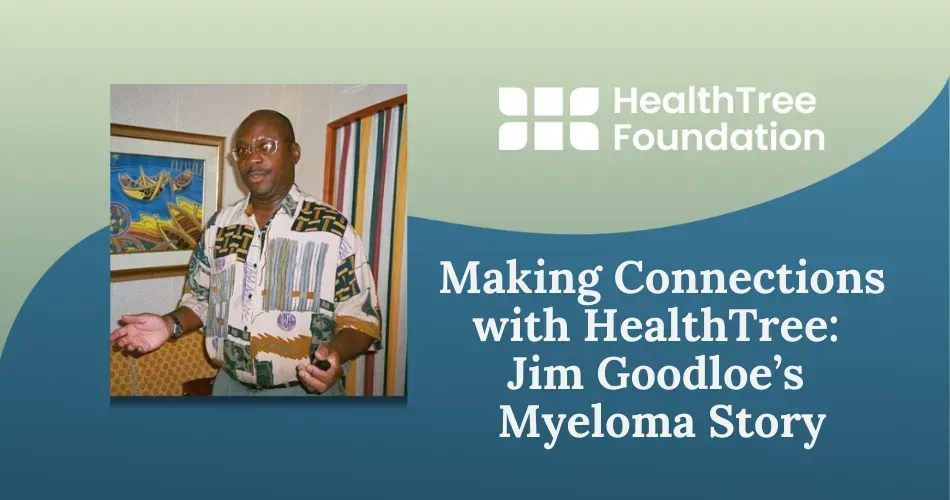


Just nine days before their 37th anniversary, Jim Goodloe lost his wife Brenda to glioblastoma, an aggressive form of brain cancer. Less than 2 years later, Jim’s life would change again when he received his own life-changing diagnosis of multiple myeloma.
Jim was initially diagnosed with an upper respiratory infection, but when he experienced severe chest pain, he went to the emergency room. After several scans, doctors asked him if he was also experiencing neck or back pain, which he was not. Jim was surprised to learn that doctors had found a broken bone in his neck, and they suspected it was caused by cancer. After biopsies, Jim was diagnosed with multiple myeloma on December 18, 2024.
A life-changing diagnosis
“I had never heard of glioblastoma when Brenda was diagnosed. Likewise, I had never heard of multiple myeloma,” Jim shared with HealthTree. The first thing he searched for was information about the life expectancy of this new disease. “I began to reflect on the last few months of my wife’s life. I had the support of both of our families of sisters, nieces, and friends. What if my needs decline to the level of support that Brenda required? How will I survive throughout the day when and if I lose my independence? I still don’t have an answer to those questions.”
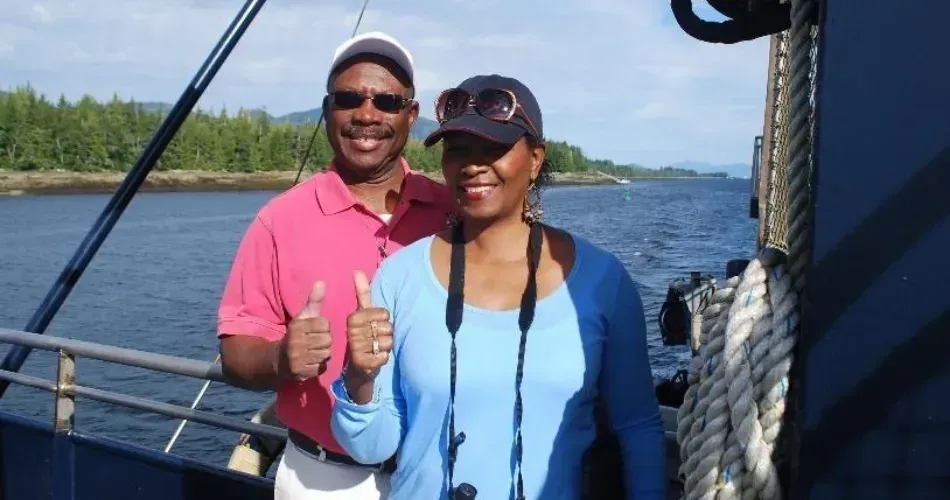
Jim went from 2 to 12 prescription medications almost overnight, along with weekly infusions at Florida Cancer Center. He also tried to learn everything he could on multiple myeloma from reputable sources, including attending an IMF Family Seminar. There, he met Dr. Joseph Mikhael.
“Dr. Mikhael is of African descent himself and spoke about the impact of the disease on the Black community. He talked about the shorter lifespan for people like me,” Jim said. “Of the 200 or so attendees, less than a dozen looked like me. I made plans to attend another IMF seminar in Philadelphia, hoping there would be a larger showing of people of color.” That was not the case, though, and Jim has found it difficult to connect with other Black patients. “This is somewhat troubling as I go through this journey,” he said. “I was able to meet and speak with Claude and Novlette Griffin, who agreed to be my coach.”
Finding support through his care team and HealthTree
So far, Jim has found his healthcare team to be a supportive partner throughout his treatment. “I managed to be seen by the well-known and very busy Dr. Brandon Blue, who reduced my medications significantly. This was welcomed as I have never been a fan of prescription medicines,” said Jim. Currently, Jim is on a maintenance regimen of monthly daratumumab (Darzalex) injections, with bimonthly visits to his team at Florida Cancer Center, led by Dr. Ramya Pinnamaneni.
Through HealthTree, Jim has continued to find information and support, especially through his HealthTree Coach, Novlette. “The Black Myeloma Health Facebook page has been very informative and provides an avenue for communication with people who are experiencing the challenges of myeloma,” he said. “It has also provided me the opportunity to meet more people of color. I have volunteered for a HealthTree walk in Tampa and, since I’m fully retired, I will seek out opportunities to continue volunteering when my time and health permit.”
Make connections through HealthTree programs
HealthTree Foundation, through the Black Myeloma Health Initiative, is committed to helping people with myeloma make connections and find support
- HealthTree Coach puts you in touch with an experienced patient or caregiver who knows first-hand what you are going through.
- Black Myeloma Health Facebook Group is a way to connect with other Black myeloma patients and caregivers.
- Black Health Connect Group is another group to connect with other Black patients and caregivers hosted on the HealthTree Connect platform.
Just nine days before their 37th anniversary, Jim Goodloe lost his wife Brenda to glioblastoma, an aggressive form of brain cancer. Less than 2 years later, Jim’s life would change again when he received his own life-changing diagnosis of multiple myeloma.
Jim was initially diagnosed with an upper respiratory infection, but when he experienced severe chest pain, he went to the emergency room. After several scans, doctors asked him if he was also experiencing neck or back pain, which he was not. Jim was surprised to learn that doctors had found a broken bone in his neck, and they suspected it was caused by cancer. After biopsies, Jim was diagnosed with multiple myeloma on December 18, 2024.
A life-changing diagnosis
“I had never heard of glioblastoma when Brenda was diagnosed. Likewise, I had never heard of multiple myeloma,” Jim shared with HealthTree. The first thing he searched for was information about the life expectancy of this new disease. “I began to reflect on the last few months of my wife’s life. I had the support of both of our families of sisters, nieces, and friends. What if my needs decline to the level of support that Brenda required? How will I survive throughout the day when and if I lose my independence? I still don’t have an answer to those questions.”
Jim went from 2 to 12 prescription medications almost overnight, along with weekly infusions at Florida Cancer Center. He also tried to learn everything he could on multiple myeloma from reputable sources, including attending an IMF Family Seminar. There, he met Dr. Joseph Mikhael.
“Dr. Mikhael is of African descent himself and spoke about the impact of the disease on the Black community. He talked about the shorter lifespan for people like me,” Jim said. “Of the 200 or so attendees, less than a dozen looked like me. I made plans to attend another IMF seminar in Philadelphia, hoping there would be a larger showing of people of color.” That was not the case, though, and Jim has found it difficult to connect with other Black patients. “This is somewhat troubling as I go through this journey,” he said. “I was able to meet and speak with Claude and Novlette Griffin, who agreed to be my coach.”
Finding support through his care team and HealthTree
So far, Jim has found his healthcare team to be a supportive partner throughout his treatment. “I managed to be seen by the well-known and very busy Dr. Brandon Blue, who reduced my medications significantly. This was welcomed as I have never been a fan of prescription medicines,” said Jim. Currently, Jim is on a maintenance regimen of monthly daratumumab (Darzalex) injections, with bimonthly visits to his team at Florida Cancer Center, led by Dr. Ramya Pinnamaneni.
Through HealthTree, Jim has continued to find information and support, especially through his HealthTree Coach, Novlette. “The Black Myeloma Health Facebook page has been very informative and provides an avenue for communication with people who are experiencing the challenges of myeloma,” he said. “It has also provided me the opportunity to meet more people of color. I have volunteered for a HealthTree walk in Tampa and, since I’m fully retired, I will seek out opportunities to continue volunteering when my time and health permit.”
Make connections through HealthTree programs
HealthTree Foundation, through the Black Myeloma Health Initiative, is committed to helping people with myeloma make connections and find support
- HealthTree Coach puts you in touch with an experienced patient or caregiver who knows first-hand what you are going through.
- Black Myeloma Health Facebook Group is a way to connect with other Black myeloma patients and caregivers.
- Black Health Connect Group is another group to connect with other Black patients and caregivers hosted on the HealthTree Connect platform.

about the author
Valarie Traynham
Valarie Traynham has been a myeloma survivor since 2015. Wanting to be a source of support, provide patient education and encouragement to help others along their myeloma journey, she is a volunteer myeloma coach, myeloma support group leader and patient advocate. She enjoys being outdoors, reading, and trying new recipes.
More on Patient Stories
Trending Articles


Upcoming Events

Get the Latest Multiple Myeloma Updates, Delivered to You.
By subscribing to the HealthTree newsletter, you'll receive the latest research, treatment updates, and expert insights to help you navigate your health.
Together we care.
Together we cure.