![[logo] HealthTree Foundation](https://static.healthtree.org/icons/icon_spinner.svg)
![[logo] HealthTree Foundation](https://static.healthtree.org/logo_icon_only.svg)
The Race I Never Trained For: Ethan Hawes' Myeloma Story
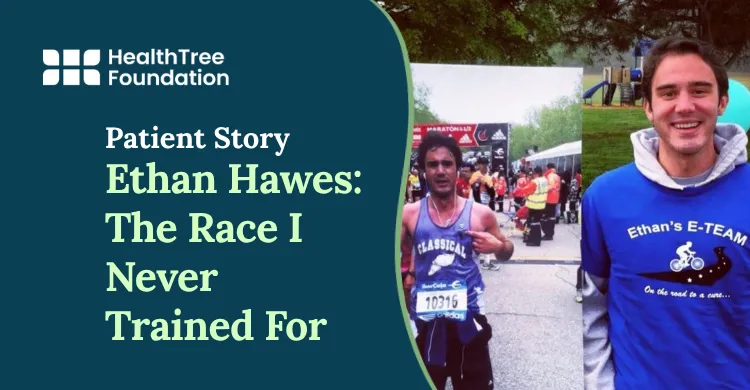


HealthTree Foundation regularly shares patient experiences with multiple myeloma, blood cancer, and other cancers. These are real stories by real people with experience as a patient or caregiver. Today, Ethan Hawes shares his experience being diagnosed with multiple myeloma at age 22 after hip pain following running a marathon.
If I ever wrote a book, I've often wondered what the title would be. The Outlier. An Asterisk. The Myeloma Marathon.
I'm still working on that part.
After all, the median age at diagnosis for multiple myeloma is 69. I was diagnosed a little over a month after my twenty-second birthday. By that definition alone, the first two titles seem fitting.
This story begins in the winter and spring of 2013, when I was studying abroad in Spain during my junior year of college. Shortly after arriving, I learned that the Madrid Rock 'n' Roll Marathon would be held later that semester. Having played sports throughout high school, I missed the feeling of competition. I missed testing myself.
With less than two months until race day, I registered on March 3. During my condensed training schedule, I began noticing a sharp pain in my right hip that came and went. I assumed it was simply part of the process. Marathon training hurts. I was logging more miles than I ever had before, and I brushed it off.
On April 28, 2013, I stood at the starting line in Madrid, wondering if I had made a terrible mistake. The longest distance I had run in training was twelve miles. Less than four and a half hours later, I crossed the finish line of my first marathon.
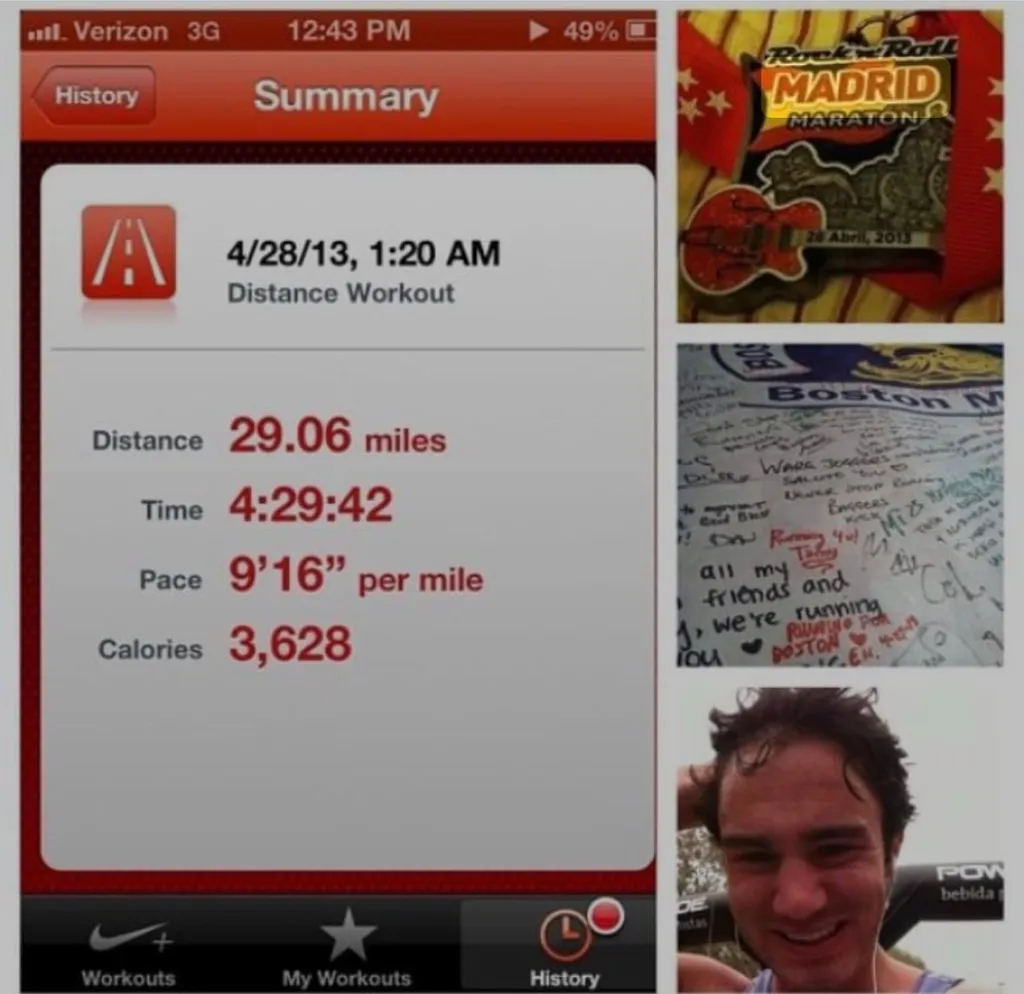
I laughed. I cried. I hugged strangers. I couldn't believe I had done it. At the time, I thought I had reached the finish line. I had no idea that moment of accomplishment would become something else entirely, a memory I would return to when I needed proof that I could endure more than I ever imagined.
From one marathon to another
A few weeks later, back home in southern Maine, the pain in my hip intensified. By late June, my right leg felt like a house of cards, ready to collapse beneath me. On the morning of July 3, I went to a nearby hospital in New Hampshire for an X-ray. Walking through the entrance, I chose to sit in a wheelchair rather than attempt the trip to radiology on my own.
Later that afternoon, while getting ready for Fourth of July festivities, the physician who had ordered the X-ray called. I remember the urgency in his voice more than the exact words. There was a suspicious lesion in my hip that had grown to the size of a clementine. It was unlikely to be cancer. But it could be. I needed to get to Boston as soon as possible.
Just months earlier, I had been navigating a foreign country. Two days later, I found myself in an even more unfamiliar place: a cancer center exam room.
After further imaging and a surgical biopsy, I waited. On July 19, 2013, just before eleven in the morning, the phone rang. I was sitting on the couch at home. My mother answered, and then handed me the phone. Putting the phone on speaker, the orthopaedic oncologist got straight to the point.
"I usually prefer having these conversations in person," the doctor said. "You have a rare form of blood cancer called a plasmacytoma." He explained that it appeared localized and could likely be treated with surgery and radiation. I remember the calmness, clarity, and sense of reassurance in his words, which helped ease this jarring moment ever so slightly.
In that moment, however, I felt nothing and everything all at once.
I scribbled notes onto the back of an already-opened envelope at the kitchen table.
Time stood still.
The air felt suffocating.
I was twenty-two years old, and suddenly I found myself face-to-face with the question hidden beneath every cancer diagnosis: Would I have enough time? There were milestones I had barely begun to imagine: career ambitions, marriage, children. Ordinary moments I had always assumed would come eventually. For the first time, I wasn't sure they would.
Over the following week, I underwent more testing at Dana-Farber, which included lab work, a bone marrow biopsy, and a PET-CT scan. Whenever I wasn't at an appointment, I was researching plasmacytomas. Most of what I found involved patients decades older than me. Diagnoses in people in their early twenties were largely undocumented.
I took comfort in one thing: At least it wasn't multiple myeloma.
Then, on July 25, another phone call changed everything. The diagnosis shifted from plasmacytoma to multiple myeloma. Once again, the ground beneath me disappeared. Everything about my case was unusual. I was twenty-two years old with a disease most people associated with grandparents, not college students. Even the way it was presented was rare.
I felt isolated, not only from my peers, but often from other myeloma patients as well. Life immediately divided itself into two chapters: before diagnosis and after. Even now, when I reflect on my life, most of my memories seem to exist on this side of that line. As angry as I was, and as desperately as I wanted to reclaim the person I had been before cancer, I slowly began confronting an uncomfortable truth: control had never been guaranteed.
Celebrating a "second birthday" after a stem cell transplant
In the midst of all the uncertainty, there was comfort in knowing that a plan was taking shape with both urgency and confidence. Of all the conversations I had during those early visits, I remember three statements most clearly:
"The statistics don't apply to you."
"You could become a trailblazer in the myeloma community."
"There are so many treatments on the horizon."
The treatment plan included radiation, hip stabilization surgery, a standard-of-care frontline treatment regimen for newly diagnosed myeloma patients, and an autologous stem cell transplant.
I also learned that my disease had likely been caught as early as possible. Ironically, the miles I had logged while training for the marathon had placed enough stress on my weakened hip to force the issue. This marathon in Spain may have helped save my life.
After months of treatment and finishing most of my senior year of college, it was time for my stem cell transplant. June 23, 2014 became what many transplant recipients call their "second birthday"—the day my previously harvested stem cells were infused back into my body after high-dose chemotherapy. I had imagined the transplant as an exclamation point at the end of a difficult chapter. Instead, isolation settled in.
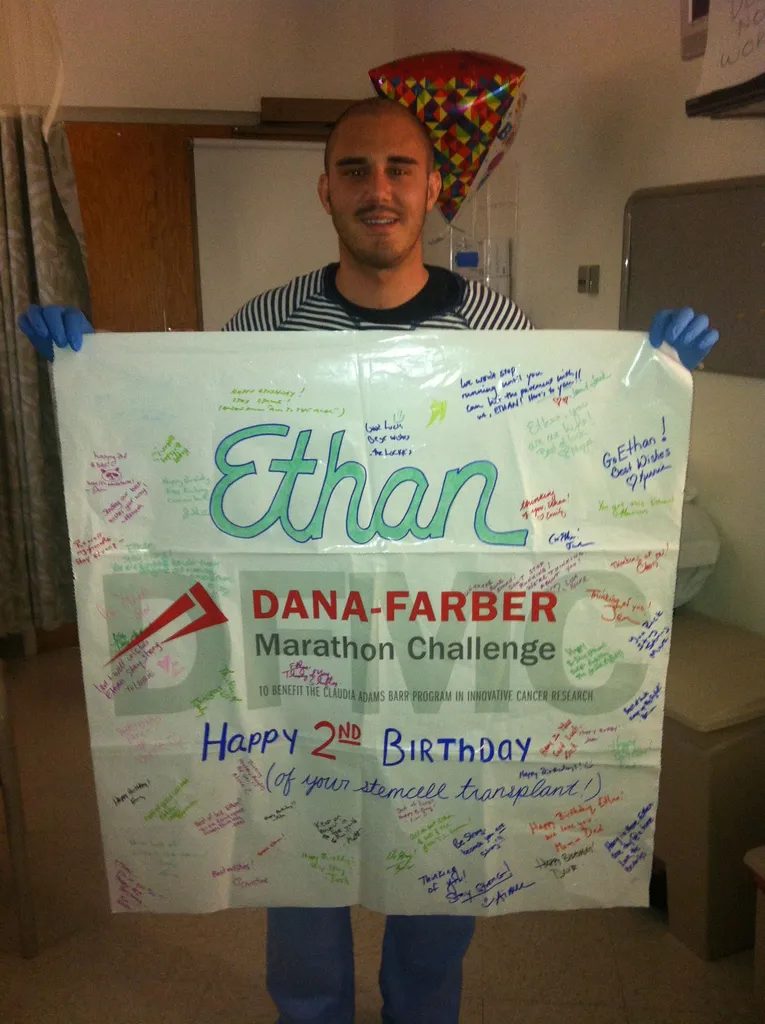
Confined to a quarantined hospital room, exhausted in ways that are difficult to describe, I began grieving the version of recovery I had expected. I watched late afternoons fade into evening and wondered whether I would ever experience ordinary routines again—leaving work at the end of the day, making plans without contingency, trusting my own body. I had never felt more vulnerable.
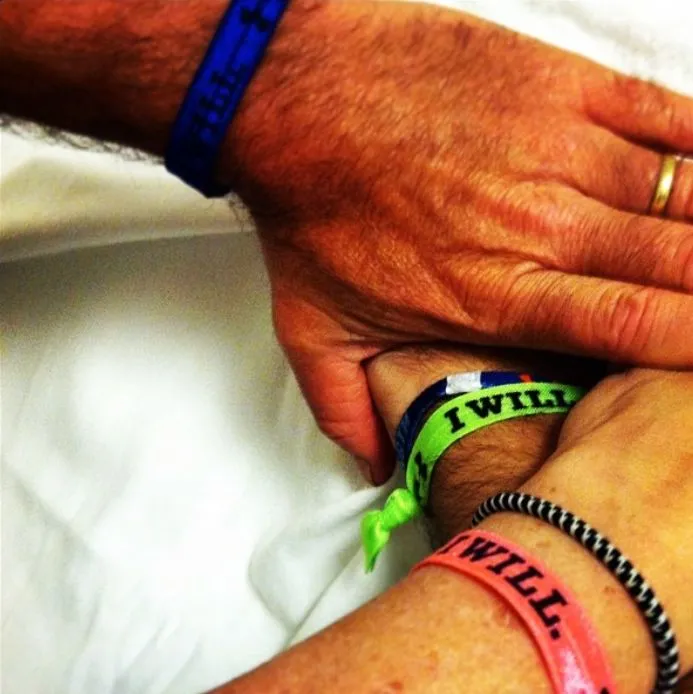
What carried me through was my family, who never stopped showing up. I remember my dad curled up in the reclining chair in the corner, trying to get comfortable despite his own exhaustion. My mom brought stacks of magazines and board games, creating small moments of normalcy in an otherwise unfamiliar world. Their presence became its own form of medicine.
A hip replacement to help recover from multiple myeloma
The transplant placed me into remission, but recovery was not immediate. For the next two years, persistent hip pain kept me from gaining momentum. I tried anyway. I worked. I spent time with friends. I kept showing up, even when I had very little left to give. Friends, family, and community members became the army that carried me when my own strength ran low. Eventually, alternating between a cane and crutches became too much. At twenty-five years old, I realized I was still living in the shadow of the life cancer had interrupted.
I needed a new hip if I was truly going to move forward. In July 2016, after a successful hip replacement, I finally felt validated when I learned just how damaged my original hip had been. Recovery brought yet another before-and-after moment. This one felt different. It felt like hope. For the first time in years, I had a sense of direction.
Finding purpose after multiple myeloma
The care I had received from physicians, nurses, therapists, and countless others inspired me to pursue a career in oncology myself. As much as I had wanted to leave the world of cancer behind while I was living through it, I eventually realized I couldn't imagine investing my time anywhere else.
And somewhere in the midst of rebuilding my life, something extraordinary happened. I met Sarah. It isn't a coincidence that I began finding my footing again around the same time she entered my life. Her love, compassion, and unwavering support gave me confidence in myself when mine had been shaken. Today, she is my wife. Together, we have a beautiful two-year-old daughter. Years earlier, sitting at that kitchen table with an envelope full of scribbled notes, I had wondered whether I would ever reach life's biggest milestones. Now, I get to live them.
It has been twelve years since my transplant, and I remain grateful that I chose that path. I believe it played a significant role in the remission I've experienced ever since, and in the last five years of being maintenance-free. The treatments in multiple myeloma that were merely "on the horizon" in 2013 have since become realities, offering hope to countless patients and reassurance to me should I ever need them.
My story is an anomaly. For a long time, I wished none of it had happened. I wanted my old life back. But somewhere along the way, I stopped measuring my life by what cancer had taken from me and started paying attention to what remained—and what had been given in return.
I found purpose in oncology.
I found strength in community.
I found a partner whose love steadied me when I couldn't stand on my own just yet.
I became a husband.
I became a father to a little girl who knows nothing of statistics or prognoses—only that I'm her dad.
So maybe the title of this story isn't The Outlier, An Asterisk, or The Myeloma Marathon. Maybe the title doesn't matter yet. Because after every finish line I thought would be the end, life kept asking me to begin again. And after all these years, I've realized something unexpected:
I'm still here.
And there's still so much left to write.
Real stories. Real patients. Delivered to your inbox every week.
HealthTree's weekly myeloma newsletter features patient stories like Ethan's, research updates, FDA approvals, and more! Never miss a myeloma update.
HealthTree Foundation regularly shares patient experiences with multiple myeloma, blood cancer, and other cancers. These are real stories by real people with experience as a patient or caregiver. Today, Ethan Hawes shares his experience being diagnosed with multiple myeloma at age 22 after hip pain following running a marathon.
If I ever wrote a book, I've often wondered what the title would be. The Outlier. An Asterisk. The Myeloma Marathon.
I'm still working on that part.
After all, the median age at diagnosis for multiple myeloma is 69. I was diagnosed a little over a month after my twenty-second birthday. By that definition alone, the first two titles seem fitting.
This story begins in the winter and spring of 2013, when I was studying abroad in Spain during my junior year of college. Shortly after arriving, I learned that the Madrid Rock 'n' Roll Marathon would be held later that semester. Having played sports throughout high school, I missed the feeling of competition. I missed testing myself.
With less than two months until race day, I registered on March 3. During my condensed training schedule, I began noticing a sharp pain in my right hip that came and went. I assumed it was simply part of the process. Marathon training hurts. I was logging more miles than I ever had before, and I brushed it off.
On April 28, 2013, I stood at the starting line in Madrid, wondering if I had made a terrible mistake. The longest distance I had run in training was twelve miles. Less than four and a half hours later, I crossed the finish line of my first marathon.
I laughed. I cried. I hugged strangers. I couldn't believe I had done it. At the time, I thought I had reached the finish line. I had no idea that moment of accomplishment would become something else entirely, a memory I would return to when I needed proof that I could endure more than I ever imagined.
From one marathon to another
A few weeks later, back home in southern Maine, the pain in my hip intensified. By late June, my right leg felt like a house of cards, ready to collapse beneath me. On the morning of July 3, I went to a nearby hospital in New Hampshire for an X-ray. Walking through the entrance, I chose to sit in a wheelchair rather than attempt the trip to radiology on my own.
Later that afternoon, while getting ready for Fourth of July festivities, the physician who had ordered the X-ray called. I remember the urgency in his voice more than the exact words. There was a suspicious lesion in my hip that had grown to the size of a clementine. It was unlikely to be cancer. But it could be. I needed to get to Boston as soon as possible.
Just months earlier, I had been navigating a foreign country. Two days later, I found myself in an even more unfamiliar place: a cancer center exam room.
After further imaging and a surgical biopsy, I waited. On July 19, 2013, just before eleven in the morning, the phone rang. I was sitting on the couch at home. My mother answered, and then handed me the phone. Putting the phone on speaker, the orthopaedic oncologist got straight to the point.
"I usually prefer having these conversations in person," the doctor said. "You have a rare form of blood cancer called a plasmacytoma." He explained that it appeared localized and could likely be treated with surgery and radiation. I remember the calmness, clarity, and sense of reassurance in his words, which helped ease this jarring moment ever so slightly.
In that moment, however, I felt nothing and everything all at once.
I scribbled notes onto the back of an already-opened envelope at the kitchen table.
Time stood still.
The air felt suffocating.
I was twenty-two years old, and suddenly I found myself face-to-face with the question hidden beneath every cancer diagnosis: Would I have enough time? There were milestones I had barely begun to imagine: career ambitions, marriage, children. Ordinary moments I had always assumed would come eventually. For the first time, I wasn't sure they would.
Over the following week, I underwent more testing at Dana-Farber, which included lab work, a bone marrow biopsy, and a PET-CT scan. Whenever I wasn't at an appointment, I was researching plasmacytomas. Most of what I found involved patients decades older than me. Diagnoses in people in their early twenties were largely undocumented.
I took comfort in one thing: At least it wasn't multiple myeloma.
Then, on July 25, another phone call changed everything. The diagnosis shifted from plasmacytoma to multiple myeloma. Once again, the ground beneath me disappeared. Everything about my case was unusual. I was twenty-two years old with a disease most people associated with grandparents, not college students. Even the way it was presented was rare.
I felt isolated, not only from my peers, but often from other myeloma patients as well. Life immediately divided itself into two chapters: before diagnosis and after. Even now, when I reflect on my life, most of my memories seem to exist on this side of that line. As angry as I was, and as desperately as I wanted to reclaim the person I had been before cancer, I slowly began confronting an uncomfortable truth: control had never been guaranteed.
Celebrating a "second birthday" after a stem cell transplant
In the midst of all the uncertainty, there was comfort in knowing that a plan was taking shape with both urgency and confidence. Of all the conversations I had during those early visits, I remember three statements most clearly:
"The statistics don't apply to you."
"You could become a trailblazer in the myeloma community."
"There are so many treatments on the horizon."
The treatment plan included radiation, hip stabilization surgery, a standard-of-care frontline treatment regimen for newly diagnosed myeloma patients, and an autologous stem cell transplant.
I also learned that my disease had likely been caught as early as possible. Ironically, the miles I had logged while training for the marathon had placed enough stress on my weakened hip to force the issue. This marathon in Spain may have helped save my life.
After months of treatment and finishing most of my senior year of college, it was time for my stem cell transplant. June 23, 2014 became what many transplant recipients call their "second birthday"—the day my previously harvested stem cells were infused back into my body after high-dose chemotherapy. I had imagined the transplant as an exclamation point at the end of a difficult chapter. Instead, isolation settled in.
Confined to a quarantined hospital room, exhausted in ways that are difficult to describe, I began grieving the version of recovery I had expected. I watched late afternoons fade into evening and wondered whether I would ever experience ordinary routines again—leaving work at the end of the day, making plans without contingency, trusting my own body. I had never felt more vulnerable.
What carried me through was my family, who never stopped showing up. I remember my dad curled up in the reclining chair in the corner, trying to get comfortable despite his own exhaustion. My mom brought stacks of magazines and board games, creating small moments of normalcy in an otherwise unfamiliar world. Their presence became its own form of medicine.
A hip replacement to help recover from multiple myeloma
The transplant placed me into remission, but recovery was not immediate. For the next two years, persistent hip pain kept me from gaining momentum. I tried anyway. I worked. I spent time with friends. I kept showing up, even when I had very little left to give. Friends, family, and community members became the army that carried me when my own strength ran low. Eventually, alternating between a cane and crutches became too much. At twenty-five years old, I realized I was still living in the shadow of the life cancer had interrupted.
I needed a new hip if I was truly going to move forward. In July 2016, after a successful hip replacement, I finally felt validated when I learned just how damaged my original hip had been. Recovery brought yet another before-and-after moment. This one felt different. It felt like hope. For the first time in years, I had a sense of direction.
Finding purpose after multiple myeloma
The care I had received from physicians, nurses, therapists, and countless others inspired me to pursue a career in oncology myself. As much as I had wanted to leave the world of cancer behind while I was living through it, I eventually realized I couldn't imagine investing my time anywhere else.
And somewhere in the midst of rebuilding my life, something extraordinary happened. I met Sarah. It isn't a coincidence that I began finding my footing again around the same time she entered my life. Her love, compassion, and unwavering support gave me confidence in myself when mine had been shaken. Today, she is my wife. Together, we have a beautiful two-year-old daughter. Years earlier, sitting at that kitchen table with an envelope full of scribbled notes, I had wondered whether I would ever reach life's biggest milestones. Now, I get to live them.
It has been twelve years since my transplant, and I remain grateful that I chose that path. I believe it played a significant role in the remission I've experienced ever since, and in the last five years of being maintenance-free. The treatments in multiple myeloma that were merely "on the horizon" in 2013 have since become realities, offering hope to countless patients and reassurance to me should I ever need them.
My story is an anomaly. For a long time, I wished none of it had happened. I wanted my old life back. But somewhere along the way, I stopped measuring my life by what cancer had taken from me and started paying attention to what remained—and what had been given in return.
I found purpose in oncology.
I found strength in community.
I found a partner whose love steadied me when I couldn't stand on my own just yet.
I became a husband.
I became a father to a little girl who knows nothing of statistics or prognoses—only that I'm her dad.
So maybe the title of this story isn't The Outlier, An Asterisk, or The Myeloma Marathon. Maybe the title doesn't matter yet. Because after every finish line I thought would be the end, life kept asking me to begin again. And after all these years, I've realized something unexpected:
I'm still here.
And there's still so much left to write.
Real stories. Real patients. Delivered to your inbox every week.
HealthTree's weekly myeloma newsletter features patient stories like Ethan's, research updates, FDA approvals, and more! Never miss a myeloma update.
about the author
Leslie Fannon Zhang
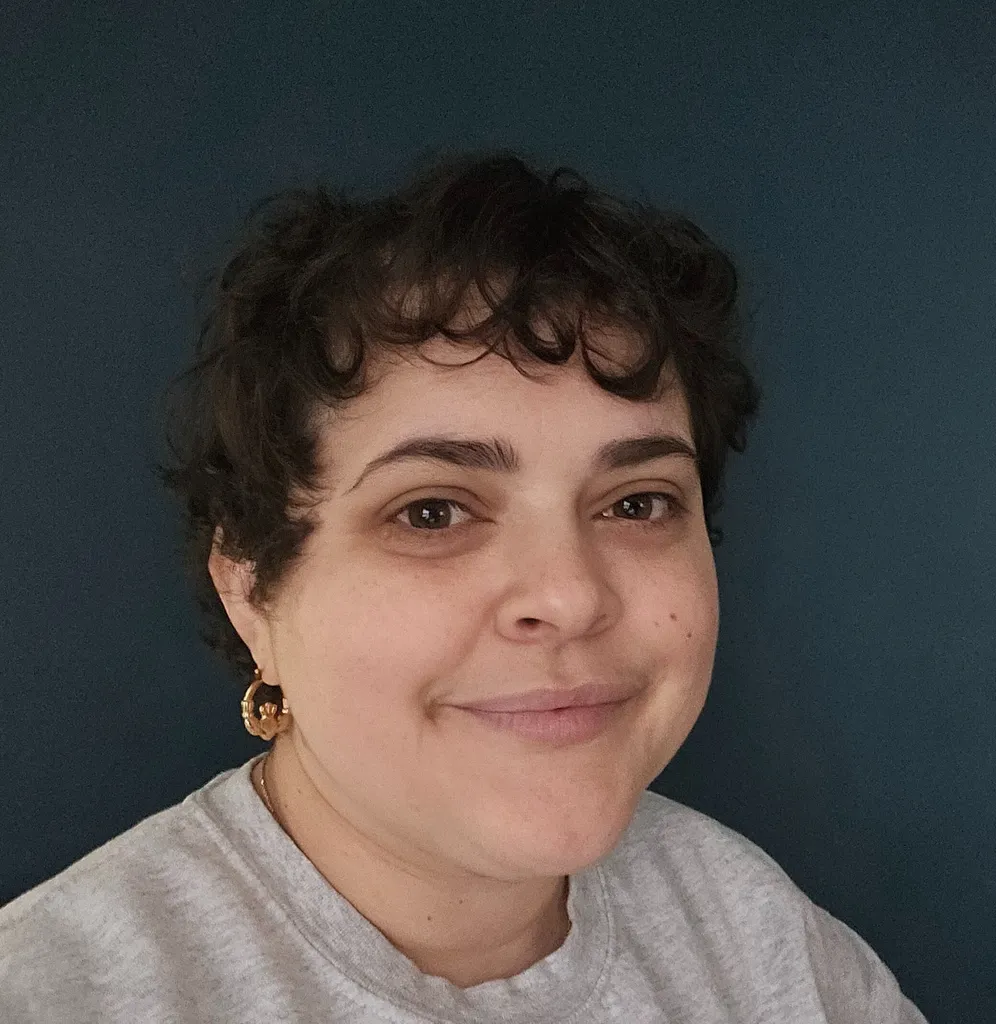
Leslie Fannon Zhang is a health and science writer and editor who joined HealthTree in 2025. She is passionate about making information about cancer and cancer care as accessible as possible. Leslie has written for the American Society of Clinical Oncology, the American Cancer Society, and the American Association for the Advancement of Science.
More on Patient Stories

Trending Articles



Upcoming Events

Get the Latest Multiple Myeloma Updates, Delivered to You.
By subscribing to the HealthTree newsletter, you'll receive the latest research, treatment updates, and expert insights to help you navigate your health.
Together we care.
Together we cure.