![[logo] HealthTree Foundation](https://static.healthtree.org/icons/icon_spinner.svg)
![[logo] HealthTree Foundation](https://static.healthtree.org/logo_icon_only.svg)
Going the Distance: How John Serafin Found Motivation Through Myeloma Treatment
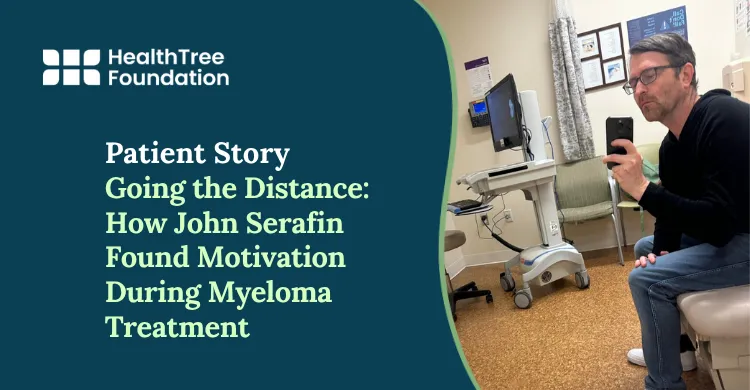


In early 2021, like everyone else, I was worried about COVID.
Masks. Social distancing. Avoiding crowded places. Doing everything I could to protect myself from something I couldn't see. What I didn't know was that something far more dangerous was already inside me.
While I was focused on staying six feet away from other people, a cancer I had never heard of was quietly spreading through my bones.
A myeloma diagnosis in the midst of COVID-19
The first scan I ever received was on February 16, 2021. It ended with a sentence I had never seen before: “Differential diagnosis includes multiple myeloma and metastatic disease.” I had never heard of multiple myeloma, but I knew enough to understand what “metastatic” implied. In a matter of seconds, routine discomfort in my chest, back, and ribs turned into something far more serious.
A biopsy soon confirmed a plasma cell neoplasm. After consultations across three hospitals, I chose a care team and underwent a PET/CT scan to determine the extent of the disease. The results were definitive: widespread infiltrative bone involvement, including destructive lesions in my ribs, sternum, sacrum, and left iliac bone, along with diffuse bone marrow infiltration in my femurs and humeri. Twenty-seven days after that first scan, I began chemotherapy.
Coping with myeloma treatment one day at a time
My treatment was standard for the time: months of chemotherapy followed by an autologous stem cell transplant. Most of that period is a blur, a combination of the shock of diagnosis and the constant physical toll it took on my body.
The pain was real. Bone fractures, nausea, five separate bone marrow biopsies, and the kind of fatigue that doesn’t really have a comparison point. I relied on a mix of prescribed medications just to get through the day. Looking back, there wasn’t a single moment—it was all of it.
I spent 13 days in the hospital for the transplant. I shaved my head the week before going in, trying to control what I could. It took close to 18 months to fully shake the brain fog that followed. Life didn’t just snap back into place—it came back slowly.
A little over three months after the transplant, I had a follow-up PET scan. The results were a surprise: “New FDG avid lytic lesion is noted in the right superior scapula with associated cortical disruption.”
My other lesions had resolved, but there was a new one in my shoulder that required immediate treatment. There was no time to recover. I was quickly moved onto a new regimen.
There was an alternative: A coffin. I chose treatment. And nine months later, I reached complete remission.
Short of my time in the hospital for the transplant—and a two-month period on medical leave after my body shut down from returning to work too soon—I worked through the nearly year-and-a-half ordeal. In some ways, I think it helped. It got me out of bed and kept my mind active. There was also nobody at home to tell me to slow down.
Much of this period took place during the pandemic, and my time was spent between three places: the hospital, my office, and my one-bedroom apartment. Alone. It’s a miracle I didn’t go mad spending that much time in isolation.
Adjusting to remission
One of the toughest adjustments I faced—the one I think many people face if they’re fortunate enough to reach remission—is this: How do you start thinking about long-term goals when, for a year and a half, your only goal was getting to tomorrow?
For me, that meant stepping away from work for eight months. I was physically and mentally worn down and needed the time to recharge. I relocated from Jersey City to suburban Philadelphia and began the process of rebuilding, both physically and mentally.
Once medically cleared, I was finally able to escape what had become a kind of solitary confinement and begin living again. More accurately, start a new life. I had been given another chance, and I wasn’t going to make the same mistakes I had before.
After staring at the same walls of my apartment for 18 months, I decided to travel. During my break from work, I visited Tokyo, Singapore, Thailand, Dallas, and Key West. I was fortunate to have the company of good friends along the way.
Advances in treatment have improved outcomes, but there are no guarantees. I don’t assume I’ll make anywhere near retirement age. Something about nearly dying changes your relationship with time—you stop putting off what can be done today.
When I wasn’t traveling, I spent nearly every day in the gym. The disease—and the treatments—had taken a physical toll, and I needed to rebuild. I wanted to be ready in case I ever needed to fight again.
A support network of close friends
You quickly find out how strong your support system is when you receive a diagnosis. Initially, I was public on social media about mine, and I’ll forever be grateful for the calls, texts, and emails of support I received—and still do. I may have physically been alone at times, but I always knew I had a team around me. Cancer isn’t something you get through alone.
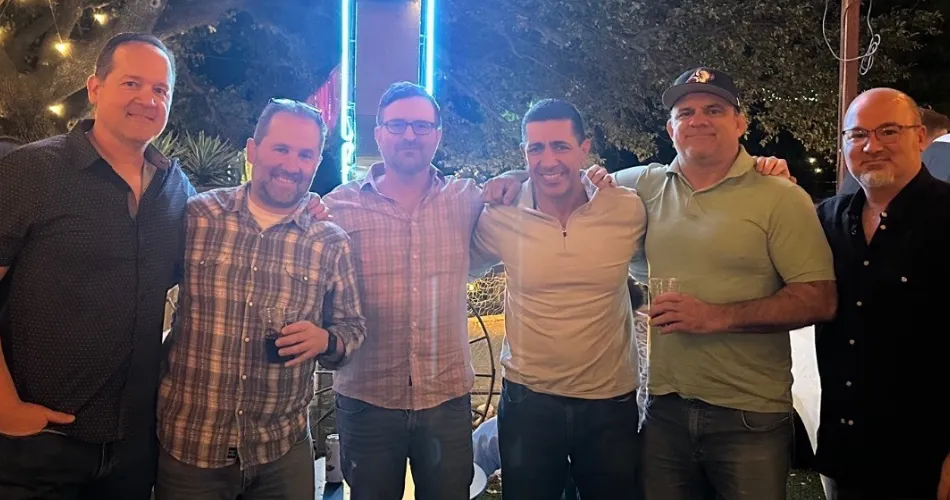
I’m part of a close group of friends from freshman year of college who remain tight to this day. After my diagnosis, we started weekly Zoom calls to stay connected—similar to the work video calls that became common during COVID, but with a lot more cursing and personal insults. I looked forward to those calls every week.
That same group chipped in to buy me a La-Z-Boy chair when bone damage made it difficult to get up and down. We’d get together whenever schedules allowed. I’d always have my own room, my bags were carried without asking, and meals and drinks—when I was able to have them—were always covered.
Most importantly, I was still a target. Cancer didn’t protect me from jokes, and I didn’t want it to. Being around them made me feel normal again, even if only for a couple of days at a time. I may not have biological brothers, but I have the best group of brothers on the planet.
A new reason to fight
During the summer of 2021, I met one of my closest friends and her husband for dinner in Hoboken. We had known each other since my time in Dallas years earlier and had stayed close ever since. That night, they asked me to be the godparent of their daughter, due in less than three months.
At first, I thought they were joking. They weren’t.
I’ve never had children, so I can’t speak from experience, but I do know this—if I were choosing someone for that role, “cancer-free” would probably be high on the list of qualifications. Ceremonial or not, it means something. I accepted.
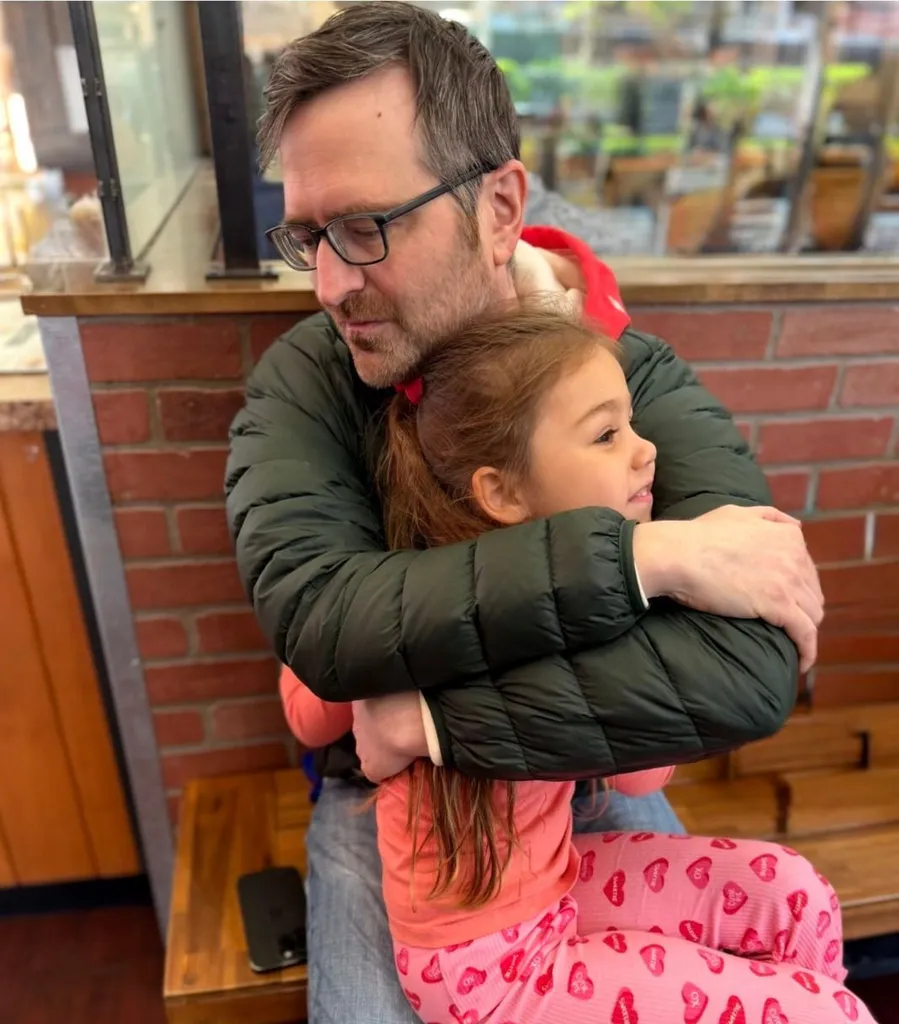
From that moment on, I had a different kind of motivation. I wasn’t going to be a framed picture on a wall they told stories about. I wasn’t going to be a posthumous godparent. She’s been in my life for nearly five years now, and it’s one of the greatest blessings I have.
I’m fortunate to have a strong support system of family and friends, but I live alone. A lot of this fight—the pain, the side effects, the long stretches between treatments—I’ve gone through by myself. And sometimes, you just need a hug. She gives the best ones I’ve ever had. Better than anything they’ve prescribed.
The rematch
I started having shoulder pain while lifting weights in September 2024. The following month, I asked two doctor friends what it might feel like if I had torn my labrum or rotator cuff. I could still lift—just nothing overhead or involving my right shoulder.
By November, the pain had intensified enough that I scheduled an appointment with a local sports medicine doctor. They ruled out a labrum or rotator cuff injury and told me to come back if it persisted. It did.
I finally scheduled an MRI on December 9, 2024. One of my oncologists had once told me the biology of my myeloma was "hen’s teeth rare." When you live with a cancer labeled “manageable,” you start to convince yourself you might be the outlier—the one who’s cured. With all the new treatments available and no long-term data yet, maybe I was the exception. I wasn’t.
The MRI results said, “The study is remarkable for a destructive osseous lesion in the scapula.” My cancer was back. In the same shoulder where it had reappeared three months after my stem cell transplant in 2021.
In all likelihood, it had never fully been eliminated—but I won’t get into the science. What mattered was this: I had been in remission. My routine blood work showed no markers. It didn’t matter. There’s a form of myeloma—non-secretory—that doesn’t show up in blood tests. It’s rare, but more common at relapse. Lucky me.
A PET scan and biopsy later that month confirmed a tumor outside the bone in my shoulder, with no evidence of spread anywhere else. Destructive, but localized—less than 1% of cases. Round 2 would begin six days later.
February 5, 2025 was the day my relapse became exponentially more difficult. While getting dressed for work, I maneuvered my right arm into my dress shirt and suddenly—POP. I still hear that sound in my head. It comes back as a painful flashback.
The pain was sharp and immediate. To this day, I don’t know how I managed to stay on my feet. Somehow, I gathered myself and finished buttoning my shirt. Five minutes later, I went to work.
I’m not sure what type of person does that after breaking their shoulder, but I assume the list isn’t long. Still, it includes me.
An X-ray eight days later confirmed a displaced pathologic fracture through the base of my acromion, the bone that connects the scapula to the collarbone at the AC joint.
The disease had weakened my shoulder so significantly that simply putting my arm into a sleeve caused it to break. Not ideal for a right-handed person.
Another round of treatment
No. Another no. Then a third and final no.
Those were my answers when my care team brought up a CAR-T transplant on three separate occasions.
CAR-T therapy (chimeric antigen receptor T-cell therapy) is a form of immunotherapy that reprograms your own T cells to recognize and attack cancer cells. Your cells are collected, engineered in a lab, and then re-infused to target the disease in a way traditional treatments cannot.
It wasn’t just fear. I was told there was a 3% chance of serious neurological side effects. Something on the spectrum of Parkinson’s. And even if everything went right, the projected success rate was only 30% to 40%. In my mind, those weren’t comforting odds. That’s not even factoring in the minute risk of not making it out alive.
In my defense, the autologous stem cell transplant I underwent in August 2021 had taken everything out of me. Preparing for it meant harvesting enough stem cells for two procedures. I often joked afterwards that they could throw the second frozen sample away—I would never go through that process again.
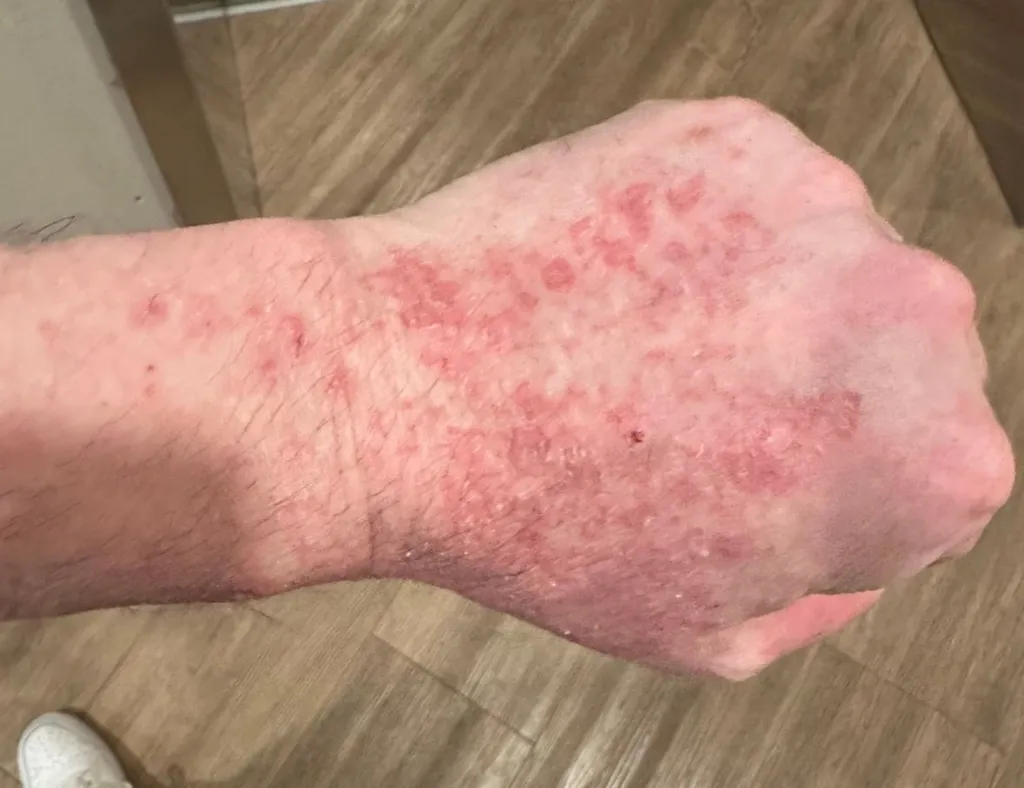
This time was different. I had gone through three separate treatment cycles in nine months before being pitched the transplant. I had handled the first bispecific, teclistamab, without much issue. The next bispecific, talquetamab, was another story. My throat was so dry it hurt to eat. My taste buds initially disappeared. Painful sores appeared on my hands and wrists. My fingernails and toenails deteriorated. My skin peeled. Fatigue settled in and stayed. I hit just about every side effect possible.
During a post-cycle PET scan, I found myself talking to God for fifteen straight minutes. I don’t do that often, as I feel like He normally has more pressing matters to attend to. In that moment, I didn’t ask to be cured. The mass in my shoulder was still there. The pain hadn’t gone anywhere. I just asked to get off talquetamab.
Radiation came next—20 treatments over consecutive weekdays. I can’t fully describe the level of fatigue that followed. The best way I could explain it to friends was this: starting the day at 50% battery, and by 8:00 pm I was already on red. Sleep was the only charging mechanism at my disposal.
Radiation shrank the mass, but the cancer remained. I told myself I didn’t have the strength to go through a transplant again. The truth was, I just didn’t want to.
Then I thought about my dad fighting colorectal cancer after it had already spread to his liver. I thought about the kids I’ve seen in the hospital over the past five years, bald, exhausted, and still fighting. It felt wrong to say no to something I knew I could endure. I had another round left in me.
Another second chance with CAR-T therapy
Compared to the stem cell transplant five years prior, CAR-T was like a week in Bangkok. I was fortunate enough to not experience any adverse side effects from cytokine release syndrome—not even a single fever or a headache. I’ve spent more money on smaller hotel rooms—with worse views of Manhattan than my bubble. The hardest part physically was the three days of outpatient chemotherapy required to deplete my lymphocytes prior to the CAR-T infusion. The food, however, was still atrocious.
I was discharged on Day +11 and back at work Day +14. By Day +25 I was back in the gym, lifting again on Day +26. Nothing is absolute, but I made it past the 30-day mark without any of the neurological side effects that caused me to decline the procedure multiple times.
My most recent blood work shows no signs of myeloma, which would be more reassuring if my version actually showed up in the bloodstream. The Bence-Jones protein, detectable in urine tests, that had appeared prior to my transplant wasn’t detected in my first post CAR-T lab work.
I feel better than I have in years. I expected to have no energy, but that hasn’t been the case. I’m in bed most nights by 8:00 pm, but I can still get through a full workday and spend 45 to 60 minutes in the gym. Then it’s just Kolao and me until I fall asleep. She’s a Merle chihuahua I got just after my relapse, who is now 18 months old. Sometimes you need a reason to get out of bed. She’s mine.
Finding motivation in the fight
Speaking of rounds, if someone asked what it was like to battle cancer over time, I’d tell them to take two minutes and watch Round 14 of the original Rocky. It’s not motivation, it’s a metaphor.
Rocky's final fight with Apollo Creed is scheduled for 15 rounds like all championship fights of that era. No one expected Rocky to still be standing by the 14th. A few more punches and Rocky is on the canvas.
As someone who’s been through eight different treatment cycles and multiple fractures, I know what it feels like to absorb punishment without being able to defend yourself.
As Rocky crawls toward the ropes, his trainer, Mickey, tells him: “Down. Down. Stay down.”
Sixty-two months later, I still hear that voice. Stay down. You’re too tired to go to work. You’re too tired to meet up with friends. You don’t have the energy to go to the gym. But you have to reach for the ropes.
The moment that resonates most comes next. Rocky gets to his feet by the count of nine. The referee checks him, and instead of backing away, Rocky motions for Apollo to come on. That’s the fight. Not winning rounds. Not avoiding damage. Just refusing to stay down.
Cracked ribs? I’m getting out of bed.
Compressed spine? Still getting up.
Break my shoulder getting dressed? I’ll be at work in five minutes.
People would occasionally say to me, after I reached remission the first time, “You kicked cancer’s ass” or “You beat cancer.” Neither could be further from the truth. You don’t beat cancer. You survive it.
Some days, surviving means just getting out of your bed and going about your life. Anyone who’s gone through it understands how hard even that can be.
John's advice for living with multiple myeloma: find a specialist, exercise, eat well, and leave nothing unsaid
In closing, here’s my advice, in no particular order, to anyone battling multiple myeloma—or cancer in general. It may not apply to everyone, but it’s what I’ve learned.
Find a specialist
I was fortunate. I had access to a specialist—and then some. I had excellent private insurance at the time of diagnosis and relapse. I also had two close friends in medicine who helped me navigate the system and secure consultations at three of the top cancer centers in the country. And I lived just outside of New York City, within reach of those institutions. Not everyone has that.
Because of it, I’ve had a medical team in my corner that includes two world-renowned specialists. My disease is cytogenetically rare, which likely made my case more compelling from a clinical standpoint. That access opened the door to treatments many patients haven’t yet experienced.
Exercise and eat well
If you have the energy, exercise—even when that voice in your head tells you not to. Eat well.
Travel
If you have the means and the energy, travel.
Leave nothing unsaid
If you love someone, tell them. If someone disappoints you, let them know. Respectfully. Leave nothing unsaid—tomorrow is a privilege. Challenge your medical team—it’s your life. And unless you’re a child with cancer, don’t play the victim.
I read a line shortly after I was diagnosed that stuck with me. I think about it every August 12th, the anniversary of my stem cell transplant. God willing, I’ll celebrate my fifth “rebirthday” in a few months.
“Don’t read the averages. The averages aren’t you. You are you.”
Go the distance.
Real people. Real experiences.
Subscribe to HealthTree Foundation's weekly myeloma newsletter for regular articles featuring other patients with myeloma and caregivers.
In early 2021, like everyone else, I was worried about COVID.
Masks. Social distancing. Avoiding crowded places. Doing everything I could to protect myself from something I couldn't see. What I didn't know was that something far more dangerous was already inside me.
While I was focused on staying six feet away from other people, a cancer I had never heard of was quietly spreading through my bones.
A myeloma diagnosis in the midst of COVID-19
The first scan I ever received was on February 16, 2021. It ended with a sentence I had never seen before: “Differential diagnosis includes multiple myeloma and metastatic disease.” I had never heard of multiple myeloma, but I knew enough to understand what “metastatic” implied. In a matter of seconds, routine discomfort in my chest, back, and ribs turned into something far more serious.
A biopsy soon confirmed a plasma cell neoplasm. After consultations across three hospitals, I chose a care team and underwent a PET/CT scan to determine the extent of the disease. The results were definitive: widespread infiltrative bone involvement, including destructive lesions in my ribs, sternum, sacrum, and left iliac bone, along with diffuse bone marrow infiltration in my femurs and humeri. Twenty-seven days after that first scan, I began chemotherapy.
Coping with myeloma treatment one day at a time
My treatment was standard for the time: months of chemotherapy followed by an autologous stem cell transplant. Most of that period is a blur, a combination of the shock of diagnosis and the constant physical toll it took on my body.
The pain was real. Bone fractures, nausea, five separate bone marrow biopsies, and the kind of fatigue that doesn’t really have a comparison point. I relied on a mix of prescribed medications just to get through the day. Looking back, there wasn’t a single moment—it was all of it.
I spent 13 days in the hospital for the transplant. I shaved my head the week before going in, trying to control what I could. It took close to 18 months to fully shake the brain fog that followed. Life didn’t just snap back into place—it came back slowly.
A little over three months after the transplant, I had a follow-up PET scan. The results were a surprise: “New FDG avid lytic lesion is noted in the right superior scapula with associated cortical disruption.”
My other lesions had resolved, but there was a new one in my shoulder that required immediate treatment. There was no time to recover. I was quickly moved onto a new regimen.
There was an alternative: A coffin. I chose treatment. And nine months later, I reached complete remission.
Short of my time in the hospital for the transplant—and a two-month period on medical leave after my body shut down from returning to work too soon—I worked through the nearly year-and-a-half ordeal. In some ways, I think it helped. It got me out of bed and kept my mind active. There was also nobody at home to tell me to slow down.
Much of this period took place during the pandemic, and my time was spent between three places: the hospital, my office, and my one-bedroom apartment. Alone. It’s a miracle I didn’t go mad spending that much time in isolation.
Adjusting to remission
One of the toughest adjustments I faced—the one I think many people face if they’re fortunate enough to reach remission—is this: How do you start thinking about long-term goals when, for a year and a half, your only goal was getting to tomorrow?
For me, that meant stepping away from work for eight months. I was physically and mentally worn down and needed the time to recharge. I relocated from Jersey City to suburban Philadelphia and began the process of rebuilding, both physically and mentally.
Once medically cleared, I was finally able to escape what had become a kind of solitary confinement and begin living again. More accurately, start a new life. I had been given another chance, and I wasn’t going to make the same mistakes I had before.
After staring at the same walls of my apartment for 18 months, I decided to travel. During my break from work, I visited Tokyo, Singapore, Thailand, Dallas, and Key West. I was fortunate to have the company of good friends along the way.
Advances in treatment have improved outcomes, but there are no guarantees. I don’t assume I’ll make anywhere near retirement age. Something about nearly dying changes your relationship with time—you stop putting off what can be done today.
When I wasn’t traveling, I spent nearly every day in the gym. The disease—and the treatments—had taken a physical toll, and I needed to rebuild. I wanted to be ready in case I ever needed to fight again.
A support network of close friends
You quickly find out how strong your support system is when you receive a diagnosis. Initially, I was public on social media about mine, and I’ll forever be grateful for the calls, texts, and emails of support I received—and still do. I may have physically been alone at times, but I always knew I had a team around me. Cancer isn’t something you get through alone.
I’m part of a close group of friends from freshman year of college who remain tight to this day. After my diagnosis, we started weekly Zoom calls to stay connected—similar to the work video calls that became common during COVID, but with a lot more cursing and personal insults. I looked forward to those calls every week.
That same group chipped in to buy me a La-Z-Boy chair when bone damage made it difficult to get up and down. We’d get together whenever schedules allowed. I’d always have my own room, my bags were carried without asking, and meals and drinks—when I was able to have them—were always covered.
Most importantly, I was still a target. Cancer didn’t protect me from jokes, and I didn’t want it to. Being around them made me feel normal again, even if only for a couple of days at a time. I may not have biological brothers, but I have the best group of brothers on the planet.
A new reason to fight
During the summer of 2021, I met one of my closest friends and her husband for dinner in Hoboken. We had known each other since my time in Dallas years earlier and had stayed close ever since. That night, they asked me to be the godparent of their daughter, due in less than three months.
At first, I thought they were joking. They weren’t.
I’ve never had children, so I can’t speak from experience, but I do know this—if I were choosing someone for that role, “cancer-free” would probably be high on the list of qualifications. Ceremonial or not, it means something. I accepted.
From that moment on, I had a different kind of motivation. I wasn’t going to be a framed picture on a wall they told stories about. I wasn’t going to be a posthumous godparent. She’s been in my life for nearly five years now, and it’s one of the greatest blessings I have.
I’m fortunate to have a strong support system of family and friends, but I live alone. A lot of this fight—the pain, the side effects, the long stretches between treatments—I’ve gone through by myself. And sometimes, you just need a hug. She gives the best ones I’ve ever had. Better than anything they’ve prescribed.
The rematch
I started having shoulder pain while lifting weights in September 2024. The following month, I asked two doctor friends what it might feel like if I had torn my labrum or rotator cuff. I could still lift—just nothing overhead or involving my right shoulder.
By November, the pain had intensified enough that I scheduled an appointment with a local sports medicine doctor. They ruled out a labrum or rotator cuff injury and told me to come back if it persisted. It did.
I finally scheduled an MRI on December 9, 2024. One of my oncologists had once told me the biology of my myeloma was "hen’s teeth rare." When you live with a cancer labeled “manageable,” you start to convince yourself you might be the outlier—the one who’s cured. With all the new treatments available and no long-term data yet, maybe I was the exception. I wasn’t.
The MRI results said, “The study is remarkable for a destructive osseous lesion in the scapula.” My cancer was back. In the same shoulder where it had reappeared three months after my stem cell transplant in 2021.
In all likelihood, it had never fully been eliminated—but I won’t get into the science. What mattered was this: I had been in remission. My routine blood work showed no markers. It didn’t matter. There’s a form of myeloma—non-secretory—that doesn’t show up in blood tests. It’s rare, but more common at relapse. Lucky me.
A PET scan and biopsy later that month confirmed a tumor outside the bone in my shoulder, with no evidence of spread anywhere else. Destructive, but localized—less than 1% of cases. Round 2 would begin six days later.
February 5, 2025 was the day my relapse became exponentially more difficult. While getting dressed for work, I maneuvered my right arm into my dress shirt and suddenly—POP. I still hear that sound in my head. It comes back as a painful flashback.
The pain was sharp and immediate. To this day, I don’t know how I managed to stay on my feet. Somehow, I gathered myself and finished buttoning my shirt. Five minutes later, I went to work.
I’m not sure what type of person does that after breaking their shoulder, but I assume the list isn’t long. Still, it includes me.
An X-ray eight days later confirmed a displaced pathologic fracture through the base of my acromion, the bone that connects the scapula to the collarbone at the AC joint.
The disease had weakened my shoulder so significantly that simply putting my arm into a sleeve caused it to break. Not ideal for a right-handed person.
Another round of treatment
No. Another no. Then a third and final no.
Those were my answers when my care team brought up a CAR-T transplant on three separate occasions.
CAR-T therapy (chimeric antigen receptor T-cell therapy) is a form of immunotherapy that reprograms your own T cells to recognize and attack cancer cells. Your cells are collected, engineered in a lab, and then re-infused to target the disease in a way traditional treatments cannot.
It wasn’t just fear. I was told there was a 3% chance of serious neurological side effects. Something on the spectrum of Parkinson’s. And even if everything went right, the projected success rate was only 30% to 40%. In my mind, those weren’t comforting odds. That’s not even factoring in the minute risk of not making it out alive.
In my defense, the autologous stem cell transplant I underwent in August 2021 had taken everything out of me. Preparing for it meant harvesting enough stem cells for two procedures. I often joked afterwards that they could throw the second frozen sample away—I would never go through that process again.
This time was different. I had gone through three separate treatment cycles in nine months before being pitched the transplant. I had handled the first bispecific, teclistamab, without much issue. The next bispecific, talquetamab, was another story. My throat was so dry it hurt to eat. My taste buds initially disappeared. Painful sores appeared on my hands and wrists. My fingernails and toenails deteriorated. My skin peeled. Fatigue settled in and stayed. I hit just about every side effect possible.
During a post-cycle PET scan, I found myself talking to God for fifteen straight minutes. I don’t do that often, as I feel like He normally has more pressing matters to attend to. In that moment, I didn’t ask to be cured. The mass in my shoulder was still there. The pain hadn’t gone anywhere. I just asked to get off talquetamab.
Radiation came next—20 treatments over consecutive weekdays. I can’t fully describe the level of fatigue that followed. The best way I could explain it to friends was this: starting the day at 50% battery, and by 8:00 pm I was already on red. Sleep was the only charging mechanism at my disposal.
Radiation shrank the mass, but the cancer remained. I told myself I didn’t have the strength to go through a transplant again. The truth was, I just didn’t want to.
Then I thought about my dad fighting colorectal cancer after it had already spread to his liver. I thought about the kids I’ve seen in the hospital over the past five years, bald, exhausted, and still fighting. It felt wrong to say no to something I knew I could endure. I had another round left in me.
Another second chance with CAR-T therapy
Compared to the stem cell transplant five years prior, CAR-T was like a week in Bangkok. I was fortunate enough to not experience any adverse side effects from cytokine release syndrome—not even a single fever or a headache. I’ve spent more money on smaller hotel rooms—with worse views of Manhattan than my bubble. The hardest part physically was the three days of outpatient chemotherapy required to deplete my lymphocytes prior to the CAR-T infusion. The food, however, was still atrocious.
I was discharged on Day +11 and back at work Day +14. By Day +25 I was back in the gym, lifting again on Day +26. Nothing is absolute, but I made it past the 30-day mark without any of the neurological side effects that caused me to decline the procedure multiple times.
My most recent blood work shows no signs of myeloma, which would be more reassuring if my version actually showed up in the bloodstream. The Bence-Jones protein, detectable in urine tests, that had appeared prior to my transplant wasn’t detected in my first post CAR-T lab work.
I feel better than I have in years. I expected to have no energy, but that hasn’t been the case. I’m in bed most nights by 8:00 pm, but I can still get through a full workday and spend 45 to 60 minutes in the gym. Then it’s just Kolao and me until I fall asleep. She’s a Merle chihuahua I got just after my relapse, who is now 18 months old. Sometimes you need a reason to get out of bed. She’s mine.
Finding motivation in the fight
Speaking of rounds, if someone asked what it was like to battle cancer over time, I’d tell them to take two minutes and watch Round 14 of the original Rocky. It’s not motivation, it’s a metaphor.
Rocky's final fight with Apollo Creed is scheduled for 15 rounds like all championship fights of that era. No one expected Rocky to still be standing by the 14th. A few more punches and Rocky is on the canvas.
As someone who’s been through eight different treatment cycles and multiple fractures, I know what it feels like to absorb punishment without being able to defend yourself.
As Rocky crawls toward the ropes, his trainer, Mickey, tells him: “Down. Down. Stay down.”
Sixty-two months later, I still hear that voice. Stay down. You’re too tired to go to work. You’re too tired to meet up with friends. You don’t have the energy to go to the gym. But you have to reach for the ropes.
The moment that resonates most comes next. Rocky gets to his feet by the count of nine. The referee checks him, and instead of backing away, Rocky motions for Apollo to come on. That’s the fight. Not winning rounds. Not avoiding damage. Just refusing to stay down.
Cracked ribs? I’m getting out of bed.
Compressed spine? Still getting up.
Break my shoulder getting dressed? I’ll be at work in five minutes.
People would occasionally say to me, after I reached remission the first time, “You kicked cancer’s ass” or “You beat cancer.” Neither could be further from the truth. You don’t beat cancer. You survive it.
Some days, surviving means just getting out of your bed and going about your life. Anyone who’s gone through it understands how hard even that can be.
John's advice for living with multiple myeloma: find a specialist, exercise, eat well, and leave nothing unsaid
In closing, here’s my advice, in no particular order, to anyone battling multiple myeloma—or cancer in general. It may not apply to everyone, but it’s what I’ve learned.
Find a specialist
I was fortunate. I had access to a specialist—and then some. I had excellent private insurance at the time of diagnosis and relapse. I also had two close friends in medicine who helped me navigate the system and secure consultations at three of the top cancer centers in the country. And I lived just outside of New York City, within reach of those institutions. Not everyone has that.
Because of it, I’ve had a medical team in my corner that includes two world-renowned specialists. My disease is cytogenetically rare, which likely made my case more compelling from a clinical standpoint. That access opened the door to treatments many patients haven’t yet experienced.
Exercise and eat well
If you have the energy, exercise—even when that voice in your head tells you not to. Eat well.
Travel
If you have the means and the energy, travel.
Leave nothing unsaid
If you love someone, tell them. If someone disappoints you, let them know. Respectfully. Leave nothing unsaid—tomorrow is a privilege. Challenge your medical team—it’s your life. And unless you’re a child with cancer, don’t play the victim.
I read a line shortly after I was diagnosed that stuck with me. I think about it every August 12th, the anniversary of my stem cell transplant. God willing, I’ll celebrate my fifth “rebirthday” in a few months.
“Don’t read the averages. The averages aren’t you. You are you.”
Go the distance.
Real people. Real experiences.
Subscribe to HealthTree Foundation's weekly myeloma newsletter for regular articles featuring other patients with myeloma and caregivers.
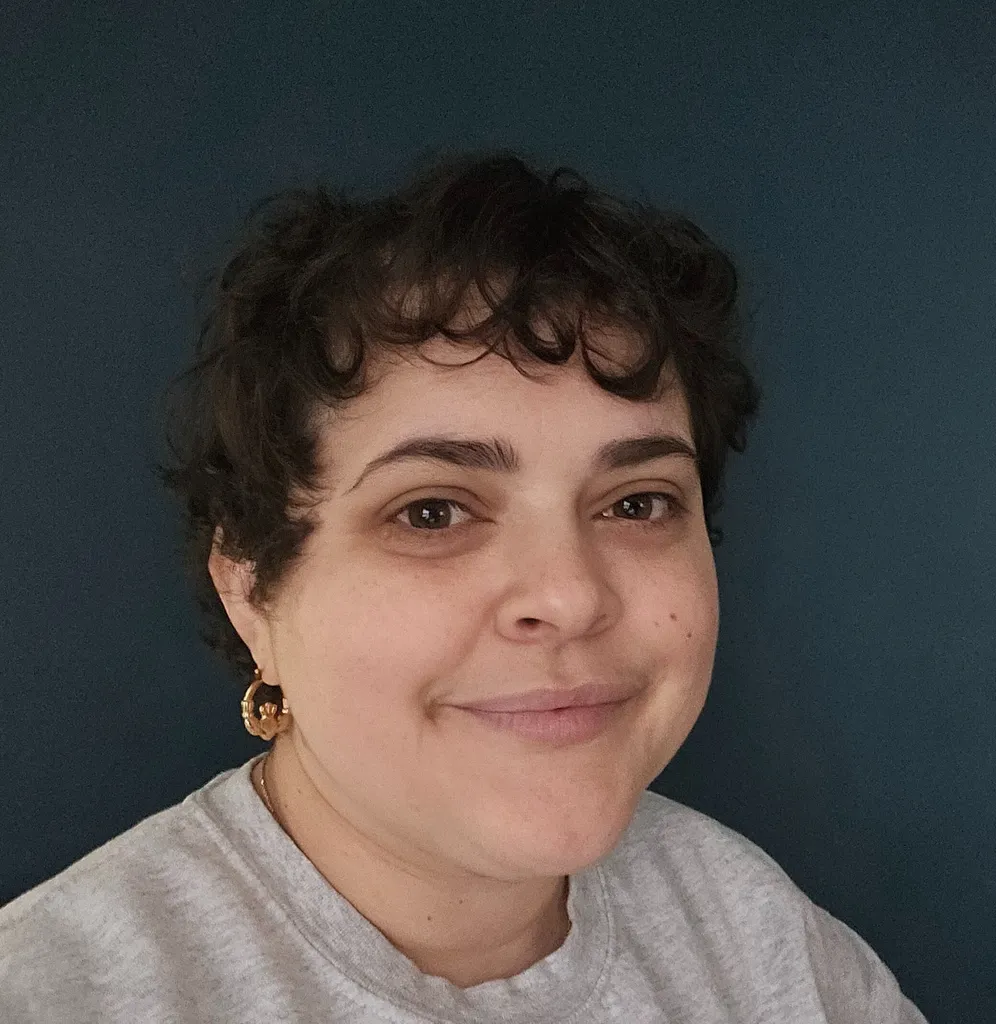
about the author
Leslie Fannon Zhang
Leslie Fannon Zhang is a health and science writer and editor who joined HealthTree in 2025. She is passionate about making information about cancer and cancer care as accessible as possible. Leslie has written for the American Society of Clinical Oncology, the American Cancer Society, and the American Association for the Advancement of Science.
More on Patient Stories

Trending Articles

Upcoming Events

Get the Latest Multiple Myeloma Updates, Delivered to You.
By subscribing to the HealthTree newsletter, you'll receive the latest research, treatment updates, and expert insights to help you navigate your health.
Together we care.
Together we cure.