![[logo] HealthTree Foundation](https://static.healthtree.org/icons/icon_spinner.svg)
![[logo] HealthTree Foundation](https://static.healthtree.org/logo_icon_only.svg)
How Are Oral Health And Kidney Disease Connected?
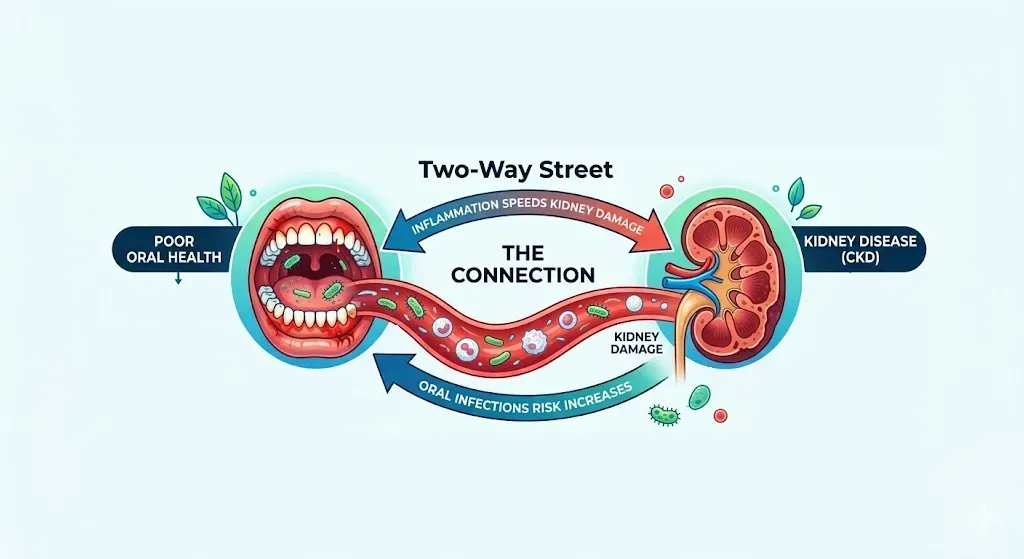


How Are Oral Health And Kidney Disease Connected?
“Good dental health is essential for people living with kidney disease. Oral infections and gum disease can lead to inflammation and make kidney problems worse. Regular dental checkups and good daily care can help protect your health.”
The link between oral health and kidney disease is a two-way relationship. Chronic inflammation from periodontal (gum) disease can worsen kidney function, and chronic kidney disease (CKD) increases the risks of oral infections due to weakened immunity and high toxin levels. Poor oral hygiene leads to bacteria entering the bloodstream, which can damage the kidneys.
The Mouth And Kidney Link
Your mouth and kidneys are connected through the body’s immune system. Inflammation occurs when germs from your mouth cause infections. For people with kidney disease, dental infections can:
-
Accelerate existing kidney damage.
Increase the risk of heart disease.
Make it harder to control blood pressure.
Slow down healing after a surgery or transplant.
“Bacteria from the mouth can enter the bloodstream and travel to other parts of the body. This makes infections more dangerous for people whose immune systems are weaker from chronic kidney disease, dialysis, or transplant medicines.” Always inform your dentist if you have kidney disease.
-
Gum disease triggers inflammation that can speed up chronic kidney disease. It can also affect other organs such as the heart.
-
Bacteria from infected gums can reach the kidneys, which can lead to infections.
-
Patients with kidney issues frequently experience mouth sores, bad breath, and dry mouth.
-
Kidney disease changes the balance of calcium and phosphorus, which can lead to bone loss in the jaw, causing loose teeth or tooth loss.
People with chronic kidney disease are more susceptible to infections and have a higher incidence of dental plaque and periodontal disease.
Oral Health Signs In Kidney Disease
Oral health signs in kidney disease often result from toxin buildup, reduced fluid intake, and medication side effects. These effects include dry mouth, metallic taste, bad breath, and increased bleeding and gum infections. These issues can cause pain, eating difficulties, and tooth decay.
-
Dry Mouth (Xerostomia): This is extremely common (up to 44% of patients), leading to difficulty in chewing, swallowing, and speaking.
-
Bad Breath (Uremic Fetor): This is an ammonia-like or fishy taste or smell caused by high urea levels in the saliva, which breaks down into ammonia.
Altered Taste (Dysgeusia): A metallic, bitter, or sweet taste change that contributes to a loss of appetite.
Gum Disease and Bleeding: Increased risk for gum recession, infection, and severe gingivitis due to weakened immunity and a reduced ability to fight plaque.
Uremic Stomatitis: This is a rare condition. But it causes severe inflammation of the mouth with white patches or sores.
Loose Teeth or Bone Loss: Kidney disease affects the mineral balance in the body, which leads to reduced bone density in the jaw.
The Symptoms Of Kidney Disease And Oral Health
-
Uremia: High levels of urea in saliva.
-
Fluid Restrictions: Reduced fluid intake to help manage kidney dysfunction.
-
Medications: Diuretics and anti-hypertensives that cause dry mouth.
-
Dialysis: Often linked to dry mouth.
Managing Oral Health When You Have Kidney Disease
Managing oral health in patients with kidney disease requires a multi-level approach. Care should be coordinated between the dentist and nephrologist to prevent infections, manage bleeding risks, and to reduce the effects of medications.
-
Medical Consultation: Always consult with your nephrologist before a dental procedure to make sure of your coagulation status and if there is any need for an antibiotic.
-
Timing: Schedule dental treatments on non-dialysis days.
-
Antibiotics: Patients with kidney disease have a weakened immune system (or are on dialysis) and are more susceptible to infections.
Daily Care: Brush twice a day with a soft toothbrush and use a fluoride toothpaste. Floss to reduce plaque buildup.
Dry Mouth Management: Kidney medicines can cause dry mouth, which can advance tooth decay. Use saliva substitutes (Biotene) or sugar-free gum to keep the mouth moist.
Infections: Active dental infections can cause severe infections. They should be treated promptly to prevent the spread of bacteria.
Diet Adjustments: Limit sugary foods and drinks to prevent cavities. Follow the specific renal diet restrictions.
The Overall Connection Between Oral Health And Kidney Disease
Chronic kidney disease predisposes to a higher risk for oral diseases compared to the general population. In fact, there seems to be a bidirectional relationship between oral diseases and kidney disease, for which the occurrence of one predisposes the onset of the other. The most common disease in CKD patients is periodontal disease. CKD patients also show a higher susceptibility to oral infections.”
Treatment for dental problems depends on the type of dental issue and your stage of kidney disease. Treating dental problems early can help prevent infections from spreading, reduce inflammation in the body, and protect your kidney health.
Read More About Kidney Disease
How Are Oral Health And Kidney Disease Connected?
“Good dental health is essential for people living with kidney disease. Oral infections and gum disease can lead to inflammation and make kidney problems worse. Regular dental checkups and good daily care can help protect your health.”
The link between oral health and kidney disease is a two-way relationship. Chronic inflammation from periodontal (gum) disease can worsen kidney function, and chronic kidney disease (CKD) increases the risks of oral infections due to weakened immunity and high toxin levels. Poor oral hygiene leads to bacteria entering the bloodstream, which can damage the kidneys.
The Mouth And Kidney Link
Your mouth and kidneys are connected through the body’s immune system. Inflammation occurs when germs from your mouth cause infections. For people with kidney disease, dental infections can:
-
Accelerate existing kidney damage.
-
Increase the risk of heart disease.
-
Make it harder to control blood pressure.
-
Slow down healing after a surgery or transplant.
“Bacteria from the mouth can enter the bloodstream and travel to other parts of the body. This makes infections more dangerous for people whose immune systems are weaker from chronic kidney disease, dialysis, or transplant medicines.” Always inform your dentist if you have kidney disease.
-
Gum disease triggers inflammation that can speed up chronic kidney disease. It can also affect other organs such as the heart.
-
Bacteria from infected gums can reach the kidneys, which can lead to infections.
-
Patients with kidney issues frequently experience mouth sores, bad breath, and dry mouth.
-
Kidney disease changes the balance of calcium and phosphorus, which can lead to bone loss in the jaw, causing loose teeth or tooth loss.
-
People with chronic kidney disease are more susceptible to infections and have a higher incidence of dental plaque and periodontal disease.
Oral Health Signs In Kidney Disease
Oral health signs in kidney disease often result from toxin buildup, reduced fluid intake, and medication side effects. These effects include dry mouth, metallic taste, bad breath, and increased bleeding and gum infections. These issues can cause pain, eating difficulties, and tooth decay.
-
Dry Mouth (Xerostomia): This is extremely common (up to 44% of patients), leading to difficulty in chewing, swallowing, and speaking.
-
Bad Breath (Uremic Fetor): This is an ammonia-like or fishy taste or smell caused by high urea levels in the saliva, which breaks down into ammonia.
-
Altered Taste (Dysgeusia): A metallic, bitter, or sweet taste change that contributes to a loss of appetite.
-
Gum Disease and Bleeding: Increased risk for gum recession, infection, and severe gingivitis due to weakened immunity and a reduced ability to fight plaque.
-
Uremic Stomatitis: This is a rare condition. But it causes severe inflammation of the mouth with white patches or sores.
-
Loose Teeth or Bone Loss: Kidney disease affects the mineral balance in the body, which leads to reduced bone density in the jaw.
The Symptoms Of Kidney Disease And Oral Health
-
Uremia: High levels of urea in saliva.
-
Fluid Restrictions: Reduced fluid intake to help manage kidney dysfunction.
-
Medications: Diuretics and anti-hypertensives that cause dry mouth.
-
Dialysis: Often linked to dry mouth.
Managing Oral Health When You Have Kidney Disease
Managing oral health in patients with kidney disease requires a multi-level approach. Care should be coordinated between the dentist and nephrologist to prevent infections, manage bleeding risks, and to reduce the effects of medications.
-
Medical Consultation: Always consult with your nephrologist before a dental procedure to make sure of your coagulation status and if there is any need for an antibiotic.
-
Timing: Schedule dental treatments on non-dialysis days.
-
Antibiotics: Patients with kidney disease have a weakened immune system (or are on dialysis) and are more susceptible to infections.
-
Daily Care: Brush twice a day with a soft toothbrush and use a fluoride toothpaste. Floss to reduce plaque buildup.
-
Dry Mouth Management: Kidney medicines can cause dry mouth, which can advance tooth decay. Use saliva substitutes (Biotene) or sugar-free gum to keep the mouth moist.
-
Infections: Active dental infections can cause severe infections. They should be treated promptly to prevent the spread of bacteria.
-
Diet Adjustments: Limit sugary foods and drinks to prevent cavities. Follow the specific renal diet restrictions.
The Overall Connection Between Oral Health And Kidney Disease
Chronic kidney disease predisposes to a higher risk for oral diseases compared to the general population. In fact, there seems to be a bidirectional relationship between oral diseases and kidney disease, for which the occurrence of one predisposes the onset of the other. The most common disease in CKD patients is periodontal disease. CKD patients also show a higher susceptibility to oral infections.”
Treatment for dental problems depends on the type of dental issue and your stage of kidney disease. Treating dental problems early can help prevent infections from spreading, reduce inflammation in the body, and protect your kidney health.

about the author
Lisa Foster
Lisa Foster is a mom of 3 daughters and 1 perfect grandchild, a puzzle lover, writer and HealthTree advocate. She believes in the mission of the foundation and the team that builds it forward. She calls Houston, Texas home.
More on Core Education





Trending Articles




Get the Latest Kidney Cancer Updates, Delivered to You.
By subscribing to the HealthTree newsletter, you'll receive the latest research, treatment updates, and expert insights to help you navigate your health.
Together we care.
Together we cure.