![[logo] HealthTree Foundation](https://static.healthtree.org/icons/icon_spinner.svg)
![[logo] HealthTree Foundation](https://static.healthtree.org/logo_icon_only.svg)
Early Signs of Kidney Disease: The Silent Symptoms


Take Charge Of Your Kidney Health: March Is National Kidney Month
March is National Kidney Month! It is the annual observance dedicated to raising awareness of kidney health, the prevention of kidney disease, and the importance of early detection. Kidney disease affects 37-40 million Americans and this month serves as a reminder to take action to reduce the impact of this disease which is the ninth leading cause of death in the United States. “This year’s focus is on taking charge of your health and the many factors that go into managing your kidney disease.”
Awareness Of Kidney Health
Kidney disease is often called a “silent pandemic” because it does not show any symptoms in the early stages. Awareness involves understanding risks, getting regular and simple blood and urine checks, managing diet and lifestyle, and becoming educated to understand and notice early symptoms of this disease.
“Kidney disease develops when kidneys lose their ability to remove waste and maintain fluid and chemical balances in the body. The severity of chronic kidney disease (CKD) depends on how well the kidneys filter wastes from the body. It can progress quickly or take many years to develop.”
-
Know Your Risk Factors: Understand that diabetes, high blood pressure, family history, and being over the age of 60 are high-risk factors.
Get Screened: Ask your doctor for an estimated glomerular filtration rate (eGFR) and a urine albumin (ACR) test.
-
eGFR measures how well the kidneys filter waste.
-
ACR measures albumin (a type of protein) in the urine.
Monitor Your Kidney Numbers: Keep track of your blood pressure and blood sugar levels.
Take the Quiz: Check to see if you are at risk for kidney disease by taking the quiz. Based on your results, next steps will be suggested, and all your information will remain anonymous.
Prevention Of Kidney Disease
Prevention involves maintaining a healthy lifestyle, managing any problematic conditions, and avoiding harmful habits. Take action to protect your kidneys and work with your doctor to maintain optimal health levels.
-
Manage Blood Pressure And Blood Sugar: Monitor your levels and keep them within the recommended range.
-
Blood Pressure: Optimal numbers are 120/80.
Blood Sugar: Fasting levels are generally under 100. Hours after eating are generally under 140.
Diabetic Blood Sugar: 80-130 before meals and less than 180 after eating.
Eat A Healthy Diet: Limit salt and processed foods. Focus on fruits, vegetables, and lean proteins.
Stay Physically Active: Aim for at least 30 minutes of moderate activity a day, such as walking or swimming.
Limit Medication Overuse: Avoid long-term use of over-the-counter pain medications (like ibuprofen or naproxen), which can harm the kidneys.
Stop Smoking and Limit Alcohol: Quit smoking in order to protect blood vessels and limit alcohol, which can raise blood pressure.
Get Regular Check Ups: Make sure you are getting both an ACR and eGFR test regularly to ensure kidney function.
Stay Hydrated: Drink enough water to help the kidneys filter waste.
The Importance Of Early Detection
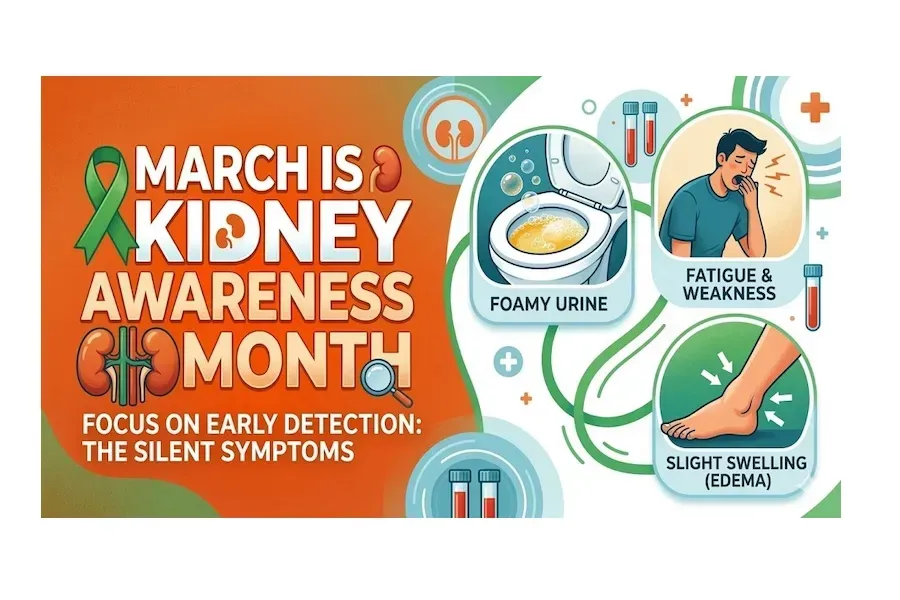
Early detection of kidney disease is often accomplished through blood work because there are only silent symptoms in the beginning stages. Warning signs can include foamy urine, fatigue, slight swelling of the legs or ankles, and increased urination at night. High-risk individuals with diabetes or high blood pressure should be tested regularly. See HERE for 8 signs of kidney disease.
-
Lab Tests Are Crucial: In the early stages (1-3) there are no noticeable symptoms, which makes lab tests vital.
-
High Risk Screening: Individuals with diabetes, high blood pressure, or a family history of kidney failure should get regular, proactive screenings.
More Information From HealthTree
From Diagnosis To Dialysis: When To Start Treatment For Kidney Disease
Manage And Slow Kidney Disease With 2026 Medication Breaththroughs
Exploring a kidney-friendly diet
Take Charge Of Your Kidney Health: March Is National Kidney Month
March is National Kidney Month! It is the annual observance dedicated to raising awareness of kidney health, the prevention of kidney disease, and the importance of early detection. Kidney disease affects 37-40 million Americans and this month serves as a reminder to take action to reduce the impact of this disease which is the ninth leading cause of death in the United States. “This year’s focus is on taking charge of your health and the many factors that go into managing your kidney disease.”
Awareness Of Kidney Health
Kidney disease is often called a “silent pandemic” because it does not show any symptoms in the early stages. Awareness involves understanding risks, getting regular and simple blood and urine checks, managing diet and lifestyle, and becoming educated to understand and notice early symptoms of this disease.
“Kidney disease develops when kidneys lose their ability to remove waste and maintain fluid and chemical balances in the body. The severity of chronic kidney disease (CKD) depends on how well the kidneys filter wastes from the body. It can progress quickly or take many years to develop.”
-
Know Your Risk Factors: Understand that diabetes, high blood pressure, family history, and being over the age of 60 are high-risk factors.
-
Get Screened: Ask your doctor for an estimated glomerular filtration rate (eGFR) and a urine albumin (ACR) test.
-
eGFR measures how well the kidneys filter waste.
-
ACR measures albumin (a type of protein) in the urine.
-
Monitor Your Kidney Numbers: Keep track of your blood pressure and blood sugar levels.
-
Take the Quiz: Check to see if you are at risk for kidney disease by taking the quiz. Based on your results, next steps will be suggested, and all your information will remain anonymous.
Prevention Of Kidney Disease
Prevention involves maintaining a healthy lifestyle, managing any problematic conditions, and avoiding harmful habits. Take action to protect your kidneys and work with your doctor to maintain optimal health levels.
-
Manage Blood Pressure And Blood Sugar: Monitor your levels and keep them within the recommended range.
-
Blood Pressure: Optimal numbers are 120/80.
-
Blood Sugar: Fasting levels are generally under 100. Hours after eating are generally under 140.
-
Diabetic Blood Sugar: 80-130 before meals and less than 180 after eating.
-
Eat A Healthy Diet: Limit salt and processed foods. Focus on fruits, vegetables, and lean proteins.
-
Stay Physically Active: Aim for at least 30 minutes of moderate activity a day, such as walking or swimming.
-
Limit Medication Overuse: Avoid long-term use of over-the-counter pain medications (like ibuprofen or naproxen), which can harm the kidneys.
-
Stop Smoking and Limit Alcohol: Quit smoking in order to protect blood vessels and limit alcohol, which can raise blood pressure.
-
Get Regular Check Ups: Make sure you are getting both an ACR and eGFR test regularly to ensure kidney function.
-
Stay Hydrated: Drink enough water to help the kidneys filter waste.
The Importance Of Early Detection
Early detection of kidney disease is often accomplished through blood work because there are only silent symptoms in the beginning stages. Warning signs can include foamy urine, fatigue, slight swelling of the legs or ankles, and increased urination at night. High-risk individuals with diabetes or high blood pressure should be tested regularly. See HERE for 8 signs of kidney disease.
-
Lab Tests Are Crucial: In the early stages (1-3) there are no noticeable symptoms, which makes lab tests vital.
-
High Risk Screening: Individuals with diabetes, high blood pressure, or a family history of kidney failure should get regular, proactive screenings.
More Information From HealthTree
From Diagnosis To Dialysis: When To Start Treatment For Kidney Disease
Manage And Slow Kidney Disease With 2026 Medication Breaththroughs
Exploring a kidney-friendly diet

about the author
Lisa Foster
Lisa Foster is a mom of 3 daughters and 1 perfect grandchild, a puzzle lover, writer and HealthTree advocate. She believes in the mission of the foundation and the team that builds it forward. She calls Houston, Texas home.
More on Core Education






Get the Latest Kidney Cancer Updates, Delivered to You.
By subscribing to the HealthTree newsletter, you'll receive the latest research, treatment updates, and expert insights to help you navigate your health.
Together we care.
Together we cure.