![[logo] HealthTree Foundation](https://static.healthtree.org/icons/icon_spinner.svg)
![[logo] HealthTree Foundation](https://static.healthtree.org/logo_icon_only.svg)
SGLT2 Inhibitors vs. GLP-1 Agonists for Chronic Kidney Disease: Which Medication Protects Your Kidneys Best?
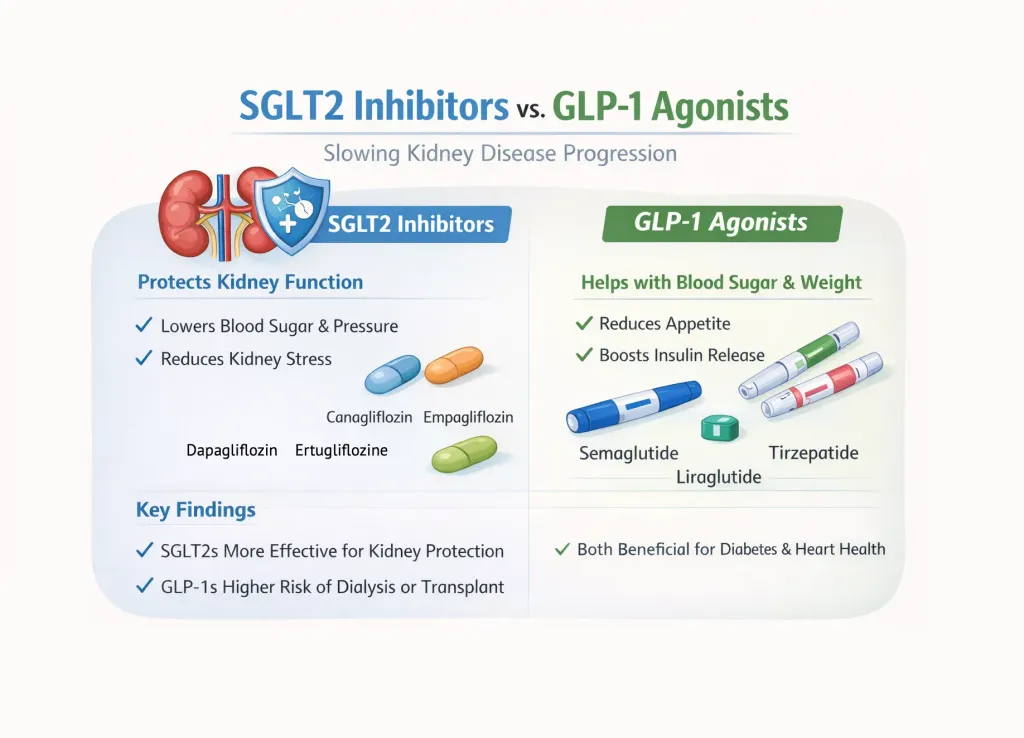


Management of kidney disease is vital to overall health and quality of life. Based on recent studies, SGLT2 inhibitors (SGLTis) are generally considered superior to GLP-1 receptor agonists (GLP-1s) for slowing the progression of chronic kidney disease. While both medication groups are effective for heart health and diabetes, SGLT2 inhibitors provide stronger, direct protection against kidney function decline. This makes these medications a first-line choice for kidney-specific benefits and diabetes management.
What Are SGLT2 Inhibitors?
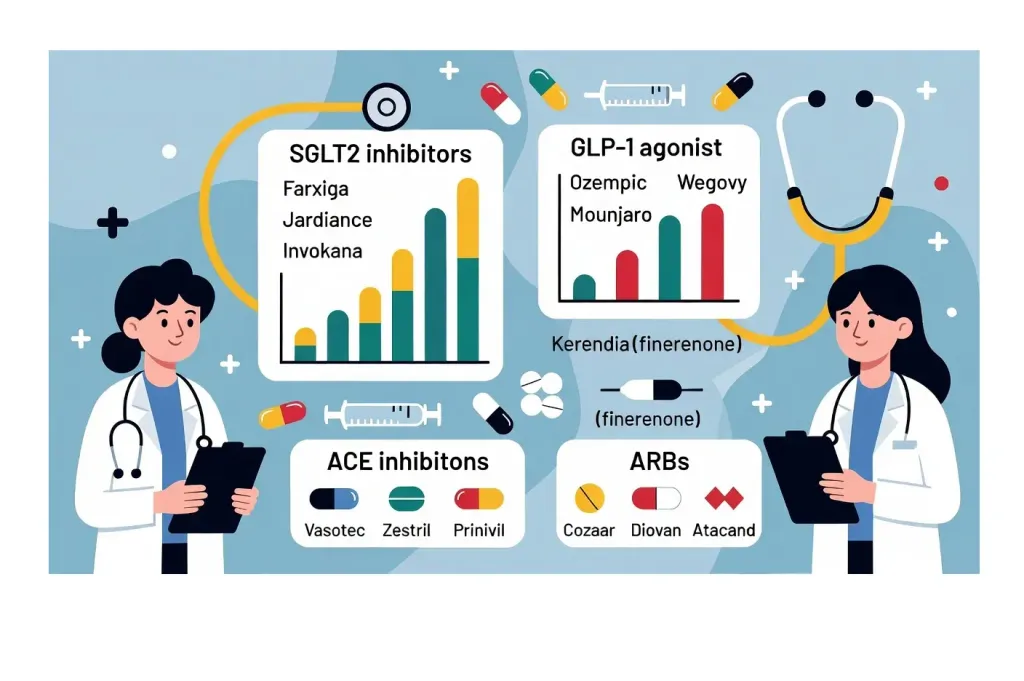
These are a class of medications that treat type 2 diabetes by blocking the kidneys from reabsorbing sugar into the bloodstream. They are also critical for managing chronic kidney disease and lowering the risk of heart failure. By reducing the sugar and sodium in the blood, they lower blood pressure, the pressure on the heart, and decrease stress on the kidneys, which slows down the progression of kidney disease.
-
Canagliflozin (Invokana)
-
Dapagliflozin (Farxiga)
Empagliflozin (Jardiance)
Ertugliflozin (Steglatro)
These medications are effective in lowering the A1c, which helps to protect heart and kidney function. Common side effects are urinary tract infections (UTIs) and yeast infections due to the increased sugar levels in the urine.
What Are GLP-1 Agonists?
Glucagon-like peptide-1 agonists are a class of medications that mimic the natural GLP-1 hormone to manage type 2 diabetes and obesity. They signal the pancreas to release more insulin when blood sugar rises and signal the brain to reduce appetite. Most are taken weekly or daily through an injection. Common side effects are nausea, vomiting, diarrhea, and constipation.
-
Semaglutide (Ozempic, Wegovy)
-
Tirzepatide (Mounjaro, Zepbound)
-
Liraglutide (Victoza)
Clinical Studies
A February 2026 study found that SGLT2 inhibitors are often associated with a lower 5-year risk of chronic kidney disease progression than GLP-1s, though both offer substantial benefits. This analysis also indicated fewer acute kidney injuries with the use of SGLT2 inhibitors. Evidence suggests that these medications are also beneficial for patients who do not have diabetes.
Another study found that patients with type 2 diabetes and kidney disease who were prescribed GLP-1s had a 39% higher risk of requiring kidney replacement therapy (dialysis or transplant), compared to patients taking SGLT2 inhibitors.
-
Progression to kidney replacement therapy (KRT) occurred in 3.7% of patients receiving GLP-1 receptor agonists.
-
Progression to KRT occurred in 2.5% of patients receiving SGLT2 inhibitors.
-
Mortality risk did not differ between the two groups.
Researchers observed that while GLP-1s offer overall kidney protective benefits, SGLT2 inhibitors appear to be more effective at slowing the progression to end-stage kidney failure. Both classes of medications are still considered to be valuable therapies for diabetes management and cardiovascular protection.
It is important to note that “no randomized trial has included a head-to-toe comparison between these two drugs, to evaluate their relative roles in preventing kidney failure and death among patients with diabetes and CKD, especially in patients with varying baseline kidney function, albuminuria severity, and comorbidities such as cardiovascular disease or obesity.”
Read More About Kidney Disease
Management of kidney disease is vital to overall health and quality of life. Based on recent studies, SGLT2 inhibitors (SGLTis) are generally considered superior to GLP-1 receptor agonists (GLP-1s) for slowing the progression of chronic kidney disease. While both medication groups are effective for heart health and diabetes, SGLT2 inhibitors provide stronger, direct protection against kidney function decline. This makes these medications a first-line choice for kidney-specific benefits and diabetes management.
What Are SGLT2 Inhibitors?
These are a class of medications that treat type 2 diabetes by blocking the kidneys from reabsorbing sugar into the bloodstream. They are also critical for managing chronic kidney disease and lowering the risk of heart failure. By reducing the sugar and sodium in the blood, they lower blood pressure, the pressure on the heart, and decrease stress on the kidneys, which slows down the progression of kidney disease.
-
Canagliflozin (Invokana)
-
Dapagliflozin (Farxiga)
-
Empagliflozin (Jardiance)
-
Ertugliflozin (Steglatro)
These medications are effective in lowering the A1c, which helps to protect heart and kidney function. Common side effects are urinary tract infections (UTIs) and yeast infections due to the increased sugar levels in the urine.
What Are GLP-1 Agonists?
Glucagon-like peptide-1 agonists are a class of medications that mimic the natural GLP-1 hormone to manage type 2 diabetes and obesity. They signal the pancreas to release more insulin when blood sugar rises and signal the brain to reduce appetite. Most are taken weekly or daily through an injection. Common side effects are nausea, vomiting, diarrhea, and constipation.
-
Semaglutide (Ozempic, Wegovy)
-
Tirzepatide (Mounjaro, Zepbound)
-
Liraglutide (Victoza)
Clinical Studies
A February 2026 study found that SGLT2 inhibitors are often associated with a lower 5-year risk of chronic kidney disease progression than GLP-1s, though both offer substantial benefits. This analysis also indicated fewer acute kidney injuries with the use of SGLT2 inhibitors. Evidence suggests that these medications are also beneficial for patients who do not have diabetes.
Another study found that patients with type 2 diabetes and kidney disease who were prescribed GLP-1s had a 39% higher risk of requiring kidney replacement therapy (dialysis or transplant), compared to patients taking SGLT2 inhibitors.
-
Progression to kidney replacement therapy (KRT) occurred in 3.7% of patients receiving GLP-1 receptor agonists.
-
Progression to KRT occurred in 2.5% of patients receiving SGLT2 inhibitors.
-
Mortality risk did not differ between the two groups.
Researchers observed that while GLP-1s offer overall kidney protective benefits, SGLT2 inhibitors appear to be more effective at slowing the progression to end-stage kidney failure. Both classes of medications are still considered to be valuable therapies for diabetes management and cardiovascular protection.
It is important to note that “no randomized trial has included a head-to-toe comparison between these two drugs, to evaluate their relative roles in preventing kidney failure and death among patients with diabetes and CKD, especially in patients with varying baseline kidney function, albuminuria severity, and comorbidities such as cardiovascular disease or obesity.”
Read More About Kidney Disease

about the author
Lisa Foster
Lisa Foster is a mom of 3 daughters and 1 perfect grandchild, a puzzle lover, writer and HealthTree advocate. She believes in the mission of the foundation and the team that builds it forward. She calls Houston, Texas home.
More on Core Education






Get the Latest Kidney Cancer Updates, Delivered to You.
By subscribing to the HealthTree newsletter, you'll receive the latest research, treatment updates, and expert insights to help you navigate your health.
Together we care.
Together we cure.