![[logo] HealthTree Foundation](https://static.healthtree.org/icons/icon_spinner.svg)
![[logo] HealthTree Foundation](https://static.healthtree.org/logo_icon_only.svg)
Researchers Identify Weakness in Blood Cancer Cells with U2AF1 S34 Mutation That Could Lead to New Treatments
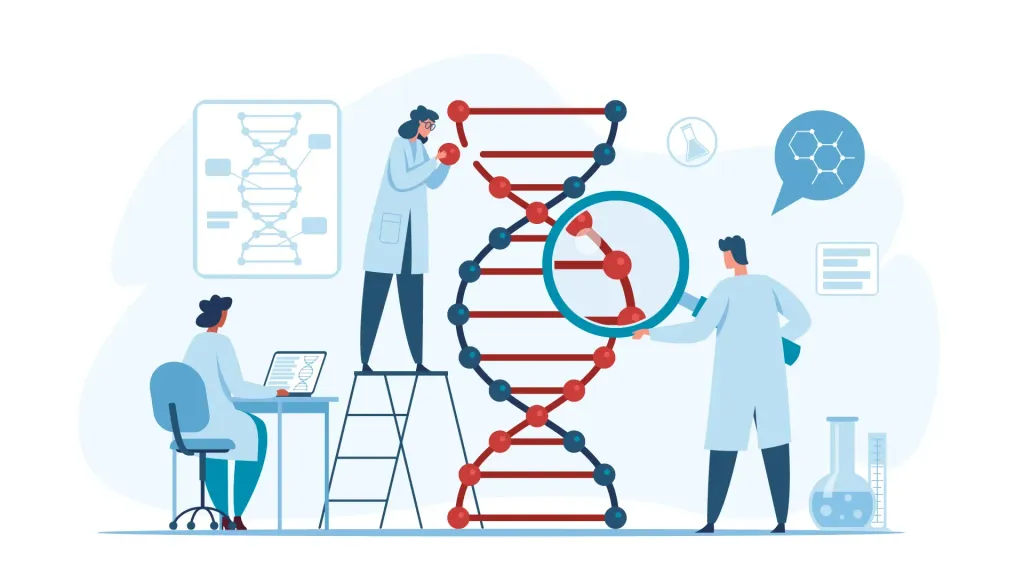


Researchers have identified a genetic mutation called U2AF1 S34 found in some blood cancers. A genetic mutation is a random change that happens in the cell’s DNA. These changes alter how the cells work.
When cells harbor a U2AF1 S34 mutation, they rely on other pathways to repair cellular damage. Researchers hope that the mutation or the cell pathways could be a target for future cancer treatments. This discovery may help explain why some patients respond differently to specific targeted therapies—and could open the door to new treatment strategies.
The U2AF1 mutation in bone marrow cancers
Myeloid malignancies are blood cancers that start in the bone marrow. They include conditions like myelodysplastic syndromes (MDS), chronic myelomonocytic leukemia (CMML), and secondary acute myeloid leukemia (AML).
In more than half of patients with these diseases, the cancer cells carry changes to the genes that control how RNA is processed. One of these genes is U2AF1, which helps cells properly “edit” genetic instructions before making proteins.
Certain mutations in U2AF1—especially those called S34 mutations—can change how cells repair damaged DNA.
What did researchers discover about U2AF1 S34 mutations?
Our cells constantly repair damage to their DNA. When one pathway doesn’t work well, cancer cells may become more dependent on the other healthy cells to survive.
This study found that cells with U2AF1 S34 mutations have a defect in a cell repair pathway. These cancer cells lose one of their key DNA repair tools.
Learning from weaknesses in cell processes can help develop new therapies
When cancer cells lose one repair pathway, they often rely more heavily on others. This creates a concept called synthetic lethality.
Synthetic lethality means that:
- A cancer cell can survive with one repair defect.
- It can survive if a second repair pathway is blocked alone.
- But if both are impaired at the same time, the cancer cell cannot survive.
In this study, U2AF1 S34-mutated cells became highly dependent on other cellular pathways responsible for repairing defective cells.
When researchers disrupted these cellular repair pathways in laboratory models, the U2AF1 S34-mutated cells were eliminated. This suggests that targeting these backup repair systems could be an effective strategy in patients whose cancers carry U2AF1 S34 mutations.
Some existing and investigational treatments already affect these cellular repair pathways, including CDK12 inhibitors and RBM39 degraders.
Patients with MDS, CMML, or AML may have a growing interest in research like this
While this research was conducted in laboratory models and cell lines, it provides a strong biological rationale for developing targeted therapies. Clinical trials will be needed to confirm whether these approaches improve outcomes for patients.
This type of research moves us closer to more personalized treatment—where therapy is selected based on the specific genetic features of your cancer.
Read more blood cancer news and stay updated with conferences, treatment advances and clinical trials.
Source: An actionable DNA repair defect in myeloid malignancies with U2AF1 S34 mutations
Researchers have identified a genetic mutation called U2AF1 S34 found in some blood cancers. A genetic mutation is a random change that happens in the cell’s DNA. These changes alter how the cells work.
When cells harbor a U2AF1 S34 mutation, they rely on other pathways to repair cellular damage. Researchers hope that the mutation or the cell pathways could be a target for future cancer treatments. This discovery may help explain why some patients respond differently to specific targeted therapies—and could open the door to new treatment strategies.
The U2AF1 mutation in bone marrow cancers
Myeloid malignancies are blood cancers that start in the bone marrow. They include conditions like myelodysplastic syndromes (MDS), chronic myelomonocytic leukemia (CMML), and secondary acute myeloid leukemia (AML).
In more than half of patients with these diseases, the cancer cells carry changes to the genes that control how RNA is processed. One of these genes is U2AF1, which helps cells properly “edit” genetic instructions before making proteins.
Certain mutations in U2AF1—especially those called S34 mutations—can change how cells repair damaged DNA.
What did researchers discover about U2AF1 S34 mutations?
Our cells constantly repair damage to their DNA. When one pathway doesn’t work well, cancer cells may become more dependent on the other healthy cells to survive.
This study found that cells with U2AF1 S34 mutations have a defect in a cell repair pathway. These cancer cells lose one of their key DNA repair tools.
Learning from weaknesses in cell processes can help develop new therapies
When cancer cells lose one repair pathway, they often rely more heavily on others. This creates a concept called synthetic lethality.
Synthetic lethality means that:
- A cancer cell can survive with one repair defect.
- It can survive if a second repair pathway is blocked alone.
- But if both are impaired at the same time, the cancer cell cannot survive.
In this study, U2AF1 S34-mutated cells became highly dependent on other cellular pathways responsible for repairing defective cells.
When researchers disrupted these cellular repair pathways in laboratory models, the U2AF1 S34-mutated cells were eliminated. This suggests that targeting these backup repair systems could be an effective strategy in patients whose cancers carry U2AF1 S34 mutations.
Some existing and investigational treatments already affect these cellular repair pathways, including CDK12 inhibitors and RBM39 degraders.
Patients with MDS, CMML, or AML may have a growing interest in research like this
While this research was conducted in laboratory models and cell lines, it provides a strong biological rationale for developing targeted therapies. Clinical trials will be needed to confirm whether these approaches improve outcomes for patients.
This type of research moves us closer to more personalized treatment—where therapy is selected based on the specific genetic features of your cancer.
Read more blood cancer news and stay updated with conferences, treatment advances and clinical trials.
Source: An actionable DNA repair defect in myeloid malignancies with U2AF1 S34 mutations

about the author
Jimena Vicencio
Jimena is an International Medical Graduate and a member of the HealthTree Writing team. Currently pursuing a bachelor's degree in journalism, she combines her medical background with a storyteller’s heart to make complex healthcare topics accessible to everyone. Driven by a deep belief that understanding health is a universal right, she is committed to translating scientific and medical knowledge into clear, compassionate language that empowers individuals to take control of their well-being.
More on Conferences






Get the Latest Myelodysplastic Syndromes Updates, Delivered to You.
By subscribing to the HealthTree newsletter, you'll receive the latest research, treatment updates, and expert insights to help you navigate your health.
Together we care.
Together we cure.