![[logo] HealthTree Foundation](https://static.healthtree.org/icons/icon_spinner.svg)
![[logo] HealthTree Foundation](https://static.healthtree.org/logo_icon_only.svg)
Understanding Lung Cancer

What is Lung Cancer?
Last updated and reviewed on May 15, 2026.
Lung cancer is a disease where cells in your lungs start growing out of control. Normally, your body makes new cells only when it needs them. But with cancer, something goes wrong, and cells keep multiplying even when they shouldn't. Over time, these extra cells form a mass called a tumor.
|
THE BASICS: There are two main types of lung cancer: non-small cell and small cell. Non-small cell is the most common and usually grows a bit slower. Small-cell lung cancer is less common but tends to grow and spread more quickly. Knowing which type someone has helps doctors pick the best way to treat it. Learning more about lung cancer can help you ask the right questions, make good decisions, and feel more in control. This guide is here to help you understand what lung cancer is, what to expect, and how to take care of yourself or someone you love |
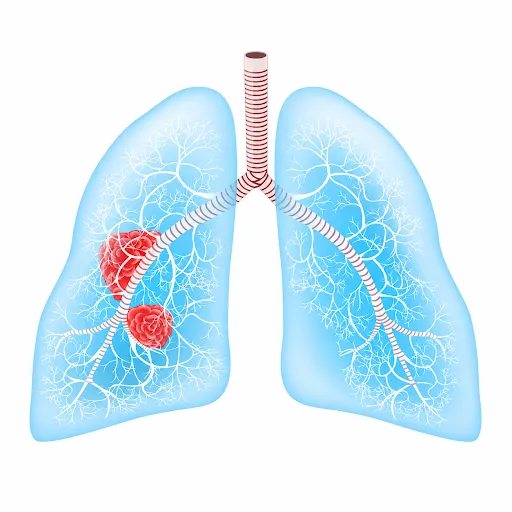
Your lungs are two spongy organs in your chest that act like your body’s air filters. Every time you breathe in, they take in oxygen, and when you breathe out, they get rid of a waste gas called carbon dioxide. Inside your lungs is a massive network of branching tubes called bronchioles, which end in tiny air sacs called alveoli. These air sacs transfer oxygen directly into your blood.
How does lung cancer start
Your lungs are lined with delicate cells that help you breathe. To understand how lung cancer starts, it helps to think of your cells as tiny workers with a very specific function. Every day, they are exposed to the air you take in. If you breathe in harmful substances called carcinogens, they can damage those delicate cells.
Inside every single cell in your body is DNA. You can think of DNA as an instruction manual or a recipe book. It tells the cell exactly when to grow, when to divide to make new cells, and when it's time for them to die.
When harmful chemicals enter the lungs, they tear pages out of that instruction manual. When the cells miss those instructions, they grow or divide faster without ever stopping.
These cells usually have a safety feature that tells them to destroy themselves if they are damaged. The chemicals can break this safety feature, which allows the damaged cell to survive and keep multiplying.
Once a cell has a broken instruction manual, it stops doing its normal job (which is helping you breathe) and focuses on making copies of itself too fast. The damaged cells divide into two, then four, then eight. Soon, there is a crowded clump of abnormal cells. These cells lose their normal shape. They no longer look or act like healthy lung cells. Eventually, this clump of cells grows large enough to form a lump, which is called a tumor. The tumor starts stealing nearby blood vessels to steal oxygen and nutrients so it can grow even bigger.
Where Does It Start?
Lung cancer can start in different parts of the lung depending on which cells were damaged first.
-
The main airways (the bronchi): This is common in people who smoke, as these tubes are the first to be hit by the heavy smoke.
-
Deep in the air sacs (the alveoli): This is common in "adenocarcinoma," a type of lung cancer that often starts in the outer edges of the lungs.
|
The Big Picture: Lung cancer doesn't happen overnight. It is a slow process that usually takes years of repeated damage to a cell's DNA before a tumor actually forms. |
How does lung cancer affect the body?
Once lung cancer starts, it doesn't just stay in one spot. As the tumor grows and potentially spreads, it acts like a domino effect, changing how different parts of your body work.
The Chest and Breathing
Because the tumor is physically taking up space inside your lungs, your respiratory system is the first to feel the impact:
-
The Constant Cough: The tumor irritates the sensitive lining of your airways, making your brain think there is something stuck in there that you need to cough out. Sometimes, the tumor bleeds a little, which can cause you to cough up rust-colored spit or blood.
-
Shortness of Breath: As the tumor grows, it can physically block your bronchial tubes (the "pipes" you breathe through). It can also cause fluid to build up in the space around your lungs (called a pleural effusion). This fluid squeezes your lungs, making them feel like you can't take a deep breath.
Pain: If the tumor grows outward and presses against the chest wall, the ribs, or nearby nerves, it can cause a sharp pain in your chest, shoulder, or back—especially when you laugh, cough, or breathe deeply.
Infections: Because the tumor can block airflow, mucus gets trapped behind it. This trapped mucus is a perfect breeding ground for bacteria, leading to repeated bouts of pneumonia or bronchitis that just won't go away.
Your Energy and Appetite
Cancer takes a massive amount of energy to grow. To feed itself, it literally takes over your body's metabolism, causing changes you can feel all over:
-
Extreme Fatigue: You might feel completely exhausted, even after a full night's sleep. This happens because your body is using all its energy trying to fight the cancer, and because your lungs are delivering less oxygen to your bloodstream.
-
Unexplained Weight Loss: Many patients lose their appetite and lose weight without even trying. The cancer cells release chemicals into your blood that trick your brain into thinking you aren't hungry, while simultaneously burning up your body's stored fat and muscle.
The Hormone System
Sometimes, lung cancer starts releasing hormones into your bloodstream that mimic your body's natural hormones, throwing your systems out of balance:
-
High Calcium (Hypercalcemia): The tumor might release a chemical that pulls calcium out of your bones and into your blood. This can make you extremely thirsty, cause frequent urination, upset your stomach, or make you feel confused.
-
Water Retention: Some tumors make a hormone that tells your kidneys to hold onto water, which dilutes the salt in your blood and can make you feel weak, crampy, or dizzy.
Other Parts of the Body
If lung cancer cells break away from the main tumor, they travel through your blood or lymph system to other organs (a process called metastasis). Where they land determines what happens next:
-
The Bones: If it spreads to the bones (like the spine or hips), it can cause a deep, aching pain that often feels worse at night.
-
The Brain: If cancer cells reach the brain, they can cause headaches, blurry vision, dizziness, balance issues, or even seizures.
-
The Liver: If it spreads to the liver, it can affect how your body filters waste, sometimes causing jaundice (which makes your skin and the whites of your eyes look yellow).
Learn more about the signs and symptoms of Lung Cancer.
Types of lung cancer
There are two main types of lung cancer, and doctors separate them based on how the cancer cells look under a microscope.
Non-Small Cell Lung Cancer (NSCLC)
This is by far the most common type of lung cancer, making up about 80% to 85% of all cases. It generally grows and spreads to other parts of the body more slowly than small-cell lung cancer.
There are three main subtypes of NSCLC:
-
Adenocarcinoma: This is the most common form of lung cancer overall. It starts in the cells that normally produce mucus and is usually found in the outer, deeper parts of the lungs. While it is common in people who smoke, it is also the most common type of lung cancer found in non-smokers and younger adults.
-
Squamous Cell Carcinoma: This type makes up about 25% to 30% of lung cancers. It starts in the flat, thin cells (squamous cells) that line the inside of the airways. It is very strongly linked to a history of smoking and is usually found in the center of the lungs near the main breathing tubes (bronchi).
-
Large Cell Carcinoma: This is a less common subtype (about 10% of cases). It can grow in any part of the lung and is known for growing and spreading quite quickly, which can make it more challenging to treat.
Small Cell Lung Cancer (SCLC)
Small-cell lung cancer accounts for about 10% to 15% of all lung cancers. It is a highly aggressive and fast-growing cancer.
-
Key Characteristics: Under a microscope, these cancer cells look small and round (sometimes called "oat cell" cancer because they resemble oat grains).
-
Cause: This type is almost exclusively found in people with a heavy history of cigarette smoking.
-
Behavior: SCLC grows very rapidly and is highly likely to spread (metastasize) to other organs, like the brain, liver, or bones, at an early stage. Because it grows so fast, it often responds very well to chemotherapy and radiation therapy initially, though it has a high chance of returning.
There is also a third, much less common category called Lung Neuroendocrine (Carcinoid) Tumors. Carcinoid tumors are a rare type of lung cancer, accounting for fewer than 5% of all lung tumors.
They start in special cells called neuroendocrine cells, which receive messages from the nervous system and release hormones. Most lung carcinoid tumors grow very slowly and are often treated successfully with surgery alone.
Cancers That Spread to the Lungs (Metastasis)
Sometimes, cancer that starts in another part of the body, such as the breast, colon, or prostate, spreads to the lungs. Even though the tumor is physically inside the lung, it is not considered lung cancer. For example, breast cancer that has traveled to the lungs is still treated as metastatic breast cancer, using breast cancer medications.
What are the related disorders to lung cancer?
Conditions That Often Go Hand-in-Hand with Lung Cancer
Because smoking is a major cause of lung cancer, people who get lung cancer often have other lung and heart diseases caused by tobacco smoke.
-
COPD (Chronic Obstructive Pulmonary Disease): This is a long-term lung disease that makes it hard to breathe. It includes chronic bronchitis (a constant cough with mucus) and emphysema (damage to the tiny air sacs in your lungs). Having COPD actually increases your risk of developing lung cancer, and many patients have both.
Pulmonary Fibrosis: This is a condition where the lung tissue becomes scarred and stiff over time. Like COPD, having lung scars makes it easier for cancer cells to form.
Heart Disease: The same smoking and lifestyle factors that damage the lungs also damage the blood vessels and heart, leading to coronary artery disease or heart attacks.
Disorders Caused by Lung Cancer
As lung cancer grows, it can cause other medical issues in the chest or throughout the body.
-
Pleurisy and Pleural Effusion: The lungs are wrapped in a thin membrane called the pleura. Lung cancer can irritate this lining (pleurisy) or cause fluid to build up in the space around the lungs (pleural effusion). This fluid squeezes the lung and makes it very hard to take a deep breath.
-
Superior Vena Cava (SVC) Syndrome: The superior vena cava is a large vein that carries blood from your head and arms back to your heart. If a tumor in the right lung grows large enough, it can press on this vein. This causes swelling in the face, neck, and arms, and can make breathing difficult.
-
Paraneoplastic Syndromes: Sometimes, lung cancer cells release hormones or chemicals into the blood. These chemicals can cause strange symptoms in other parts of the body that seem completely unrelated to the lungs. For example, they can cause high calcium levels in the blood, muscle weakness, or nerve problems. This is most common with Small Cell Lung Cancer.
Non-Cancerous Disorders That Can Look Like Lung Cancer
Sometimes, a person is suspected of having lung cancer because of a spot on their X-ray, but further tests show it is a different, non-cancerous disorder.
-
Lung Abscess or Severe Pneumonia: A deep lung infection can cause a collection of pus or a shadow on a scan that looks identical to a tumor.
-
Tuberculosis (TB) or Fungal Infections: These are chronic infections that can cause hard lumps (called granulomas) to form in the lungs. On a CT scan, these lumps can easily be mistaken for lung cancer.
-
This is an inflammatory disease that causes tiny clumps of immune cells to grow in the lungs and lymph nodes, which can look very similar to spread cancer on imaging.
Genetic and inherited risk factors
A small percentage of lung cancers are linked to inherited mutations (called germline mutations). These are gene changes passed down from parent to child, meaning they are present in every cell of your body from birth.
Inherited Genetic Risk Factors
While having an inherited gene change does not guarantee you will get lung cancer, it does make your body more vulnerable to the disease. Scientists have identified several specific genes linked to inherited lung cancer risk:
-
EGFR (T790M Mutation): This is one of the most well-known inherited risks. A specific hereditary version of the EGFR gene (called T790M) can be passed down in families. It is a major cause of hereditary lung cancer, especially in people who have never smoked.
BRCA1 and BRCA2: While these genes are famous for increasing the risk of breast and ovarian cancers, research has shown that inherited BRCA mutations also slightly increase the risk of developing lung cancer.
TP53 (Li-Fraumeni Syndrome): An inherited mutation in the TP53 gene—which normally acts as a "helper" to stop cancer cells from growing—causes a rare condition called Li-Fraumeni syndrome. People with this syndrome have a much higher risk of developing several cancers, including lung cancer, at a young age.
ATM and CHEK2: These genes are responsible for repairing damaged DNA in your body. If you inherit a broken version of these genes, your body cannot fix damaged lung cells as easily, raising your cancer risk 1.
Genetic Changes Acquired During Your Lifetime
Most genetic mutations found in lung cancer are not inherited. Instead, they happen over time. If you are diagnosed with lung cancer, your doctor will likely test your tumor for these acquired genetic changes to help choose the best medicine.
The most common acquired genetic mutations include 2:
-
TP53: 40% to 51% - responsible for the production of the tumor protein p53. This protein monitors cells for DNA damage and acts as a tumor suppressor. This means it keeps damaged cells from growing out of control or growing too fast.
-
EGFR: 15% - Controls how cells grow and divide. When it mutates, it stays "stuck" in the on position, causing cells to multiply out of control.
-
KRAS: 30% - A very common mutation, particularly in people who have a history of smoking. It acts like a broken gas pedal, constantly telling cells to divide.
ALK and ROS1: 5% - These are "fusion" mutations where two different genes accidentally fuse together. They are most commonly found in younger patients and non-smokers.
Shared Family Risk: Genes + Environment
Sometimes, lung cancer seems to run in families, but it isn't caused by a single broken gene. Instead, it is a mix of minor shared genetic traits and a shared environment.
For example, family members often share the same habits (like smoking) or live in the same house (meaning they breathe in the same secondhand smoke or radon gas). Additionally, some families inherit genes that make their bodies process and break down tobacco chemicals much more slowly, making smoking even more dangerous for them than for the average person.
Related Cancers
When we talk about related cancers to lung cancer, we are usually looking at how different cancers are connected. Cancers can be related in three main ways:
-
They are caused by the same environmental triggers (like smoking).
-
They are linked by the same inherited gene mutations running through a family.
-
They are physically located in the same area of the chest and can behave similarly.
Cancers Linked by Tobacco Use
Because cigarette smoke travels through the mouth, throat, and into the body, the toxins in it damage cells in many different organs. If someone is diagnosed with lung cancer, they have a higher risk of developing other "tobacco-related" cancers, which include:
-
Head and Neck Cancers: This includes cancers of the mouth, throat (pharynx), voice box (larynx), and esophagus (the food pipe).
-
Bladder and Kidney Cancers: When you inhale tobacco smoke, the harmful chemicals enter your bloodstream. Your kidneys filter these chemicals out of your blood, and they sit in your bladder before you urinate. This exposure makes bladder and kidney cancers highly related to lung cancer through smoking.
-
Pancreatic, Esophageal, and Stomach Cancers: These digestive organs are also highly vulnerable to the cancer-causing chemicals found in tobacco.
Cancers Linked by Shared Inherited Genes
Sometimes, a person inherits a mutated (broken) gene from a parent that increases their risk for several different types of cancer. If you have one of these rare genetic syndromes, lung cancer can be closely related to:
-
Breast, Ovarian, and Pancreatic Cancers: Families carrying inherited mutations in the BRCA1 or BRCA2 genes are famous for having high rates of breast and ovarian cancer. However, researchers have found that these same gene mutations also slightly raise the risk of developing lung cancer.
-
Sarcomas, Brain Tumors, and Leukemia: A very rare genetic condition called Li-Fraumeni Syndrome (caused by an inherited mutation in the TP53 gene) prevents the body from stopping tumor growth. People with this syndrome are at a high risk for developing childhood cancers, sarcomas (bone and muscle cancers), brain tumors, leukemia, and early-onset lung cancer.
Cancers of the Chest and Respiratory System
There are other cancers that form in the chest that are often confused with lung cancer because they cause similar breathing issues, though they start in different tissues:
-
Mesothelioma: This is a rare cancer that starts in the pleura—the thin, protective lining that wraps around the outside of the lungs and the inside of the chest cavity. It is almost always caused by breathing in asbestos fibers. While it is physically right next to the lungs, it is a different disease from lung cancer.
-
Thymic Cancer: This is a rare cancer of the thymus, a small gland located in the front of the chest, right between the lungs.
Cancers that start in other parts of the body can commonly spread to the lungs
A process called metastasis. Breast cancer, colorectal cancer, kidney cancer, and melanoma (skin cancer) are among the cancers that most frequently send metastatic cells to the lungs.
When another cancer spreads to the lung, it does not become lung cancer; it is still the original cancer in a new location. However, the presence of metastatic tumors in the lungs does need to be treated and managed, often alongside the primary cancer. Understanding the relationship between lung cancer and these other cancers can help you ask better questions and take a more complete approach to their long-term health monitoring.
|
What’s Next: The next page in this guide describes the Signs and Symptoms of Lung Cancer. If you would like to read another page in this guide, return to the Lung Cancer 101 Guides page and choose another topic. |
What is Lung Cancer?
Last updated and reviewed on May 15, 2026.
Lung cancer is a disease where cells in your lungs start growing out of control. Normally, your body makes new cells only when it needs them. But with cancer, something goes wrong, and cells keep multiplying even when they shouldn't. Over time, these extra cells form a mass called a tumor.
|
THE BASICS: There are two main types of lung cancer: non-small cell and small cell. Non-small cell is the most common and usually grows a bit slower. Small-cell lung cancer is less common but tends to grow and spread more quickly. Knowing which type someone has helps doctors pick the best way to treat it. Learning more about lung cancer can help you ask the right questions, make good decisions, and feel more in control. This guide is here to help you understand what lung cancer is, what to expect, and how to take care of yourself or someone you love |
Your lungs are two spongy organs in your chest that act like your body’s air filters. Every time you breathe in, they take in oxygen, and when you breathe out, they get rid of a waste gas called carbon dioxide. Inside your lungs is a massive network of branching tubes called bronchioles, which end in tiny air sacs called alveoli. These air sacs transfer oxygen directly into your blood.
How does lung cancer start
Your lungs are lined with delicate cells that help you breathe. To understand how lung cancer starts, it helps to think of your cells as tiny workers with a very specific function. Every day, they are exposed to the air you take in. If you breathe in harmful substances called carcinogens, they can damage those delicate cells.
Inside every single cell in your body is DNA. You can think of DNA as an instruction manual or a recipe book. It tells the cell exactly when to grow, when to divide to make new cells, and when it's time for them to die.
When harmful chemicals enter the lungs, they tear pages out of that instruction manual. When the cells miss those instructions, they grow or divide faster without ever stopping.
These cells usually have a safety feature that tells them to destroy themselves if they are damaged. The chemicals can break this safety feature, which allows the damaged cell to survive and keep multiplying.
Once a cell has a broken instruction manual, it stops doing its normal job (which is helping you breathe) and focuses on making copies of itself too fast. The damaged cells divide into two, then four, then eight. Soon, there is a crowded clump of abnormal cells. These cells lose their normal shape. They no longer look or act like healthy lung cells. Eventually, this clump of cells grows large enough to form a lump, which is called a tumor. The tumor starts stealing nearby blood vessels to steal oxygen and nutrients so it can grow even bigger.
Where Does It Start?
Lung cancer can start in different parts of the lung depending on which cells were damaged first.
-
The main airways (the bronchi): This is common in people who smoke, as these tubes are the first to be hit by the heavy smoke.
-
Deep in the air sacs (the alveoli): This is common in "adenocarcinoma," a type of lung cancer that often starts in the outer edges of the lungs.
|
The Big Picture: Lung cancer doesn't happen overnight. It is a slow process that usually takes years of repeated damage to a cell's DNA before a tumor actually forms. |
How does lung cancer affect the body?
Once lung cancer starts, it doesn't just stay in one spot. As the tumor grows and potentially spreads, it acts like a domino effect, changing how different parts of your body work.
The Chest and Breathing
Because the tumor is physically taking up space inside your lungs, your respiratory system is the first to feel the impact:
-
The Constant Cough: The tumor irritates the sensitive lining of your airways, making your brain think there is something stuck in there that you need to cough out. Sometimes, the tumor bleeds a little, which can cause you to cough up rust-colored spit or blood.
-
Shortness of Breath: As the tumor grows, it can physically block your bronchial tubes (the "pipes" you breathe through). It can also cause fluid to build up in the space around your lungs (called a pleural effusion). This fluid squeezes your lungs, making them feel like you can't take a deep breath.
-
Pain: If the tumor grows outward and presses against the chest wall, the ribs, or nearby nerves, it can cause a sharp pain in your chest, shoulder, or back—especially when you laugh, cough, or breathe deeply.
-
Infections: Because the tumor can block airflow, mucus gets trapped behind it. This trapped mucus is a perfect breeding ground for bacteria, leading to repeated bouts of pneumonia or bronchitis that just won't go away.
Your Energy and Appetite
Cancer takes a massive amount of energy to grow. To feed itself, it literally takes over your body's metabolism, causing changes you can feel all over:
-
Extreme Fatigue: You might feel completely exhausted, even after a full night's sleep. This happens because your body is using all its energy trying to fight the cancer, and because your lungs are delivering less oxygen to your bloodstream.
-
Unexplained Weight Loss: Many patients lose their appetite and lose weight without even trying. The cancer cells release chemicals into your blood that trick your brain into thinking you aren't hungry, while simultaneously burning up your body's stored fat and muscle.
The Hormone System
Sometimes, lung cancer starts releasing hormones into your bloodstream that mimic your body's natural hormones, throwing your systems out of balance:
-
High Calcium (Hypercalcemia): The tumor might release a chemical that pulls calcium out of your bones and into your blood. This can make you extremely thirsty, cause frequent urination, upset your stomach, or make you feel confused.
-
Water Retention: Some tumors make a hormone that tells your kidneys to hold onto water, which dilutes the salt in your blood and can make you feel weak, crampy, or dizzy.
Other Parts of the Body
If lung cancer cells break away from the main tumor, they travel through your blood or lymph system to other organs (a process called metastasis). Where they land determines what happens next:
-
The Bones: If it spreads to the bones (like the spine or hips), it can cause a deep, aching pain that often feels worse at night.
-
The Brain: If cancer cells reach the brain, they can cause headaches, blurry vision, dizziness, balance issues, or even seizures.
-
The Liver: If it spreads to the liver, it can affect how your body filters waste, sometimes causing jaundice (which makes your skin and the whites of your eyes look yellow).
Learn more about the signs and symptoms of Lung Cancer.
Types of lung cancer
There are two main types of lung cancer, and doctors separate them based on how the cancer cells look under a microscope.
Non-Small Cell Lung Cancer (NSCLC)
This is by far the most common type of lung cancer, making up about 80% to 85% of all cases. It generally grows and spreads to other parts of the body more slowly than small-cell lung cancer.
There are three main subtypes of NSCLC:
-
Adenocarcinoma: This is the most common form of lung cancer overall. It starts in the cells that normally produce mucus and is usually found in the outer, deeper parts of the lungs. While it is common in people who smoke, it is also the most common type of lung cancer found in non-smokers and younger adults.
-
Squamous Cell Carcinoma: This type makes up about 25% to 30% of lung cancers. It starts in the flat, thin cells (squamous cells) that line the inside of the airways. It is very strongly linked to a history of smoking and is usually found in the center of the lungs near the main breathing tubes (bronchi).
-
Large Cell Carcinoma: This is a less common subtype (about 10% of cases). It can grow in any part of the lung and is known for growing and spreading quite quickly, which can make it more challenging to treat.
Small Cell Lung Cancer (SCLC)
Small-cell lung cancer accounts for about 10% to 15% of all lung cancers. It is a highly aggressive and fast-growing cancer.
-
Key Characteristics: Under a microscope, these cancer cells look small and round (sometimes called "oat cell" cancer because they resemble oat grains).
-
Cause: This type is almost exclusively found in people with a heavy history of cigarette smoking.
-
Behavior: SCLC grows very rapidly and is highly likely to spread (metastasize) to other organs, like the brain, liver, or bones, at an early stage. Because it grows so fast, it often responds very well to chemotherapy and radiation therapy initially, though it has a high chance of returning.
There is also a third, much less common category called Lung Neuroendocrine (Carcinoid) Tumors. Carcinoid tumors are a rare type of lung cancer, accounting for fewer than 5% of all lung tumors.
They start in special cells called neuroendocrine cells, which receive messages from the nervous system and release hormones. Most lung carcinoid tumors grow very slowly and are often treated successfully with surgery alone.
Cancers That Spread to the Lungs (Metastasis)
Sometimes, cancer that starts in another part of the body, such as the breast, colon, or prostate, spreads to the lungs. Even though the tumor is physically inside the lung, it is not considered lung cancer. For example, breast cancer that has traveled to the lungs is still treated as metastatic breast cancer, using breast cancer medications.
What are the related disorders to lung cancer?
Conditions That Often Go Hand-in-Hand with Lung Cancer
Because smoking is a major cause of lung cancer, people who get lung cancer often have other lung and heart diseases caused by tobacco smoke.
-
COPD (Chronic Obstructive Pulmonary Disease): This is a long-term lung disease that makes it hard to breathe. It includes chronic bronchitis (a constant cough with mucus) and emphysema (damage to the tiny air sacs in your lungs). Having COPD actually increases your risk of developing lung cancer, and many patients have both.
-
Pulmonary Fibrosis: This is a condition where the lung tissue becomes scarred and stiff over time. Like COPD, having lung scars makes it easier for cancer cells to form.
-
Heart Disease: The same smoking and lifestyle factors that damage the lungs also damage the blood vessels and heart, leading to coronary artery disease or heart attacks.
Disorders Caused by Lung Cancer
As lung cancer grows, it can cause other medical issues in the chest or throughout the body.
-
Pleurisy and Pleural Effusion: The lungs are wrapped in a thin membrane called the pleura. Lung cancer can irritate this lining (pleurisy) or cause fluid to build up in the space around the lungs (pleural effusion). This fluid squeezes the lung and makes it very hard to take a deep breath.
-
Superior Vena Cava (SVC) Syndrome: The superior vena cava is a large vein that carries blood from your head and arms back to your heart. If a tumor in the right lung grows large enough, it can press on this vein. This causes swelling in the face, neck, and arms, and can make breathing difficult.
-
Paraneoplastic Syndromes: Sometimes, lung cancer cells release hormones or chemicals into the blood. These chemicals can cause strange symptoms in other parts of the body that seem completely unrelated to the lungs. For example, they can cause high calcium levels in the blood, muscle weakness, or nerve problems. This is most common with Small Cell Lung Cancer.
Non-Cancerous Disorders That Can Look Like Lung Cancer
Sometimes, a person is suspected of having lung cancer because of a spot on their X-ray, but further tests show it is a different, non-cancerous disorder.
-
Lung Abscess or Severe Pneumonia: A deep lung infection can cause a collection of pus or a shadow on a scan that looks identical to a tumor.
-
Tuberculosis (TB) or Fungal Infections: These are chronic infections that can cause hard lumps (called granulomas) to form in the lungs. On a CT scan, these lumps can easily be mistaken for lung cancer.
-
This is an inflammatory disease that causes tiny clumps of immune cells to grow in the lungs and lymph nodes, which can look very similar to spread cancer on imaging.
Genetic and inherited risk factors
A small percentage of lung cancers are linked to inherited mutations (called germline mutations). These are gene changes passed down from parent to child, meaning they are present in every cell of your body from birth.
Inherited Genetic Risk Factors
While having an inherited gene change does not guarantee you will get lung cancer, it does make your body more vulnerable to the disease. Scientists have identified several specific genes linked to inherited lung cancer risk:
-
EGFR (T790M Mutation): This is one of the most well-known inherited risks. A specific hereditary version of the EGFR gene (called T790M) can be passed down in families. It is a major cause of hereditary lung cancer, especially in people who have never smoked.
-
BRCA1 and BRCA2: While these genes are famous for increasing the risk of breast and ovarian cancers, research has shown that inherited BRCA mutations also slightly increase the risk of developing lung cancer.
-
TP53 (Li-Fraumeni Syndrome): An inherited mutation in the TP53 gene—which normally acts as a "helper" to stop cancer cells from growing—causes a rare condition called Li-Fraumeni syndrome. People with this syndrome have a much higher risk of developing several cancers, including lung cancer, at a young age.
-
ATM and CHEK2: These genes are responsible for repairing damaged DNA in your body. If you inherit a broken version of these genes, your body cannot fix damaged lung cells as easily, raising your cancer risk 1.
Genetic Changes Acquired During Your Lifetime
Most genetic mutations found in lung cancer are not inherited. Instead, they happen over time. If you are diagnosed with lung cancer, your doctor will likely test your tumor for these acquired genetic changes to help choose the best medicine.
The most common acquired genetic mutations include 2:
-
TP53: 40% to 51% - responsible for the production of the tumor protein p53. This protein monitors cells for DNA damage and acts as a tumor suppressor. This means it keeps damaged cells from growing out of control or growing too fast.
-
EGFR: 15% - Controls how cells grow and divide. When it mutates, it stays "stuck" in the on position, causing cells to multiply out of control.
-
KRAS: 30% - A very common mutation, particularly in people who have a history of smoking. It acts like a broken gas pedal, constantly telling cells to divide.
-
ALK and ROS1: 5% - These are "fusion" mutations where two different genes accidentally fuse together. They are most commonly found in younger patients and non-smokers.
Shared Family Risk: Genes + Environment
Sometimes, lung cancer seems to run in families, but it isn't caused by a single broken gene. Instead, it is a mix of minor shared genetic traits and a shared environment.
For example, family members often share the same habits (like smoking) or live in the same house (meaning they breathe in the same secondhand smoke or radon gas). Additionally, some families inherit genes that make their bodies process and break down tobacco chemicals much more slowly, making smoking even more dangerous for them than for the average person.
Related Cancers
When we talk about related cancers to lung cancer, we are usually looking at how different cancers are connected. Cancers can be related in three main ways:
-
They are caused by the same environmental triggers (like smoking).
-
They are linked by the same inherited gene mutations running through a family.
-
They are physically located in the same area of the chest and can behave similarly.
Cancers Linked by Tobacco Use
Because cigarette smoke travels through the mouth, throat, and into the body, the toxins in it damage cells in many different organs. If someone is diagnosed with lung cancer, they have a higher risk of developing other "tobacco-related" cancers, which include:
-
Head and Neck Cancers: This includes cancers of the mouth, throat (pharynx), voice box (larynx), and esophagus (the food pipe).
-
Bladder and Kidney Cancers: When you inhale tobacco smoke, the harmful chemicals enter your bloodstream. Your kidneys filter these chemicals out of your blood, and they sit in your bladder before you urinate. This exposure makes bladder and kidney cancers highly related to lung cancer through smoking.
-
Pancreatic, Esophageal, and Stomach Cancers: These digestive organs are also highly vulnerable to the cancer-causing chemicals found in tobacco.
Cancers Linked by Shared Inherited Genes
Sometimes, a person inherits a mutated (broken) gene from a parent that increases their risk for several different types of cancer. If you have one of these rare genetic syndromes, lung cancer can be closely related to:
-
Breast, Ovarian, and Pancreatic Cancers: Families carrying inherited mutations in the BRCA1 or BRCA2 genes are famous for having high rates of breast and ovarian cancer. However, researchers have found that these same gene mutations also slightly raise the risk of developing lung cancer.
-
Sarcomas, Brain Tumors, and Leukemia: A very rare genetic condition called Li-Fraumeni Syndrome (caused by an inherited mutation in the TP53 gene) prevents the body from stopping tumor growth. People with this syndrome are at a high risk for developing childhood cancers, sarcomas (bone and muscle cancers), brain tumors, leukemia, and early-onset lung cancer.
Cancers of the Chest and Respiratory System
There are other cancers that form in the chest that are often confused with lung cancer because they cause similar breathing issues, though they start in different tissues:
-
Mesothelioma: This is a rare cancer that starts in the pleura—the thin, protective lining that wraps around the outside of the lungs and the inside of the chest cavity. It is almost always caused by breathing in asbestos fibers. While it is physically right next to the lungs, it is a different disease from lung cancer.
-
Thymic Cancer: This is a rare cancer of the thymus, a small gland located in the front of the chest, right between the lungs.
Cancers that start in other parts of the body can commonly spread to the lungs
A process called metastasis. Breast cancer, colorectal cancer, kidney cancer, and melanoma (skin cancer) are among the cancers that most frequently send metastatic cells to the lungs.
When another cancer spreads to the lung, it does not become lung cancer; it is still the original cancer in a new location. However, the presence of metastatic tumors in the lungs does need to be treated and managed, often alongside the primary cancer. Understanding the relationship between lung cancer and these other cancers can help you ask better questions and take a more complete approach to their long-term health monitoring.
|
What’s Next: The next page in this guide describes the Signs and Symptoms of Lung Cancer. If you would like to read another page in this guide, return to the Lung Cancer 101 Guides page and choose another topic. |

Get the Latest Lung Cancer Updates, Delivered to You.
By subscribing to the HealthTree newsletter, you'll receive the latest research, treatment updates, and expert insights to help you navigate your health.
Together we care.
Together we cure.