![[logo] HealthTree Foundation](https://static.healthtree.org/icons/icon_spinner.svg)
![[logo] HealthTree Foundation](https://static.healthtree.org/logo_icon_only.svg)
What are Menin Inhibitors for the Treatment of AML?



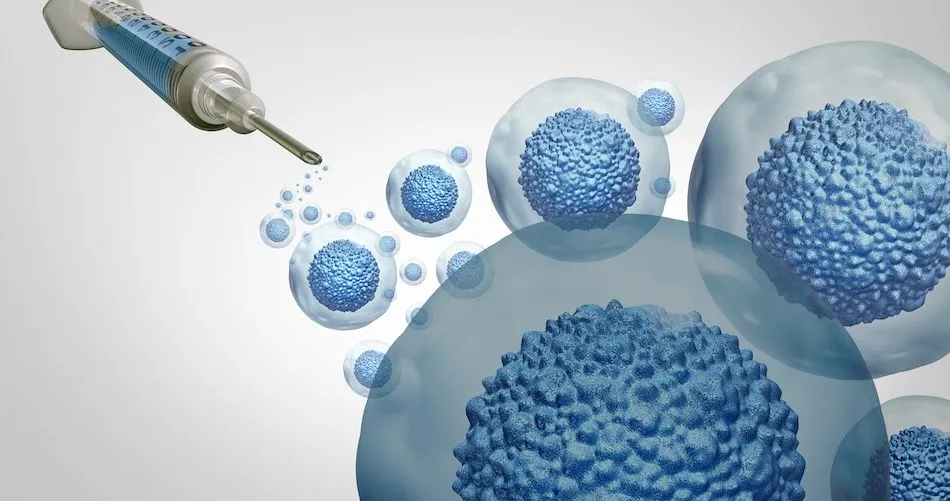
Menin inhibitors are a new type of targeted therapy used to treat acute myeloid leukemia (AML). Recently, this class of medication has been approved by the U.S. Food and Drug Administration (FDA) for certain people with AML. Currently approved menin inhibitors include:
- Revumenib (Revuforj, Syndax) is approved for relapsed/refractory AML with an NPM1 mutation or a KMT2A translocation.
- Ziftomenib (Komzifti, Kura) for relapsed/refractory AML with an NPM1 mutation.
Two new menin inhibitors, bleximenib and enzomenib, are actively recruiting for clinical trials.
What are menin inhibitors, and how do they treat AML?
AML is a rare, aggressive form of blood cancer. In AML, immature cells called blasts multiply quickly and prevent healthy cells from functioning properly. Some acute leukemias are driven by certain cell (or protein) changes such as KMT2A rearrangement and NMP1 mutations.
Learn more about what menin inhibitors are, how they treat AML, and what to know before starting this treatment.
What is KMT2A rearrangement?
KMT2A is a gene that helps regulate gene expression. Research has shown that about 10% of acute leukemia cases have change to KMT2A called a KMT2A rearrangement or KMT2A translocation. It is associated with high rates of relapse in AML.
What are NPM1 mutations?
NPM1 is a gene that supports the development of a protein responsible for DNA repair and regulating cell function. Changes in the NPM1 gene lead to an uncontrolled growth of white blood cells. NPM1 Mutations are present in about 30% to 40% of adult AML cases and 2% to -8% of childhood AML cases.
How do KMT2A rearrangements and NPM1 mutations affect menin?
Each of these proteins interacts with menin, a protein found in human cells that suppresses tumors. They can can cause menin not to function properly, leading to uncontrolled cell growth.
Menin inhibitors block the interaction between certain mutated proteins in AML. Blocking menin leads to a down regulation (a decrease in receptors) of cells associated with leukemia.
What are common side effects of menin inhibitors?
As with many targeted therapies, menin inhibitors can cause side effects that range from mild to more serious and can vary from person to person. Some of the side effects found in people using menin inhibitors are:
- Differentiation syndrome inflammation caused by an increased release of cytokines
- QTC Prolongation-a heart rhythm disorder
- GI Symptoms (nausea, vomiting, diarrhea)
- Blood count changes (cytopenia and neutropenia)
Be sure to let your doctor know about any new or worsening side effects that you experience so that your care team can adress them early.
In a recent HealthTree webinar Whats New in AML: Menin Inhibitors Explained, Dr. Eunice Wang, MD, shared that researchers are still investigating whether the drugs are effective for people without these specific mutations but that “current data suggests menin inhibitors are perhaps most effective in patients that have these biological identities”.
Menin inhibitors are a promising treatment for certain types of AML and ongoing research will help us better understand all of the potential benefits.
Follow the link below to watch Menin Inhibitors Explained.
When you subscribe to the HealthTree Newsletter, you will receive the latest research, treatment updates, and expert insights to help you navigate your health. Follow the link below to subscribe to the AML newsletter today.
Subscribe to the AML Newsletter
Sources:
- MD Anderson Menin Inhibitors
- Dana-Farber Menin Inhibitors
- Outcomes of acute myeloid leukemia with KMT2A (MLL) rearrangement
- NIH KMT2A Rearrangement
- NPM1: the ultimate target in AML
- Leukemia Research Foundation-NPM1-mutated AML
- American Cancer Society-Targeted Therapy
- HealthTree-Menin Inhibitors Explained
Menin inhibitors are a new type of targeted therapy used to treat acute myeloid leukemia (AML). Recently, this class of medication has been approved by the U.S. Food and Drug Administration (FDA) for certain people with AML. Currently approved menin inhibitors include:
- Revumenib (Revuforj, Syndax) is approved for relapsed/refractory AML with an NPM1 mutation or a KMT2A translocation.
- Ziftomenib (Komzifti, Kura) for relapsed/refractory AML with an NPM1 mutation.
Two new menin inhibitors, bleximenib and enzomenib, are actively recruiting for clinical trials.
What are menin inhibitors, and how do they treat AML?
AML is a rare, aggressive form of blood cancer. In AML, immature cells called blasts multiply quickly and prevent healthy cells from functioning properly. Some acute leukemias are driven by certain cell (or protein) changes such as KMT2A rearrangement and NMP1 mutations.
Learn more about what menin inhibitors are, how they treat AML, and what to know before starting this treatment.
What is KMT2A rearrangement?
KMT2A is a gene that helps regulate gene expression. Research has shown that about 10% of acute leukemia cases have change to KMT2A called a KMT2A rearrangement or KMT2A translocation. It is associated with high rates of relapse in AML.
What are NPM1 mutations?
NPM1 is a gene that supports the development of a protein responsible for DNA repair and regulating cell function. Changes in the NPM1 gene lead to an uncontrolled growth of white blood cells. NPM1 Mutations are present in about 30% to 40% of adult AML cases and 2% to -8% of childhood AML cases.
How do KMT2A rearrangements and NPM1 mutations affect menin?
Each of these proteins interacts with menin, a protein found in human cells that suppresses tumors. They can can cause menin not to function properly, leading to uncontrolled cell growth.
Menin inhibitors block the interaction between certain mutated proteins in AML. Blocking menin leads to a down regulation (a decrease in receptors) of cells associated with leukemia.
What are common side effects of menin inhibitors?
As with many targeted therapies, menin inhibitors can cause side effects that range from mild to more serious and can vary from person to person. Some of the side effects found in people using menin inhibitors are:
- Differentiation syndrome inflammation caused by an increased release of cytokines
- QTC Prolongation-a heart rhythm disorder
- GI Symptoms (nausea, vomiting, diarrhea)
- Blood count changes (cytopenia and neutropenia)
Be sure to let your doctor know about any new or worsening side effects that you experience so that your care team can adress them early.
In a recent HealthTree webinar Whats New in AML: Menin Inhibitors Explained, Dr. Eunice Wang, MD, shared that researchers are still investigating whether the drugs are effective for people without these specific mutations but that “current data suggests menin inhibitors are perhaps most effective in patients that have these biological identities”.
Menin inhibitors are a promising treatment for certain types of AML and ongoing research will help us better understand all of the potential benefits.
Follow the link below to watch Menin Inhibitors Explained.
When you subscribe to the HealthTree Newsletter, you will receive the latest research, treatment updates, and expert insights to help you navigate your health. Follow the link below to subscribe to the AML newsletter today.
Subscribe to the AML Newsletter
Sources:
- MD Anderson Menin Inhibitors
- Dana-Farber Menin Inhibitors
- Outcomes of acute myeloid leukemia with KMT2A (MLL) rearrangement
- NIH KMT2A Rearrangement
- NPM1: the ultimate target in AML
- Leukemia Research Foundation-NPM1-mutated AML
- American Cancer Society-Targeted Therapy
- HealthTree-Menin Inhibitors Explained

about the author
Bethany Howell
Bethany joined HealthTree in 2025. She is passionate about supporting patients and their care partners and improving access to quality care.
More on Core Education





Trending Articles








Get the Latest Blood Cancer Updates, Delivered to You.
By subscribing to the HealthTree newsletter, you'll receive the latest research, treatment updates, and expert insights to help you navigate your health.
Together we care.
Together we cure.