![[logo] HealthTree Foundation](https://static.healthtree.org/icons/icon_spinner.svg)
![[logo] HealthTree Foundation](https://static.healthtree.org/logo_icon_only.svg)
Patient-Powered HealthTree Research at ASCO: Using AI to Guide Myeloma Treatment Recommendations



An artificial intelligence (AI) model trained to find specific biomarkers could help guide treatment decisions for people newly diagnosed with multiple myeloma.
As multiple myeloma treatment options expand, knowing which treatments are best for which patients is a challenge. These treatments often have significant side effects and impacts on quality of life, and most patients will need multiple treatments over time.
By identifying biomarkers that can predict treatment outcomes, doctors can make better treatment recommendations. This is called precision medicine.
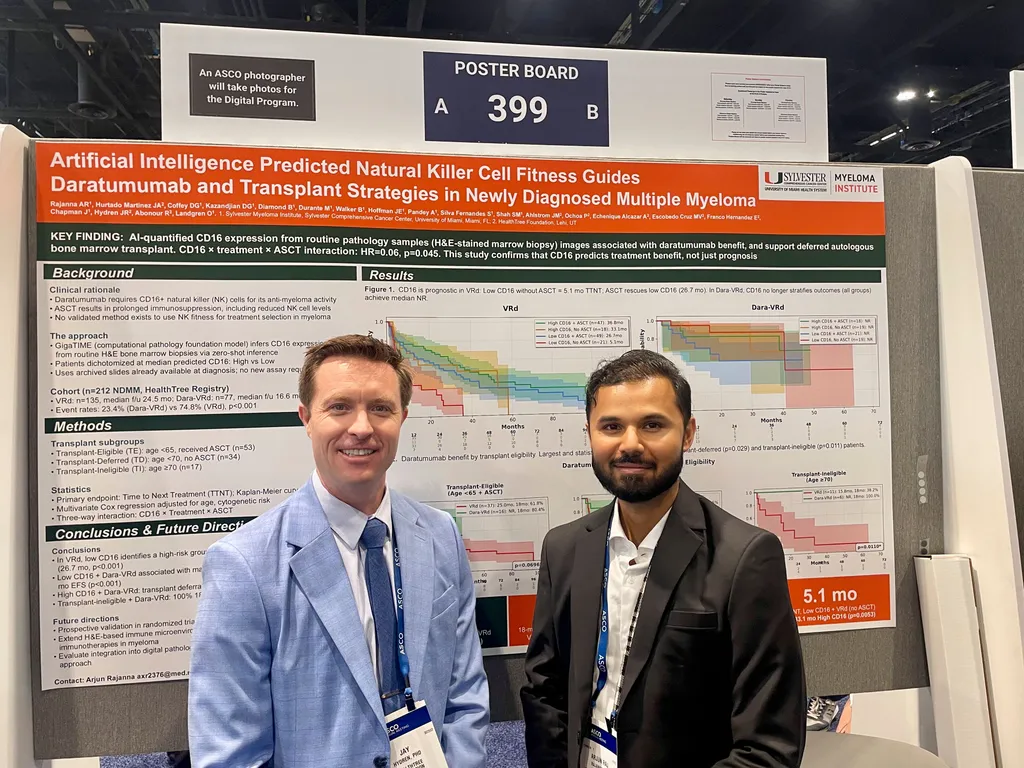
Researchers at the University of Miami Sylvester Comprehensive Cancer Center and HealthTree Foundation are trying to find new ways to personalize treatment strategies for people with newly diagnosed multiple myeloma. In a recent research study presented at the American Society of Clinical Oncology (ASCO) Annual Meeting, researchers used an AI model trained to identify patients with high and low levels of a biomarker called CD16.
Why CD16 levels matter when making treatment decisions for multiple myeloma
Daratumumab is a monoclonal antibody used to treat multiple myeloma. It requires CD16-expressing natural killer (NK) cells to effectively destroy myeloma cells. Stem cell transplants, which are often used alongside other myeloma treatments, suppress the immune system. This includes reducing the number of NK cells.
Using a foundational AI model called GigaTIME, researchers analyzed the donated bone marrow biopsies for CD16 levels. They then looked at patient outcomes comparing two different treatment options: standard of care triplet therapy or triplet therapy with daratumumab.
Researchers looked at how long the initial treatment controlled the patients’ cancer before another treatment was needed. This endpoint is called “time to next treatment.”
Patient-powered research: Using donated bone marrow biopsy slides to advance myeloma research
This research was conducted using bone marrow biopsy slides that were donated to HealthTree Foundation by patients. There were 212 samples included in this study from the HealthTree registry, along with information about their treatments after diagnosis.
There were:
- 135 patients treated with VRd, the triplet therapy combination of bortezomib (Velcade), lenalidomide (Revlimid), and dexamethasone.
- 77 patients treated with D-VRd, which adds daratumumab to the VRd triplet therapy.
The subgroups included in the study were:
- Transplant eligible (53 patients)
- Deferred (34 patients)
- Transplant ineligible (17 patients)
For people who are otherwise healthy, stem cell transplants are often given after the initial myeloma treatment to control the cancer. But stem cell transplants are a difficult process that is physically and mentally challenging. Some people choose to wait to get a stem cell transplant. Other patients, such as those older than 70 or who have other health problems, are not eligible for a stem cell transplant.
This study is still enrolling! Help HealthTree Foundation advance a cure for myeloma by sharing your biopsy results. Learn more today.
AI identified which patients could benefit from daratumumab and which patients could wait for a stem cell transplant
In the VRd group, the AI model was able to identify when treatments may not work as well to control the cancer.
Patients in the VRd group with high levels of CD16 had a median time to next treatment of 33.1 months. In comparison, patients in this group with low levels of CD16 had a median time to next treatment of only 5.1 months. When patients with low CD16 levels had a stem cell transplant, their time to next treatment went up to 26.7 months.
But in the daratumumab group, the outcomes were not different between those with high and low CD16 levels. For patients with low levels of CD16 who didn’t have a stem cell transplant, daratumumab increased the amount of time before disease progression.
“These findings suggest that daratumumab is likely helping the immune cells with CD16 ‘punch above their weight,’ leading to improved outcomes in low-CD16 patients,” said Jay Hydren, PhD, a HealthTree Foundation researcher.
Importantly, for patients with high CD16 levels treated with daratumumab and VRd, getting a stem cell transplant did not improve their outcomes. This suggests that the AI model could successfully identify patients who can safely defer stem cell transplants until later in their treatment course.
“This is an important finding. Because novel therapies are so much more effective, many patients are choosing to skip stem cell transplants. This data supports that decision if they meet the criteria within this analysis,” said Dr. Hydren.
What’s next for precision medicine in multiple myeloma
This study takes a novel approach to finding new ways to personalize treatment strategies. Combining inexpensive slide staining that analyzes the bone marrow with treatment combination outcomes allows researchers to better understand how well treatments work for specific patient groups.
This research is still ongoing. Researchers hope to look at larger groups of patients, as well as study other patient subgroups with different biomarkers important to myeloma.
Be a part of the search for a cure. Join this research study today.
The Sylvester Comprehensive Cancer Center in partnership with HealthTree Foundation is continuing to study personalized treatments in newly diagnosed multiple myeloma. Learn more about how you can share your bone marrow biopsy slides and help researchers find better ways to treat multiple myeloma.
Sources:
An artificial intelligence (AI) model trained to find specific biomarkers could help guide treatment decisions for people newly diagnosed with multiple myeloma.
As multiple myeloma treatment options expand, knowing which treatments are best for which patients is a challenge. These treatments often have significant side effects and impacts on quality of life, and most patients will need multiple treatments over time.
By identifying biomarkers that can predict treatment outcomes, doctors can make better treatment recommendations. This is called precision medicine.
Researchers at the University of Miami Sylvester Comprehensive Cancer Center and HealthTree Foundation are trying to find new ways to personalize treatment strategies for people with newly diagnosed multiple myeloma. In a recent research study presented at the American Society of Clinical Oncology (ASCO) Annual Meeting, researchers used an AI model trained to identify patients with high and low levels of a biomarker called CD16.
Why CD16 levels matter when making treatment decisions for multiple myeloma
Daratumumab is a monoclonal antibody used to treat multiple myeloma. It requires CD16-expressing natural killer (NK) cells to effectively destroy myeloma cells. Stem cell transplants, which are often used alongside other myeloma treatments, suppress the immune system. This includes reducing the number of NK cells.
Using a foundational AI model called GigaTIME, researchers analyzed the donated bone marrow biopsies for CD16 levels. They then looked at patient outcomes comparing two different treatment options: standard of care triplet therapy or triplet therapy with daratumumab.
Researchers looked at how long the initial treatment controlled the patients’ cancer before another treatment was needed. This endpoint is called “time to next treatment.”
Patient-powered research: Using donated bone marrow biopsy slides to advance myeloma research
This research was conducted using bone marrow biopsy slides that were donated to HealthTree Foundation by patients. There were 212 samples included in this study from the HealthTree registry, along with information about their treatments after diagnosis.
There were:
- 135 patients treated with VRd, the triplet therapy combination of bortezomib (Velcade), lenalidomide (Revlimid), and dexamethasone.
- 77 patients treated with D-VRd, which adds daratumumab to the VRd triplet therapy.
The subgroups included in the study were:
- Transplant eligible (53 patients)
- Deferred (34 patients)
- Transplant ineligible (17 patients)
For people who are otherwise healthy, stem cell transplants are often given after the initial myeloma treatment to control the cancer. But stem cell transplants are a difficult process that is physically and mentally challenging. Some people choose to wait to get a stem cell transplant. Other patients, such as those older than 70 or who have other health problems, are not eligible for a stem cell transplant.
This study is still enrolling! Help HealthTree Foundation advance a cure for myeloma by sharing your biopsy results. Learn more today.
AI identified which patients could benefit from daratumumab and which patients could wait for a stem cell transplant
In the VRd group, the AI model was able to identify when treatments may not work as well to control the cancer.
Patients in the VRd group with high levels of CD16 had a median time to next treatment of 33.1 months. In comparison, patients in this group with low levels of CD16 had a median time to next treatment of only 5.1 months. When patients with low CD16 levels had a stem cell transplant, their time to next treatment went up to 26.7 months.
But in the daratumumab group, the outcomes were not different between those with high and low CD16 levels. For patients with low levels of CD16 who didn’t have a stem cell transplant, daratumumab increased the amount of time before disease progression.
“These findings suggest that daratumumab is likely helping the immune cells with CD16 ‘punch above their weight,’ leading to improved outcomes in low-CD16 patients,” said Jay Hydren, PhD, a HealthTree Foundation researcher.
Importantly, for patients with high CD16 levels treated with daratumumab and VRd, getting a stem cell transplant did not improve their outcomes. This suggests that the AI model could successfully identify patients who can safely defer stem cell transplants until later in their treatment course.
“This is an important finding. Because novel therapies are so much more effective, many patients are choosing to skip stem cell transplants. This data supports that decision if they meet the criteria within this analysis,” said Dr. Hydren.
What’s next for precision medicine in multiple myeloma
This study takes a novel approach to finding new ways to personalize treatment strategies. Combining inexpensive slide staining that analyzes the bone marrow with treatment combination outcomes allows researchers to better understand how well treatments work for specific patient groups.
This research is still ongoing. Researchers hope to look at larger groups of patients, as well as study other patient subgroups with different biomarkers important to myeloma.
Be a part of the search for a cure. Join this research study today.
The Sylvester Comprehensive Cancer Center in partnership with HealthTree Foundation is continuing to study personalized treatments in newly diagnosed multiple myeloma. Learn more about how you can share your bone marrow biopsy slides and help researchers find better ways to treat multiple myeloma.
Sources:
about the author
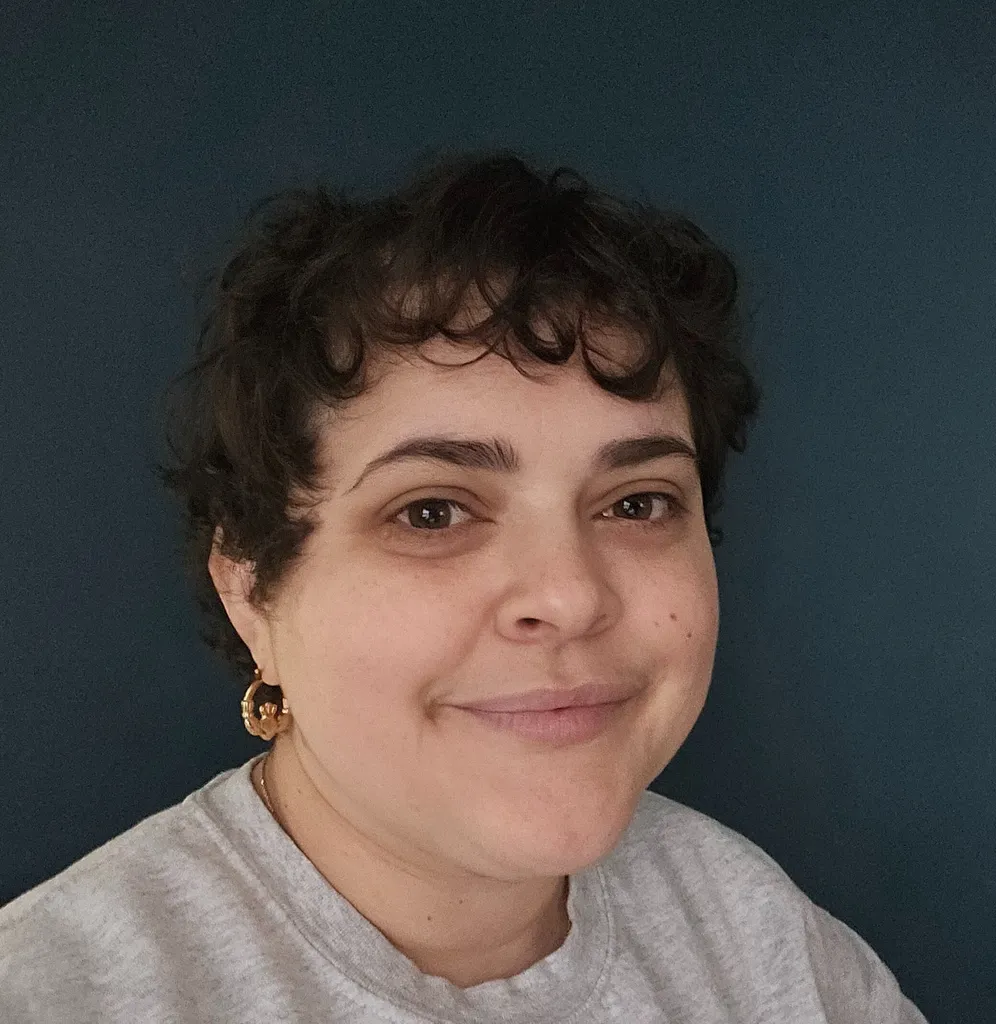
Leslie Fannon Zhang
Leslie Fannon Zhang is a health and science writer and editor who joined HealthTree in 2025. She is passionate about making information about cancer and cancer care as accessible as possible. Leslie has written for the American Society of Clinical Oncology, the American Cancer Society, and the American Association for the Advancement of Science.
More on HealthTree Research





Trending Articles



Upcoming Events




Get the Latest Blood Cancer Updates, Delivered to You.
By subscribing to the HealthTree newsletter, you'll receive the latest research, treatment updates, and expert insights to help you navigate your health.
Together we care.
Together we cure.