![[logo] HealthTree Foundation](https://static.healthtree.org/icons/icon_spinner.svg)
![[logo] HealthTree Foundation](https://static.healthtree.org/logo_icon_only.svg)
Avatrombopag for Platelet Recovery After Haploidentical Stem Cell Transplant
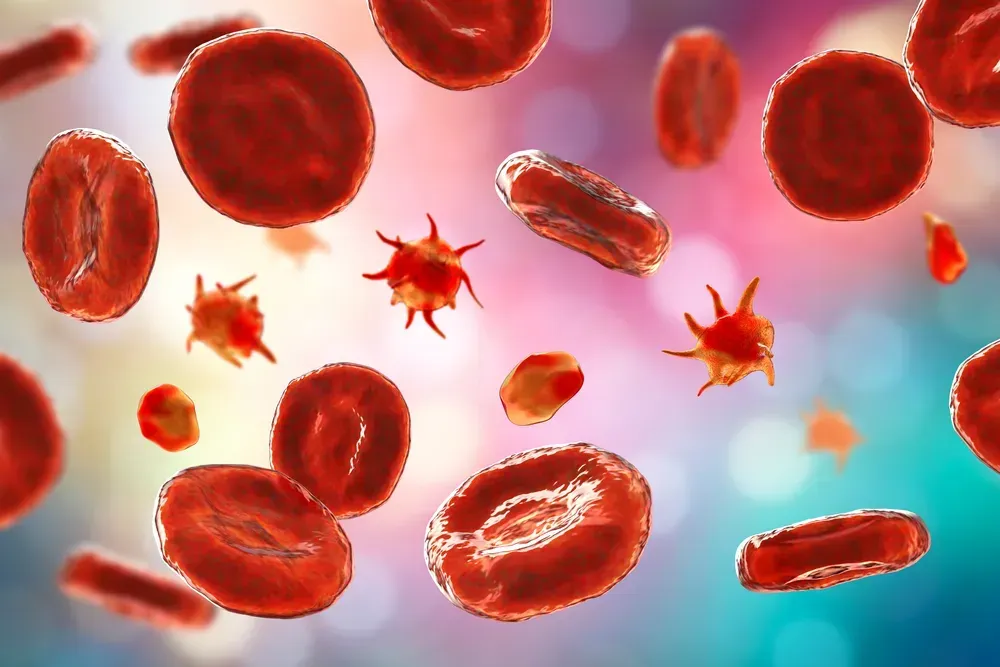


Recovering healthy blood counts after a stem cell transplant can take time. Low platelet levels are a common concern for the risk of bleeding it represents. New research presented at the American Society of Hematology (ASH) meeting suggests that a medication called avatrombopag may support faster and more reliable platelet recovery after haploidentical hematopoietic stem cell transplantation (haplo-HSCT). Avatrombopag is an oral medication that helps the body produce platelets.
What is haploidentical hematopoietic stem cell transplantation (haplo-HSCT) and how does it affect platelets?
Haplo-HSCT is a type of hematopoietic stem cell transplantation. It utilizes a partially matched donor, allowing for rapid donor identification for patients who need a transplant.
In the process of haplo-HSCT, many of the patient’s own bone marrow cells are eliminated and replaced by the new transplanted cells. This makes recovering platelet production slower because the new cells need to start producing blood cells after adjusting to the new host’s environment. The process is usually longer than autologous or allogeneic transplants because the donor is only a partial genetic match in haplo-HSCT.
When platelet counts stay low, patients may need repeated transfusions. They also face a higher risk of bleeding, infections, and longer hospital stays. Improving platelet recovery is an important goal to support safer recovery after transplant.
How does avatrombopag work?
Avatrombopag is a thrombopoietin receptor agonist (TPO-RA). It stimulates the body to make more platelets by activating the same pathway used by natural platelet-producing hormones. It is taken by mouth and has already been used in other conditions that cause low platelet counts. Researchers wanted to know if starting avatrombopag early after haplo-HSCT could safely improve platelet engraftment.
What did this clinical study evaluate?
This was a randomized, double-blind, placebo-controlled clinical trial conducted at 10 medical centers in China. A total of 100 adults between 18 and 65 years of age who had undergone haploidentical stem cell transplantation were enrolled.
Study details:
- Participants were randomly assigned to receive either avatrombopag at a dose of 20 mg per day or a placebo.
- Treatment started on day 7 after transplant and continued until platelet recovery milestones were reached or up to day 60.
- The main goal was to see how many patients reached a platelet count of at least 50 billion per liter and stayed free from platelet transfusions for at least seven consecutive days by day 60.
- Patients with active infections, significant liver or kidney problems, prior blood clots, or recent use of platelet-stimulating drugs were excluded.
Key findings
- After 30 days of treatment with avatrombopag, a significantly higher proportion of patients achieved adequate platelet levels without transfusion than those receiving placebo.
- By day 60, platelet recovery remained higher in the avatrombopag group.
- There were no serious treatment-related side effects reported
The importance of this study for blood cancer patients
For patients, this study shows that avatrombopag use can mean fewer transfusions, less bleeding risk, and a smoother recovery during the early months after transplant. For those whose only transplantation option is a haplo-HSCT, the risk of having low platelet counts for longer, can be slimmer if this therapy is approved.
While avatrombopag is not yet a standard part of all transplant protocols, these results are encouraging. They provide encouraging evidence that targeted support for platelet recovery is possible. As research continues, patients undergoing or preparing for stem cell transplantation may have more options to support recovery and quality of life.
Staying informed matters
New advances in transplant care are happening every year. We encourage patients and caregivers to keep learning by exploring more educational articles on our site, so you can feel informed, empowered, and confident when discussing treatment options with your care team.
SUBSCRIBE TO NEWSLETTER
Sources:
Recovering healthy blood counts after a stem cell transplant can take time. Low platelet levels are a common concern for the risk of bleeding it represents. New research presented at the American Society of Hematology (ASH) meeting suggests that a medication called avatrombopag may support faster and more reliable platelet recovery after haploidentical hematopoietic stem cell transplantation (haplo-HSCT). Avatrombopag is an oral medication that helps the body produce platelets.
What is haploidentical hematopoietic stem cell transplantation (haplo-HSCT) and how does it affect platelets?
Haplo-HSCT is a type of hematopoietic stem cell transplantation. It utilizes a partially matched donor, allowing for rapid donor identification for patients who need a transplant.
In the process of haplo-HSCT, many of the patient’s own bone marrow cells are eliminated and replaced by the new transplanted cells. This makes recovering platelet production slower because the new cells need to start producing blood cells after adjusting to the new host’s environment. The process is usually longer than autologous or allogeneic transplants because the donor is only a partial genetic match in haplo-HSCT.
When platelet counts stay low, patients may need repeated transfusions. They also face a higher risk of bleeding, infections, and longer hospital stays. Improving platelet recovery is an important goal to support safer recovery after transplant.
How does avatrombopag work?
Avatrombopag is a thrombopoietin receptor agonist (TPO-RA). It stimulates the body to make more platelets by activating the same pathway used by natural platelet-producing hormones. It is taken by mouth and has already been used in other conditions that cause low platelet counts. Researchers wanted to know if starting avatrombopag early after haplo-HSCT could safely improve platelet engraftment.
What did this clinical study evaluate?
This was a randomized, double-blind, placebo-controlled clinical trial conducted at 10 medical centers in China. A total of 100 adults between 18 and 65 years of age who had undergone haploidentical stem cell transplantation were enrolled.
Study details:
- Participants were randomly assigned to receive either avatrombopag at a dose of 20 mg per day or a placebo.
- Treatment started on day 7 after transplant and continued until platelet recovery milestones were reached or up to day 60.
- The main goal was to see how many patients reached a platelet count of at least 50 billion per liter and stayed free from platelet transfusions for at least seven consecutive days by day 60.
- Patients with active infections, significant liver or kidney problems, prior blood clots, or recent use of platelet-stimulating drugs were excluded.
Key findings
- After 30 days of treatment with avatrombopag, a significantly higher proportion of patients achieved adequate platelet levels without transfusion than those receiving placebo.
- By day 60, platelet recovery remained higher in the avatrombopag group.
- There were no serious treatment-related side effects reported
The importance of this study for blood cancer patients
For patients, this study shows that avatrombopag use can mean fewer transfusions, less bleeding risk, and a smoother recovery during the early months after transplant. For those whose only transplantation option is a haplo-HSCT, the risk of having low platelet counts for longer, can be slimmer if this therapy is approved.
While avatrombopag is not yet a standard part of all transplant protocols, these results are encouraging. They provide encouraging evidence that targeted support for platelet recovery is possible. As research continues, patients undergoing or preparing for stem cell transplantation may have more options to support recovery and quality of life.
Staying informed matters
New advances in transplant care are happening every year. We encourage patients and caregivers to keep learning by exploring more educational articles on our site, so you can feel informed, empowered, and confident when discussing treatment options with your care team.
SUBSCRIBE TO NEWSLETTER
Sources:

about the author
Jimena Vicencio
Jimena is an International Medical Graduate and a member of the HealthTree Writing team. Currently pursuing a bachelor's degree in journalism, she combines her medical background with a storyteller’s heart to make complex healthcare topics accessible to everyone. Driven by a deep belief that understanding health is a universal right, she is committed to translating scientific and medical knowledge into clear, compassionate language that empowers individuals to take control of their well-being.
More on Treatment Advances






Trending Articles






Get the Latest Leukemia Updates, Delivered to You.
By subscribing to the HealthTree newsletter, you'll receive the latest research, treatment updates, and expert insights to help you navigate your health.
Together we care.
Together we cure.