![[logo] HealthTree Foundation](https://static.healthtree.org/icons/icon_spinner.svg)
![[logo] HealthTree Foundation](https://static.healthtree.org/logo_icon_only.svg)
Can Blenrep Affect Your Vision?
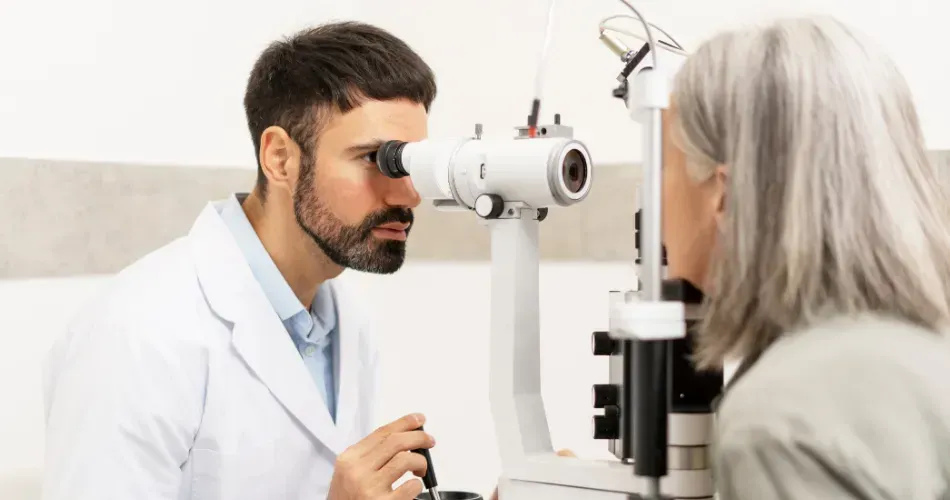


Belantamab mafodotin-blmf (Blenrep) is a multiple myeloma treatment that was recently approved by the U.S. Food and Drug Administration (FDA). It is given in combination with bortezomib (Velcade) and dexamethasone to treat relapsed or refractory multiple myeloma in adult patients who have received at least two prior lines of therapy.
Blenrep is an antibody-drug conjugate (ADC). Some ADCs, like Blenrep, can cause various vision-related problems. This is because it can cause changes to the healthy cells on the surface of the eye, which can lead to:
- Decreased and blurry vision
- Dry eyes
- Sensitivity to light
- Feeling like something is in your eyes
- Eye irritation and pain
- Changes to visual acuity (the ability to see fine details)
Serious eye-related side effects include:
- Keratopathy, which is damage to one of the layers of the cornea
- Corneal ulcers, which can be a type of ulcerative or infective keratitis
- Double vision, also known as diplopia
The name for vision problems caused by a medication is ocular toxicity.
When do eye problems happen after taking Blenrep?
Eye problems are common after taking Blenrep, but not everyone will experience them. Around 7 out of 10 people (77%) experienced eye problems during the clinical trial that led to Blenrep's approval. Almost everyone who experienced eye problems had keratopathy, or damage to one of the layers of the cornea. You may wonder when most people begin to experience eye problems, so you can be aware of the signs and symptoms of these changes.
Most vision changes from Blenrep, especially blurred vision and dry eyes, happen within the first 2 treatment cycles and generally begin to resolve within several weeks to months after dose changes. The specific timeline can vary depending on the severity of the side effect.
Research has also found that:
- Around 65% of patients who develop cornea damage (keratopathy) usually experience the side effect within the first 6 weeks of treatment.
- Visual acuity, which is seeing fine details, worsened most significantly between 45 and 64 days after the beginning of the treatment.
- Dry eye, grittiness, and soreness often take 23 to 44 days to recover.
Tell your healthcare team right away if you experience any changes to your eye health.
How are vision problems caused by Blenrep managed?
If you experience vision problems while taking Blenrep, your care team may need to lower your dose, interrupt treatment, or stop Blenrep temporarily if you develop moderate to severe eye problems. The vision changes are generally reversible with proper management and even drug discontinuation.
It is not uncommon to move from an every 3-week to an every 6-week dosing schedule while experiencing vision side effects. Blenrep's half-life is long, and the effects of this medication may last even when skipping a dose. Most patients can resume treatment after their symptoms and eye exam have improved.
Patient monitoring through the REMS program
If you are eligible for Blenrep, you will be evaluated and monitored through a program called the Risk Evaluation and Mitigation Strategy or REMS. Your doctor will refer you to an ophthalmologist to check your eyes before you start treatment. An ophthalmologist is a medical doctor who treats eye conditions. You will continue to see the ophthalmologist before each dose of Blenrep.
You will also:
- Use preservative-free artificial tears at least 4 times per day, starting with your first infusion and continuing throughout treatment.
- Avoid using contact lenses while taking Blenrep.
- Use caution when driving because Blenrep can cause blurry vision.
Even if you don't notice any vision changes, it's important to attend all scheduled eye exams. Some cornea changes are only detectable through specialized equipment.
Other side effects of Blenrep
When used in combination with bortezomib and dexamethasone, Blenrep can also cause other side effects. These include:
- Upper respiratory infection
- Liver problems
- Diarrhea and fatigue
- Pneumonia
- Cataracts
- A severe decrease in platelets
- COVID-19
Tell your doctor right away if you experience any lung problems, such as shortness of breath, chest pain, or cough. You should also tell your doctor if you have any bleeding or bruising during treatment.
Stay up-to-date on your medications and their side effects with HealthTree Cure Hub
HealthTree Cure Hub helps you take control of your care by putting all of your health data in one place. You can monitor your labs, see out-of-range values, and learn what has worked for others to help find the best treatment for you.
Source:
Belantamab mafodotin-blmf (Blenrep) is a multiple myeloma treatment that was recently approved by the U.S. Food and Drug Administration (FDA). It is given in combination with bortezomib (Velcade) and dexamethasone to treat relapsed or refractory multiple myeloma in adult patients who have received at least two prior lines of therapy.
Blenrep is an antibody-drug conjugate (ADC). Some ADCs, like Blenrep, can cause various vision-related problems. This is because it can cause changes to the healthy cells on the surface of the eye, which can lead to:
- Decreased and blurry vision
- Dry eyes
- Sensitivity to light
- Feeling like something is in your eyes
- Eye irritation and pain
- Changes to visual acuity (the ability to see fine details)
Serious eye-related side effects include:
- Keratopathy, which is damage to one of the layers of the cornea
- Corneal ulcers, which can be a type of ulcerative or infective keratitis
- Double vision, also known as diplopia
The name for vision problems caused by a medication is ocular toxicity.
When do eye problems happen after taking Blenrep?
Eye problems are common after taking Blenrep, but not everyone will experience them. Around 7 out of 10 people (77%) experienced eye problems during the clinical trial that led to Blenrep's approval. Almost everyone who experienced eye problems had keratopathy, or damage to one of the layers of the cornea. You may wonder when most people begin to experience eye problems, so you can be aware of the signs and symptoms of these changes.
Most vision changes from Blenrep, especially blurred vision and dry eyes, happen within the first 2 treatment cycles and generally begin to resolve within several weeks to months after dose changes. The specific timeline can vary depending on the severity of the side effect.
Research has also found that:
- Around 65% of patients who develop cornea damage (keratopathy) usually experience the side effect within the first 6 weeks of treatment.
- Visual acuity, which is seeing fine details, worsened most significantly between 45 and 64 days after the beginning of the treatment.
- Dry eye, grittiness, and soreness often take 23 to 44 days to recover.
Tell your healthcare team right away if you experience any changes to your eye health.
How are vision problems caused by Blenrep managed?
If you experience vision problems while taking Blenrep, your care team may need to lower your dose, interrupt treatment, or stop Blenrep temporarily if you develop moderate to severe eye problems. The vision changes are generally reversible with proper management and even drug discontinuation.
It is not uncommon to move from an every 3-week to an every 6-week dosing schedule while experiencing vision side effects. Blenrep's half-life is long, and the effects of this medication may last even when skipping a dose. Most patients can resume treatment after their symptoms and eye exam have improved.
Patient monitoring through the REMS program
If you are eligible for Blenrep, you will be evaluated and monitored through a program called the Risk Evaluation and Mitigation Strategy or REMS. Your doctor will refer you to an ophthalmologist to check your eyes before you start treatment. An ophthalmologist is a medical doctor who treats eye conditions. You will continue to see the ophthalmologist before each dose of Blenrep.
You will also:
- Use preservative-free artificial tears at least 4 times per day, starting with your first infusion and continuing throughout treatment.
- Avoid using contact lenses while taking Blenrep.
- Use caution when driving because Blenrep can cause blurry vision.
Even if you don't notice any vision changes, it's important to attend all scheduled eye exams. Some cornea changes are only detectable through specialized equipment.
Other side effects of Blenrep
When used in combination with bortezomib and dexamethasone, Blenrep can also cause other side effects. These include:
- Upper respiratory infection
- Liver problems
- Diarrhea and fatigue
- Pneumonia
- Cataracts
- A severe decrease in platelets
- COVID-19
Tell your doctor right away if you experience any lung problems, such as shortness of breath, chest pain, or cough. You should also tell your doctor if you have any bleeding or bruising during treatment.
Stay up-to-date on your medications and their side effects with HealthTree Cure Hub
HealthTree Cure Hub helps you take control of your care by putting all of your health data in one place. You can monitor your labs, see out-of-range values, and learn what has worked for others to help find the best treatment for you.
Source:

about the author
Lisa Foster
Lisa Foster is a mom of 3 daughters and 1 perfect grandchild, a puzzle lover, writer and HealthTree advocate. She believes in the mission of the foundation and the team that builds it forward. She calls Houston, Texas home.
More on Treatment Advances






Upcoming Events




Get the Latest Blood Cancer Updates, Delivered to You.
By subscribing to the HealthTree newsletter, you'll receive the latest research, treatment updates, and expert insights to help you navigate your health.
Together we care.
Together we cure.