![[logo] HealthTree Foundation](https://static.healthtree.org/icons/icon_spinner.svg)
![[logo] HealthTree Foundation](https://static.healthtree.org/logo_icon_only.svg)
Bispecific Antibodies for Lymphoma: What Patients Need to Know
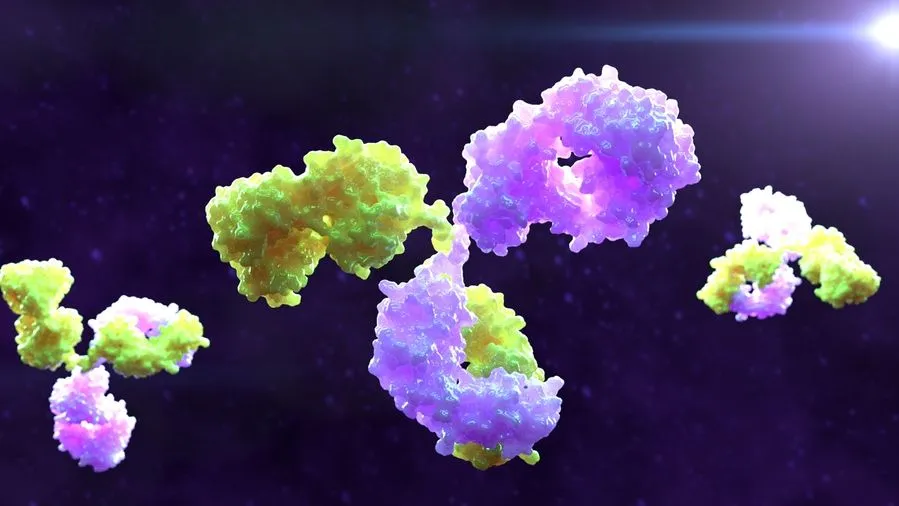


Bispecific antibodies are changing how lymphoma is treated. These medications help your own immune system find and remove lymphoma cells in a targeted way. In this article, you will learn:
- How bispecific antibodies work.
- FDA-approved bispecific antibodies for lymphoma.
- How bispecific antibodies are used in different lymphoma subtypes.
- Possible side effects of bispecific antibodies.
What are bispecific antibodies?
Bispecific antibodies are lab-made immune proteins. They are designed to connect two different cells at the same time.
Traditional monoclonal antibodies attach to one target on a cancer cell. Bispecific antibodies are different. One side binds to a marker on lymphoma cells. The other side binds to an immune cell, usually a T cell.
In most B-cell lymphomas, these treatments target:
- CD20 on lymphoma B cells.
- CD3 on T cells.
When the bispecific antibody attaches to both cells, it brings the T cell directly next to the lymphoma cell. This allows the T cell to recognize and kill the cancer cell.
Because these medicines are ready to use and do not require collecting a patient’s cells, they are often described as an “off-the-shelf” immunotherapy. This makes bispecific antibodies more accessible than some other immune therapies like CAR T-cell therapy.
How do bispecific antibodies fit into lymphoma treatment?
To understand where bispecific antibodies for lymphoma treatment fit, it helps to know how lymphoma is grouped.
Lymphoma is divided into two main categories:
- Non-Hodgkin lymphoma
- Hodgkin lymphoma
The currently approved bispecific antibodies are used in B-cell non-Hodgkin lymphoma.
How many bispecific antibodies are FDA-approved for lymphoma?
Currently, three bispecific antibodies are FDA-approved for certain types of B-cell non-Hodgkin lymphoma. FDA-approved means these treatments showed meaningful results and manageable side effects in clinical studies.
Non-Hodgkin lymphoma includes many subtypes. The most studied and treated with bispecific antibodies are B-cell lymphomas, such as:
- Large B-cell lymphoma (LBCL)
- Follicular lymphoma (FL)
- Mantle cell lymphoma (MCL)
- Marginal zone lymphoma (MZL)
Bispecific antibodies for LBCL
LBCL is an aggressive lymphoma. If it returns after standard therapy, treatment options can be limited. Several bispecific antibodies have been studied for people whose LBCL returned after two or more prior treatments. These therapies showed meaningful response rates and manageable side effects.
For people with relapsed LBCL, this means there are additional immune-based options beyond chemoimmunotherapy, a stem cell transplant, and CAR T-cell therapy. The approved bispecific antibodies for LBCL are:
Epcoritamab (Epkinly, Genmab/AbbVie) is approved for adults with relapsed or refractory LBCL after two or more prior treatments.
Glofitamab (Columvi, Genentech) is also approved for adults with relapsed or refractory LBCL, including LBCL that developed from follicular lymphoma, after two or more prior treatments.
Ask your lymphoma specialist if one of these bispecific antibodies is right for your care.
Bispecific antibodies for follicular lymphoma
Follicular lymphoma is a slower-growing lymphoma. Many people receive several different treatments over time. Bispecific antibodies for follicular lymphoma have shown encouraging results in clinical trials.
In long-term follow-up studies:
- Around two-thirds of patients experienced a response to treatment
- Nearly half experienced a complete response
- Some responses lasted several years
For people with relapsed follicular lymphoma, bispecific antibodies offer a chemotherapy-free option that uses the immune system directly. The approved bispecific antibodies for follicular lymphoma are:
Epcoritamab is approved for adults with relapsed or refractory follicular lymphoma after at least two prior treatments.
Mosunetuzumab (Lunsumio, Genentech) is approved for adults with relapsed or refractory follicular lymphoma after two or more prior treatments.
Ask your lymphoma specialist if one of these bispecific antibodies is right for your care.
Bispecific antibodies for MCL and MZL
MCL and MZL can return after standard therapy. Currently, there are no bispecific antibodies approved for MCL or MZL.
But researchers are studying bispecific antibodies for both of these lymphoma subtypes. Clinical trials are testing these treatments alone and in combination with other medicines, such as BTK inhibitors, chemotherapy, and other immune-based therapies. While bispecific antibodies are not yet FDA-approved specifically for MCL or MZL, ongoing clinical trials may expand options for patients in the future.
Bispecific antibodies for Hodgkin lymphoma
Hodgkin lymphoma is biologically different from most non-Hodgkin lymphomas.
Instead of targeting CD20, bispecific antibodies in clinical trials for Hodgkin lymphoma often target CD30 on Hodgkin lymphoma cells, CD3 on T cells, or CD16 on natural killer (NK) cells.
Early studies of CD30-directed bispecific antibodies have shown promising results for heavily pretreated patients. Some combination approaches have produced high response rates in early trials.
At this time, bispecific antibodies for Hodgkin lymphoma are still being studied in clinical trials and are not yet FDA-approved. However, research continues to move forward. For people with Hodgkin lymphoma, clinical trials may offer access to these newer therapies.
Discover Hodgkin lymphoma clinical trials
How are bispecific antibodies given?
Bispecific antibodies are given either by intravenous infusion (IV) or by an injection under the skin, depending on the specific medicine.
At the beginning of treatment, they have a step-up dosing schedule. Step-up dosing means the first few doses are given at lower amounts and gradually increased to the normal dose. This helps lower the risk of side effects, especially cytokine release syndrome, by allowing the immune system to adjust slowly.
After the step-up period, treatment is given on a regular schedule called a cycle. At first, doses are often given weekly. If treatment is going well, the schedule is usually spaced out to every two to four weeks per cycle, which can make treatment more manageable.
Some bispecific antibodies are given for a fixed period of time. This means treatment stops after a set number of cycles if the lymphoma responds. Others are given continuously. This means treatment continues as long as it is working and the benefits of treatment outweigh any side effects. Newer antibody designs are also being developed to improve how long the medicine stays active, which may support less frequent dosing over time.
Your lymphoma specialist can explain which schedule applies to your specific treatment plan.
What are the side effects of bispecific antibodies?
All immune-based treatments can cause side effects. Most side effects from bispecific antibodies are manageable with careful monitoring by your healthcare team.
Cytokine release syndrome (CRS)
Cytokine release syndrome happens when the immune system becomes highly activated.
Symptoms may include:
- Fever
- Chills
- Low blood pressure
- Fatigue
In clinical trials of bispecific antibodies for non-Hodgkin lymphoma:
- CRS affected about half of the patients
- Severe cases were uncommon
Most CRS events happen early in treatment and can be treated effectively. For patients, this means the first doses are often given with close monitoring.
Neurological side effects
Some patients experience temporary neurological symptoms known as ICANS, which stands for immune effector cell-associated neurotoxicity syndrome.
Symptoms may include:
- Headache
- Confusion
- Difficulty speaking
With bispecific antibodies, severe neurological side effects are less common than with CAR T-cell therapy.
Low blood counts (cytopenias)
Cytopenias mean reduced blood cell levels. Neutropenia, or low white blood cells, can increase infection risk.
In studies:
- Neutropenia occurred in a portion of patients.
- Severe cases were manageable.
- Few patients had to stop treatment because of this.
Regular blood testing helps doctors monitor and manage this risk.
Infections
Because many bispecific antibodies target CD20, they reduce normal B cells along with lymphoma cells. B cells help produce antibodies that fight infection.
Studies showed:
- Increased infection risk.
- Most infections were treatable.
- Severe or fatal infections were not common.
Some patients develop low antibody levels in the blood. In certain cases, intravenous immunoglobulin (IVIG) may be used to support the immune system. Ask your lymphoma specialist about what they suggest to reduce the risk of infections or manage active infections surrounding treatment with bispecific antibodies.
How do bispecific antibodies compare to CAR T-cell therapy?
Both bispecific antibodies and CAR T-cell therapy use the immune system to target lymphoma.
Key differences include:
- Bispecific antibodies are ready to use. CAR-T requires cell collection and manufacturing.
- Bispecific antibodies are given repeatedly. CAR-T is usually a one-time infusion.
- Severe neurological side effects appear less common with bispecific antibodies.
- Both can cause cytokine release syndrome.
For some people, bispecific antibodies may be an option if CAR-T is not available or not appropriate. For others, CAR-T may be preferred. The right choice depends on personal circumstances.
Ongoing research and future directions
Research into bispecific antibodies for lymphoma continues to expand.
Current studies are exploring:
- Use in earlier lines of treatment
- Combination with chemotherapy or targeted therapy
- Use after CAR T-cell therapy
- Strategies to reduce side effects
- Biomarkers to predict who will respond
Read some of this research below:
- Does Treatment Order of CAR T-cell Therapy and Bispecific Antibodies Matter for LBCL?
- Latest Follicular Lymphoma Research from ASH 2025
- U.S. FDA Approves Epcoritamab (Epkinly) Combination for Follicular Lymphoma
- Two-Year Study Update: Glofitamab (Columvi) with GemOx for Relapsed/Refractory LBCL
For patients, this active research suggests that immune-based treatment options may continue to grow and improve.
Key takeaways
Bispecific antibodies for lymphoma are immune-based medicines that connect lymphoma cells with immune cells to help target cancer. They are given without the need for cell collection and generally have manageable side effects with supportive care.
Three bispecific antibodies are FDA-approved for certain types of B-cell non-Hodgkin lymphoma, including LBCL and follicular lymphoma. Other subtypes of non-Hodgkin lymphoma, like MCL and MZL, have bispecific antibodies being reviewed in clinical trials. Bispecific antibodies for Hodgkin lymphoma are still in clinical development but show promise in early studies.
For people living with lymphoma, these therapies represent an important addition to available treatment options. Talking with your care team about whether bispecific antibodies are appropriate for your lymphoma subtype and treatment history can help guide the next steps in your care.
Get the latest lymphoma updates delivered to you! The HealthTree newsletter shares core education, research advances, and more directly to your inbox.
Sources:
- Bi- and Tri-specific antibodies in non-Hodgkin lymphoma: current data and perspectives
- Bispecific antibody therapy for lymphoma
- Toxicities associated with lymphoma-targeting bispecific antibodies—a review
- Bispecific Antibody Therapies for Lymphoma
- Chimeric Antigen Receptor T-Cell Therapy and Bispecific Antibody Use in Earlier Lines of Treatment of Large B-Cell Lymphoma, Follicular Lymphoma, and Mantle Cell Lymphoma
- The Development and Application of Bispecific Antibodies in B-Cell Non-Hodgkin Lymphoma
- Immune recruitment by bispecific antibodies for the treatment of Hodgkin disease
- Rescue of Impaired NK Cell Activity in Hodgkin Lymphoma With Bispecific Antibodies In Vitro and in Patients
- Recent development in bispecific antibody immunotherapy for hematological malignancies
Bispecific antibodies are changing how lymphoma is treated. These medications help your own immune system find and remove lymphoma cells in a targeted way. In this article, you will learn:
- How bispecific antibodies work.
- FDA-approved bispecific antibodies for lymphoma.
- How bispecific antibodies are used in different lymphoma subtypes.
- Possible side effects of bispecific antibodies.
What are bispecific antibodies?
Bispecific antibodies are lab-made immune proteins. They are designed to connect two different cells at the same time.
Traditional monoclonal antibodies attach to one target on a cancer cell. Bispecific antibodies are different. One side binds to a marker on lymphoma cells. The other side binds to an immune cell, usually a T cell.
In most B-cell lymphomas, these treatments target:
- CD20 on lymphoma B cells.
- CD3 on T cells.
When the bispecific antibody attaches to both cells, it brings the T cell directly next to the lymphoma cell. This allows the T cell to recognize and kill the cancer cell.
Because these medicines are ready to use and do not require collecting a patient’s cells, they are often described as an “off-the-shelf” immunotherapy. This makes bispecific antibodies more accessible than some other immune therapies like CAR T-cell therapy.
How do bispecific antibodies fit into lymphoma treatment?
To understand where bispecific antibodies for lymphoma treatment fit, it helps to know how lymphoma is grouped.
Lymphoma is divided into two main categories:
- Non-Hodgkin lymphoma
- Hodgkin lymphoma
The currently approved bispecific antibodies are used in B-cell non-Hodgkin lymphoma.
How many bispecific antibodies are FDA-approved for lymphoma?
Currently, three bispecific antibodies are FDA-approved for certain types of B-cell non-Hodgkin lymphoma. FDA-approved means these treatments showed meaningful results and manageable side effects in clinical studies.
Non-Hodgkin lymphoma includes many subtypes. The most studied and treated with bispecific antibodies are B-cell lymphomas, such as:
- Large B-cell lymphoma (LBCL)
- Follicular lymphoma (FL)
- Mantle cell lymphoma (MCL)
- Marginal zone lymphoma (MZL)
Bispecific antibodies for LBCL
LBCL is an aggressive lymphoma. If it returns after standard therapy, treatment options can be limited. Several bispecific antibodies have been studied for people whose LBCL returned after two or more prior treatments. These therapies showed meaningful response rates and manageable side effects.
For people with relapsed LBCL, this means there are additional immune-based options beyond chemoimmunotherapy, a stem cell transplant, and CAR T-cell therapy. The approved bispecific antibodies for LBCL are:
Epcoritamab (Epkinly, Genmab/AbbVie) is approved for adults with relapsed or refractory LBCL after two or more prior treatments.
Glofitamab (Columvi, Genentech) is also approved for adults with relapsed or refractory LBCL, including LBCL that developed from follicular lymphoma, after two or more prior treatments.
Ask your lymphoma specialist if one of these bispecific antibodies is right for your care.
Bispecific antibodies for follicular lymphoma
Follicular lymphoma is a slower-growing lymphoma. Many people receive several different treatments over time. Bispecific antibodies for follicular lymphoma have shown encouraging results in clinical trials.
In long-term follow-up studies:
- Around two-thirds of patients experienced a response to treatment
- Nearly half experienced a complete response
- Some responses lasted several years
For people with relapsed follicular lymphoma, bispecific antibodies offer a chemotherapy-free option that uses the immune system directly. The approved bispecific antibodies for follicular lymphoma are:
Epcoritamab is approved for adults with relapsed or refractory follicular lymphoma after at least two prior treatments.
Mosunetuzumab (Lunsumio, Genentech) is approved for adults with relapsed or refractory follicular lymphoma after two or more prior treatments.
Ask your lymphoma specialist if one of these bispecific antibodies is right for your care.
Bispecific antibodies for MCL and MZL
MCL and MZL can return after standard therapy. Currently, there are no bispecific antibodies approved for MCL or MZL.
But researchers are studying bispecific antibodies for both of these lymphoma subtypes. Clinical trials are testing these treatments alone and in combination with other medicines, such as BTK inhibitors, chemotherapy, and other immune-based therapies. While bispecific antibodies are not yet FDA-approved specifically for MCL or MZL, ongoing clinical trials may expand options for patients in the future.
Bispecific antibodies for Hodgkin lymphoma
Hodgkin lymphoma is biologically different from most non-Hodgkin lymphomas.
Instead of targeting CD20, bispecific antibodies in clinical trials for Hodgkin lymphoma often target CD30 on Hodgkin lymphoma cells, CD3 on T cells, or CD16 on natural killer (NK) cells.
Early studies of CD30-directed bispecific antibodies have shown promising results for heavily pretreated patients. Some combination approaches have produced high response rates in early trials.
At this time, bispecific antibodies for Hodgkin lymphoma are still being studied in clinical trials and are not yet FDA-approved. However, research continues to move forward. For people with Hodgkin lymphoma, clinical trials may offer access to these newer therapies.
Discover Hodgkin lymphoma clinical trials
How are bispecific antibodies given?
Bispecific antibodies are given either by intravenous infusion (IV) or by an injection under the skin, depending on the specific medicine.
At the beginning of treatment, they have a step-up dosing schedule. Step-up dosing means the first few doses are given at lower amounts and gradually increased to the normal dose. This helps lower the risk of side effects, especially cytokine release syndrome, by allowing the immune system to adjust slowly.
After the step-up period, treatment is given on a regular schedule called a cycle. At first, doses are often given weekly. If treatment is going well, the schedule is usually spaced out to every two to four weeks per cycle, which can make treatment more manageable.
Some bispecific antibodies are given for a fixed period of time. This means treatment stops after a set number of cycles if the lymphoma responds. Others are given continuously. This means treatment continues as long as it is working and the benefits of treatment outweigh any side effects. Newer antibody designs are also being developed to improve how long the medicine stays active, which may support less frequent dosing over time.
Your lymphoma specialist can explain which schedule applies to your specific treatment plan.
What are the side effects of bispecific antibodies?
All immune-based treatments can cause side effects. Most side effects from bispecific antibodies are manageable with careful monitoring by your healthcare team.
Cytokine release syndrome (CRS)
Cytokine release syndrome happens when the immune system becomes highly activated.
Symptoms may include:
- Fever
- Chills
- Low blood pressure
- Fatigue
In clinical trials of bispecific antibodies for non-Hodgkin lymphoma:
- CRS affected about half of the patients
- Severe cases were uncommon
Most CRS events happen early in treatment and can be treated effectively. For patients, this means the first doses are often given with close monitoring.
Neurological side effects
Some patients experience temporary neurological symptoms known as ICANS, which stands for immune effector cell-associated neurotoxicity syndrome.
Symptoms may include:
- Headache
- Confusion
- Difficulty speaking
With bispecific antibodies, severe neurological side effects are less common than with CAR T-cell therapy.
Low blood counts (cytopenias)
Cytopenias mean reduced blood cell levels. Neutropenia, or low white blood cells, can increase infection risk.
In studies:
- Neutropenia occurred in a portion of patients.
- Severe cases were manageable.
- Few patients had to stop treatment because of this.
Regular blood testing helps doctors monitor and manage this risk.
Infections
Because many bispecific antibodies target CD20, they reduce normal B cells along with lymphoma cells. B cells help produce antibodies that fight infection.
Studies showed:
- Increased infection risk.
- Most infections were treatable.
- Severe or fatal infections were not common.
Some patients develop low antibody levels in the blood. In certain cases, intravenous immunoglobulin (IVIG) may be used to support the immune system. Ask your lymphoma specialist about what they suggest to reduce the risk of infections or manage active infections surrounding treatment with bispecific antibodies.
How do bispecific antibodies compare to CAR T-cell therapy?
Both bispecific antibodies and CAR T-cell therapy use the immune system to target lymphoma.
Key differences include:
- Bispecific antibodies are ready to use. CAR-T requires cell collection and manufacturing.
- Bispecific antibodies are given repeatedly. CAR-T is usually a one-time infusion.
- Severe neurological side effects appear less common with bispecific antibodies.
- Both can cause cytokine release syndrome.
For some people, bispecific antibodies may be an option if CAR-T is not available or not appropriate. For others, CAR-T may be preferred. The right choice depends on personal circumstances.
Ongoing research and future directions
Research into bispecific antibodies for lymphoma continues to expand.
Current studies are exploring:
- Use in earlier lines of treatment
- Combination with chemotherapy or targeted therapy
- Use after CAR T-cell therapy
- Strategies to reduce side effects
- Biomarkers to predict who will respond
Read some of this research below:
- Does Treatment Order of CAR T-cell Therapy and Bispecific Antibodies Matter for LBCL?
- Latest Follicular Lymphoma Research from ASH 2025
- U.S. FDA Approves Epcoritamab (Epkinly) Combination for Follicular Lymphoma
- Two-Year Study Update: Glofitamab (Columvi) with GemOx for Relapsed/Refractory LBCL
For patients, this active research suggests that immune-based treatment options may continue to grow and improve.
Key takeaways
Bispecific antibodies for lymphoma are immune-based medicines that connect lymphoma cells with immune cells to help target cancer. They are given without the need for cell collection and generally have manageable side effects with supportive care.
Three bispecific antibodies are FDA-approved for certain types of B-cell non-Hodgkin lymphoma, including LBCL and follicular lymphoma. Other subtypes of non-Hodgkin lymphoma, like MCL and MZL, have bispecific antibodies being reviewed in clinical trials. Bispecific antibodies for Hodgkin lymphoma are still in clinical development but show promise in early studies.
For people living with lymphoma, these therapies represent an important addition to available treatment options. Talking with your care team about whether bispecific antibodies are appropriate for your lymphoma subtype and treatment history can help guide the next steps in your care.
Get the latest lymphoma updates delivered to you! The HealthTree newsletter shares core education, research advances, and more directly to your inbox.
Sources:
- Bi- and Tri-specific antibodies in non-Hodgkin lymphoma: current data and perspectives
- Bispecific antibody therapy for lymphoma
- Toxicities associated with lymphoma-targeting bispecific antibodies—a review
- Bispecific Antibody Therapies for Lymphoma
- Chimeric Antigen Receptor T-Cell Therapy and Bispecific Antibody Use in Earlier Lines of Treatment of Large B-Cell Lymphoma, Follicular Lymphoma, and Mantle Cell Lymphoma
- The Development and Application of Bispecific Antibodies in B-Cell Non-Hodgkin Lymphoma
- Immune recruitment by bispecific antibodies for the treatment of Hodgkin disease
- Rescue of Impaired NK Cell Activity in Hodgkin Lymphoma With Bispecific Antibodies In Vitro and in Patients
- Recent development in bispecific antibody immunotherapy for hematological malignancies

about the author
Megan Heaps
Megan joined HealthTree in 2022. She enjoys helping patients and their care partners understand the various aspects of the cancer. This understanding enables them to better advocate for themselves and improve their treatment outcomes.
More on Core Education








Get the Latest Adult T-cell Leukemia / Lymphoma Updates, Delivered to You.
By subscribing to the HealthTree newsletter, you'll receive the latest research, treatment updates, and expert insights to help you navigate your health.
Together we care.
Together we cure.