![[logo] HealthTree Foundation](https://static.healthtree.org/icons/icon_spinner.svg)
![[logo] HealthTree Foundation](https://static.healthtree.org/logo_icon_only.svg)
Pluvicto (Lutetium-177) Therapy: The "Smart" Radiation Treatment for Prostate Cancer Therapy: The "Smart" Radiation Treatment for Prostate Cancer
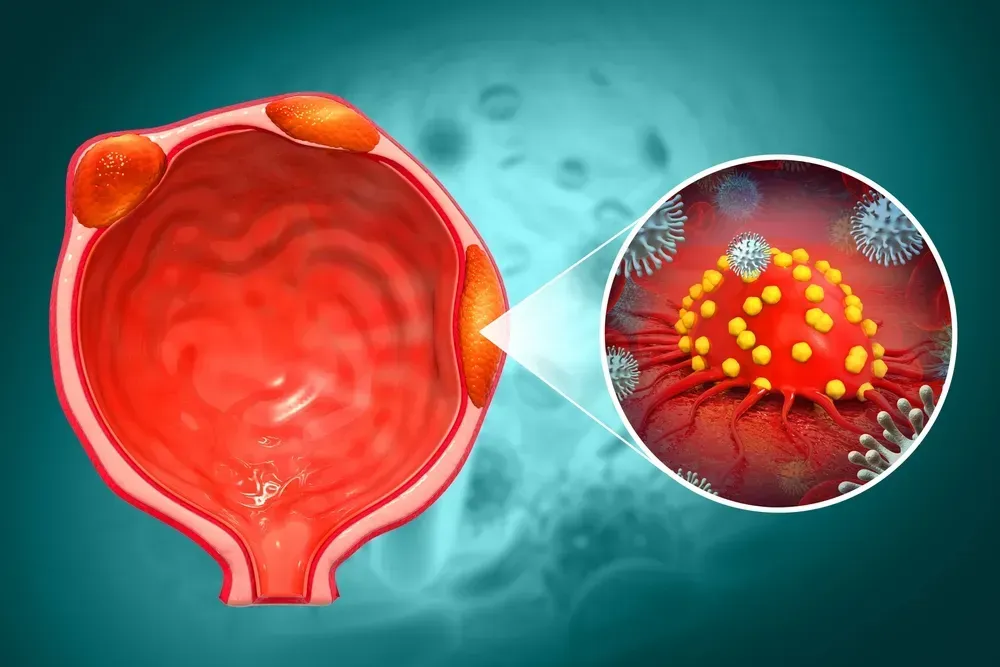


What Is Radiopharmaceutical Therapy for Prostate Cancer?
If your doctor has mentioned a treatment called lutetium therapy or PSMA-targeted therapy, this article is for you. We'll walk you through what it is, how it works, and what to expect in plain language.
What Is Radiopharmaceutical Therapy?
Radiopharmaceutical therapy (ray-dee-oh-far-muh-SOO-tih-kul) is a newer type of cancer treatment. It uses a special drug that carries a small amount of radiation directly to cancer cells while mostly leaving healthy cells alone.
Think of it this way: traditional chemotherapy is like spraying weed killer all over a garden; it kills the weeds, but it can damage the flowers too. Radiopharmaceutical therapy is more like using a spray that only sticks to weeds while it leaves the flowers alone. It is much more targeted.
How Does It Find Cancer Cells?
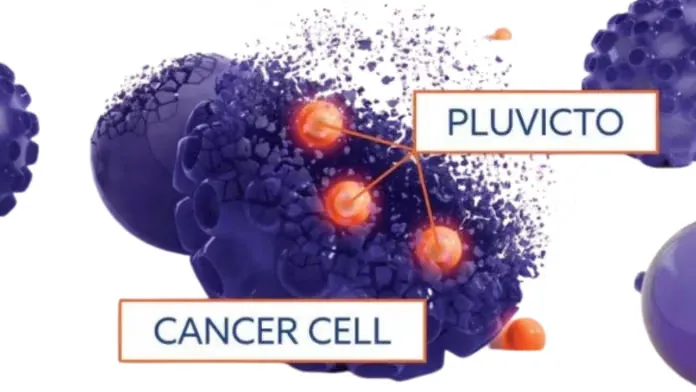
Prostate cancer cells have a lot of a protein called PSMA (you can just think of PSMA as a "lock") on their surface. The drug used in this therapy has a special part that acts like a "key"; it fits perfectly into that lock and attaches to the cancer cell.
Once attached, the radioactive part of the drug releases energy that damages the cancer cell and destroys it. Because PSMA is mostly found on prostate cancer cells and not on most other cells in your body, the treatment can seek out cancer in a very targeted way.
The Name of the Treatment
The most commonly used version of this therapy is called Lutetium-177 PSMA-617, sometimes shortened to Lu-177 or Pluvicto (its brand name). It was approved by the U.S. Food and Drug Administration (FDA) in 2022 for men with advanced prostate cancer that has spread and is no longer responding to hormone therapy.
Before You Start: The PSMA PET Scan
Before your doctor can prescribe this therapy, they need to confirm that your cancer cells actually have enough PSMA on their surface. Not all prostate cancers are the same.
To check, you will have a special imaging test called a PSMA PET scan. Here is what to expect:
- A small amount of a harmless radioactive tracer is injected into a vein
- You lie in a scanner for about 20–30 minutes
- The scan "lights up" areas of your body where PSMA-positive cancer cells are present
- Your doctor reviews the images to confirm you are a good candidate for treatment
- If the scan shows PSMA-positive cancer, you may be eligible to receive this therapy.
What Happens During Treatment?
Treatment is given at a specialized clinic or hospital, usually in a nuclear medicine department. This is what you can expect:
- You arrive at the clinic, and a nurse places an IV (a small tube in your vein)
- The drug is slowly injected into your bloodstream. This usually takes less than 30 minutes
- You may need to stay briefly for observation before going home
- Treatment repeats every 6 weeks, for a total of 4 to 6 cycles
Because the drug is radioactive, you will be given safety instructions to protect family members, especially young children and pregnant women, for a few days after each treatment. Your care team will walk you through these precautions in detail.
Does It Work?
Yes, research shows it can make a real difference. A large clinical study called the VISION trial looked at men with advanced prostate cancer who had already tried hormone therapy and chemotherapy. The results showed:
- Men who received this therapy lived longer than those who did not
- Their cancer took longer to grow or spread
- Many men experienced a meaningful improvement in their cancer markers
This is why the FDA approved it — the evidence is strong.
What Are the Side Effects?
Like any cancer treatment, this therapy can cause side effects. The good news is that most people tolerate it well. Common side effects include:
- Dry mouth — the most common complaint; sipping water and chewing sugar-free gum can help
- Fatigue — feeling more tired than usual
- Nausea — usually mild and manageable with medication
- Changes in blood counts — your doctor will monitor this with regular blood tests
Important: Studies show that most patients' quality of life is not significantly worse during this treatment compared to other prostate cancer therapies. Many patients say they feel better than they expected.
Serious side effects are less common but possible. Always let your care team know about any new or worsening symptoms.
What to Expect Between Treatments
During your treatment course, your doctor will keep a close eye on how you are responding. You can expect:
- Blood tests every few weeks to check your blood counts and organ function
- PSA blood tests to track whether the cancer is responding
- Follow-up imaging scans after a few cycles
Questions to Ask Your Doctor
If you are considering this treatment, here are some helpful questions to bring to your next appointment:
- Am I a good candidate for this therapy?
- Will I need a PSMA PET scan first?
- What other treatments have I already tried, and does that matter?
- What side effects should I watch for?
- How will I know if the treatment is working?
- Are there any clinical trials I might qualify for?
- What are the safety precautions I need to follow at home?
Study Results
The biggest proof that this therapy works came from a major clinical trial called the VISION trial. In this study, patients with advanced prostate cancer received either 177Lu-PSMA-617 plus standard care or standard care alone.
The results were impressive:
- Patients who received the therapy lived significantly longer — a median of 15.3 months versus 11.3 months in those who did not.
- The cancer stopped growing for a longer period of time — a median of 8.7 months compared to just 3.4 months in the control group.
- Overall, nearly all of the secondary goals of the trial also favored the treatment.
Based on these results, this therapy was approved by the U.S. Food and Drug Administration (FDA) as a new treatment option for advanced prostate cancer.
What's Next? The Future of Radiopharmaceutical Therapy
Researchers are not stopping here. Several exciting directions are being explored:
- Earlier use in the disease course, testing whether treatment works better if given sooner, before other therapies fail.
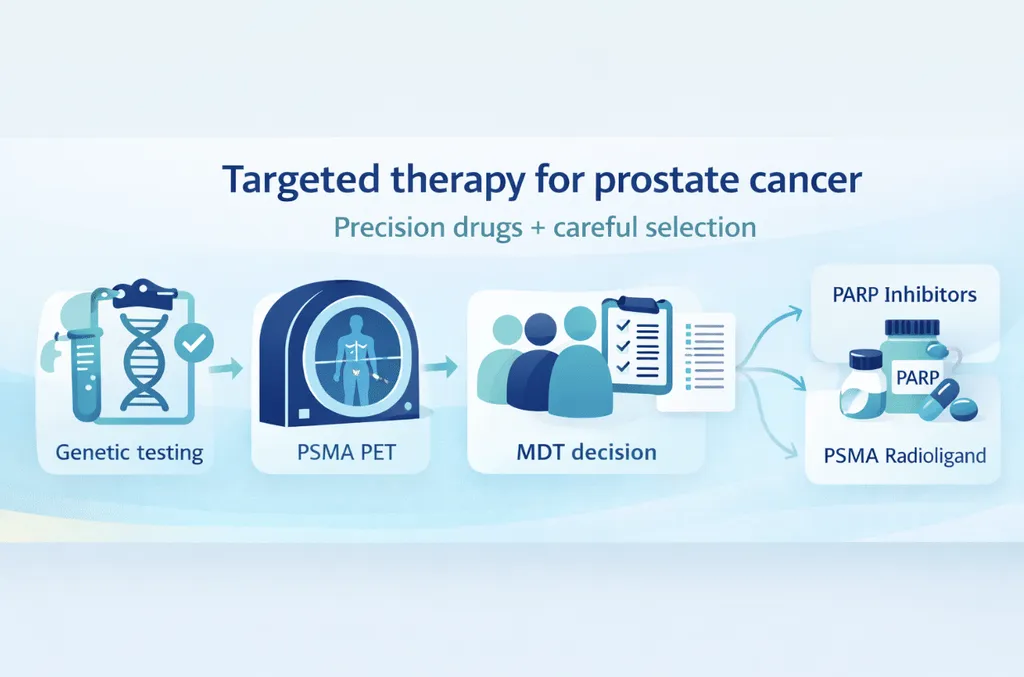
- Combination therapies pairing 177Lu-PSMA with other cancer drugs (like PARP inhibitors or immunotherapy) to make it even more powerful.
- New radioactive elements scientists are exploring actinium-225, which emits a different and more powerful type of radiation (alpha particles), potentially helping patients who do not respond to lutetium-177.
- Other cancer types, because PSMA is also found in the blood vessels of some other tumors, researchers are exploring whether this approach could work in other cancers, too.
The field is evolving rapidly, and what is true today may expand significantly over the next few years.
The Bottom Line
Radiopharmaceutical therapy is an exciting and proven treatment option for men with advanced prostate cancer. It works by using a targeted "smart" drug to deliver radiation directly to cancer cells, with less harm to the rest of your body than traditional chemotherapy.
It is not the right treatment for everyone, but for eligible patients, it can help control the cancer, reduce symptoms, and extend life.
Talk to your doctor about whether this therapy might be right for you. You deserve to understand all of your options.
What Is Radiopharmaceutical Therapy for Prostate Cancer?
If your doctor has mentioned a treatment called lutetium therapy or PSMA-targeted therapy, this article is for you. We'll walk you through what it is, how it works, and what to expect in plain language.
What Is Radiopharmaceutical Therapy?
Radiopharmaceutical therapy (ray-dee-oh-far-muh-SOO-tih-kul) is a newer type of cancer treatment. It uses a special drug that carries a small amount of radiation directly to cancer cells while mostly leaving healthy cells alone.
Think of it this way: traditional chemotherapy is like spraying weed killer all over a garden; it kills the weeds, but it can damage the flowers too. Radiopharmaceutical therapy is more like using a spray that only sticks to weeds while it leaves the flowers alone. It is much more targeted.
How Does It Find Cancer Cells?
Prostate cancer cells have a lot of a protein called PSMA (you can just think of PSMA as a "lock") on their surface. The drug used in this therapy has a special part that acts like a "key"; it fits perfectly into that lock and attaches to the cancer cell.
Once attached, the radioactive part of the drug releases energy that damages the cancer cell and destroys it. Because PSMA is mostly found on prostate cancer cells and not on most other cells in your body, the treatment can seek out cancer in a very targeted way.
The Name of the Treatment
The most commonly used version of this therapy is called Lutetium-177 PSMA-617, sometimes shortened to Lu-177 or Pluvicto (its brand name). It was approved by the U.S. Food and Drug Administration (FDA) in 2022 for men with advanced prostate cancer that has spread and is no longer responding to hormone therapy.
Before You Start: The PSMA PET Scan
Before your doctor can prescribe this therapy, they need to confirm that your cancer cells actually have enough PSMA on their surface. Not all prostate cancers are the same.
To check, you will have a special imaging test called a PSMA PET scan. Here is what to expect:
- A small amount of a harmless radioactive tracer is injected into a vein
- You lie in a scanner for about 20–30 minutes
- The scan "lights up" areas of your body where PSMA-positive cancer cells are present
- Your doctor reviews the images to confirm you are a good candidate for treatment
- If the scan shows PSMA-positive cancer, you may be eligible to receive this therapy.
What Happens During Treatment?
Treatment is given at a specialized clinic or hospital, usually in a nuclear medicine department. This is what you can expect:
- You arrive at the clinic, and a nurse places an IV (a small tube in your vein)
- The drug is slowly injected into your bloodstream. This usually takes less than 30 minutes
- You may need to stay briefly for observation before going home
- Treatment repeats every 6 weeks, for a total of 4 to 6 cycles
Because the drug is radioactive, you will be given safety instructions to protect family members, especially young children and pregnant women, for a few days after each treatment. Your care team will walk you through these precautions in detail.
Does It Work?
Yes, research shows it can make a real difference. A large clinical study called the VISION trial looked at men with advanced prostate cancer who had already tried hormone therapy and chemotherapy. The results showed:
- Men who received this therapy lived longer than those who did not
- Their cancer took longer to grow or spread
- Many men experienced a meaningful improvement in their cancer markers
This is why the FDA approved it — the evidence is strong.
What Are the Side Effects?
Like any cancer treatment, this therapy can cause side effects. The good news is that most people tolerate it well. Common side effects include:
- Dry mouth — the most common complaint; sipping water and chewing sugar-free gum can help
- Fatigue — feeling more tired than usual
- Nausea — usually mild and manageable with medication
- Changes in blood counts — your doctor will monitor this with regular blood tests
Important: Studies show that most patients' quality of life is not significantly worse during this treatment compared to other prostate cancer therapies. Many patients say they feel better than they expected.
Serious side effects are less common but possible. Always let your care team know about any new or worsening symptoms.
What to Expect Between Treatments
During your treatment course, your doctor will keep a close eye on how you are responding. You can expect:
- Blood tests every few weeks to check your blood counts and organ function
- PSA blood tests to track whether the cancer is responding
- Follow-up imaging scans after a few cycles
Questions to Ask Your Doctor
If you are considering this treatment, here are some helpful questions to bring to your next appointment:
- Am I a good candidate for this therapy?
- Will I need a PSMA PET scan first?
- What other treatments have I already tried, and does that matter?
- What side effects should I watch for?
- How will I know if the treatment is working?
- Are there any clinical trials I might qualify for?
- What are the safety precautions I need to follow at home?
Study Results
The biggest proof that this therapy works came from a major clinical trial called the VISION trial. In this study, patients with advanced prostate cancer received either 177Lu-PSMA-617 plus standard care or standard care alone.
The results were impressive:
- Patients who received the therapy lived significantly longer — a median of 15.3 months versus 11.3 months in those who did not.
- The cancer stopped growing for a longer period of time — a median of 8.7 months compared to just 3.4 months in the control group.
- Overall, nearly all of the secondary goals of the trial also favored the treatment.
Based on these results, this therapy was approved by the U.S. Food and Drug Administration (FDA) as a new treatment option for advanced prostate cancer.
What's Next? The Future of Radiopharmaceutical Therapy
Researchers are not stopping here. Several exciting directions are being explored:
- Earlier use in the disease course, testing whether treatment works better if given sooner, before other therapies fail.
- Combination therapies pairing 177Lu-PSMA with other cancer drugs (like PARP inhibitors or immunotherapy) to make it even more powerful.
- New radioactive elements scientists are exploring actinium-225, which emits a different and more powerful type of radiation (alpha particles), potentially helping patients who do not respond to lutetium-177.
- Other cancer types, because PSMA is also found in the blood vessels of some other tumors, researchers are exploring whether this approach could work in other cancers, too.
The field is evolving rapidly, and what is true today may expand significantly over the next few years.
The Bottom Line
Radiopharmaceutical therapy is an exciting and proven treatment option for men with advanced prostate cancer. It works by using a targeted "smart" drug to deliver radiation directly to cancer cells, with less harm to the rest of your body than traditional chemotherapy.
It is not the right treatment for everyone, but for eligible patients, it can help control the cancer, reduce symptoms, and extend life.
Talk to your doctor about whether this therapy might be right for you. You deserve to understand all of your options.

about the author
Todd Foster
Todd has a passion for using technology that can help people have a better life and along the way, help to further research and a cure. He has 3 daughters and lives with his wife in Utah.
More on Treatment Advances


Trending Articles


Get the Latest Prostate Cancer Updates, Delivered to You.
By subscribing to the HealthTree newsletter, you'll receive the latest research, treatment updates, and expert insights to help you navigate your health.
Together we care.
Together we cure.