![[logo] HealthTree Foundation](https://static.healthtree.org/icons/icon_spinner.svg)
![[logo] HealthTree Foundation](https://static.healthtree.org/logo_icon_only.svg)
Mental Health Awareness Month: Ken Casler Shares His Notes on Living with Multiple Myeloma


At HealthTree Foundation, we are committed to amplifying the voices of those navigating cancer. We regularly share patient stories to build community and provide real-world insights that only those who have "been there" can offer.
May is Mental Health Awareness Month. This month, we are sharing the story of Ken Casler. After his diagnosis, Ken became interested in the mental and emotional challenges of a multiple myeloma diagnosis and generously offered to share his experiences with HealthTree.
Ken grew up in California and now lives in France with his wife. He retired in 2013 from a career in higher education, has 2 children and 5 grandchildren. Today, he is a 17-year survivor of multiple myeloma and active in multiple myeloma advocacy work across Europe.
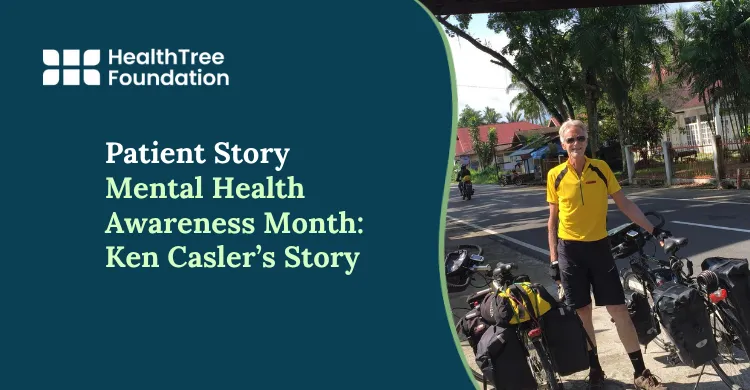
I have always been a healthy, high-energy person, working hard and playing hard. I am an avid traveler and long-distance cyclist with a love of exotic places.
In the fall of 2009, I was 61 years old and living a normal, active life. I worked long hours and traveled extensively for work and pleasure.
I thought I was pretty fit for a 61-year-old, maybe a little tired now and then, prone to infections, but never missing a day of work or canceling a travel plan.
My family doctor didn't like my anemia and infections, so he sent me to a round of specialists to investigate. It took nine months to identify the culprit.
A surprise diagnosis: multiple myeloma
I was surprised when the hematologist told me I had multiple myeloma. What in the world was that, I wondered? It didn't sound good.
At the time, life expectancy with myeloma was around 5 years. Putting a positive spin on a rather grim diagnosis, the hematologist told me I was fortunate, so to speak, because myeloma was attracting lots of attention from researchers and the pharmaceutical industry.
"With a bit of luck, you might benefit from some of the progress," she said.
That was encouraging. Somewhat.
Starting myeloma treatment
Four months later, in March 2010, the hematologist rang and left a message to call back. I was finalizing plans for a solo hiking trip in the Sacred Forests of Japan on the Ise peninsula.
I did call back, and she asked me to cancel all travel plans immediately. My myeloma was out of control. Treatment needed to start, the sooner the better.
Somewhat dazed, I realized that the active phase of my myeloma journey was about to begin. And I remember making a very conscious decision.
I would not let cancer define who I am, dictate how I live, and certainly not influence what I think and feel. I was determined to just live my life. That decision has been the hallmark of my myeloma journey.
Negative thinking after a cancer diagnosis
Have you ever found yourself in a lovely old city or in an exotic landscape somewhere, then discovered you're thinking about something totally unrelated to the situation? Perhaps something unpleasant that happened to you or what someone said to you?
Our minds wander to other places and times, totally unexpectedly. Especially in moments of challenge and stress, unpleasant thoughts and strong emotions can arise and distract us.
Last fall, I was cycling in the hills of Tuscany, lost in thought. It was distracting me from the splendor of the countryside, the hilltop villages, the rust-colored vineyards, the cypress trees lining the narrow road.
When I snapped out of my reverie, I realized that I was missing the entire moment. My mind was wandering, and I was not fully enjoying the experience of Tuscany.
Something similar happens with a cancer diagnosis. We lose touch with the present moment. We become confused and fall prey to our worst fears.
And as we focus on the negative in our lives, we let many imagined horrors play out in our minds, forgetting all the good.
Mark Twain said, "I've suffered a great many catastrophes in my life. Most of them never happened."
Well, even if some of them do happen, it is still possible to step back and recognize that our negative thinking and turbulent emotions are just making us more miserable. Once we realize that, we can find our way out of the dark labyrinth.
Emotions shape our lives
Emotions shape our perceptions and our very lives. Positive emotions make us feel good. Negative ones drag us down.
A difficult challenge, and it doesn't even have to be a life-threatening one, can trigger agonizing thoughts and horrible feelings of suffering. And, if we are not careful, they can sweep us into an abyss of despair.
That's why it is important for cancer patients to be aware, even curious, about the impact of illness on their mental and emotional states.
Flourishing in the face of challenge
After years of traveling far and wide, I began to realize that I needed to explore the inner world of my thoughts and emotions as well. Only then could I handle the turbulence triggered by my struggle with cancer.
I also needed to know more about this strange thing called myeloma, to be more knowledgeable so that I could become more involved in what was going on medically.
Slowly, I realized it is possible to flourish in the face of challenge. Sinking into sadness & despair is an avoidable option.
I began my myeloma journey, determined to transform the challenge of cancer into another life-enriching adventure.
The mental challenge of a stem cell transplant
In preparation for a Stem Cell Transplant in late August 2010, I went through the usual induction cycles every month for four months.
Before the actual transplant procedure, my wife and I spent 2 lovely weeks in Tuscany to relax & unwind.
Then I spent 25 days in a sterile room, coping with a flurry of side effects.
The process is fraught with uncertainty and confusion. We don’t know or understand what is going on. That is unsettling and can provoke a tailspin into doubt and anxiety.
But I decided to use my time well and prepare for the future. So, I put together a 3-week trip to South-east Asia that coming winter.
At every twist and turn of my journey, travel projects have been my mainstay.
They project me forward into the future, creating a horizon of better days to come.
A cycling journey during remission
I remained in remission without treatment for the next 30 months.
In early 2013, I began thinking about what adventure I might undertake to celebrate my retirement.
I had been traveling in and around Asia for over 25 years and was particularly fond of the Mekong River and the countries surrounding its course: Burma, Thailand, Laos, Cambodia, Vietnam.
What better way to explore the region than to cycle down the mighty Mekong, using boats when the roads ran out and accepting the inevitable challenges along the way.
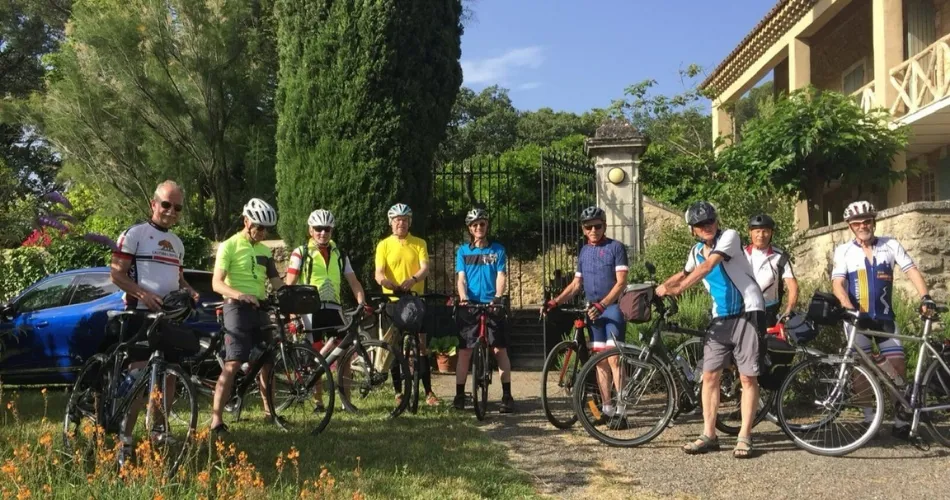
In January 2014, I set off on my adventure with eight cycling friends from France. My hematologist was skeptical, but she acknowledged my determination.
For 6 weeks we cycled through Thailand, Laos and Cambodia, some 2,500 km (1500 mi).
Exhilarated by the experience, I have cycled thousands of kilometers in South East Asia in the winters and thousands more in Europe in the summers, always with my supply of myeloma medicines in tow.
Second line of treatment and clinical trials
In mid-2014 I was told that my myeloma was progressing and that further treatment was necessary. I began a 2nd line with Revlimid and Medrol.
For the next 26 months I followed the protocol until the cytopenia became too challenging and treatment had to be stopped.
In January 2017 I was admitted into a Clinical Trial exploring the impact of a triplet combination on myeloma. The approach was novel at the time. Today 3 and 4 molecules in combination are the Standard of Care already in the first line.
In August 2018 the hospital granted me a 3 week break from treatment.
I cycled the French portion of the Saint James’ Way to the Spanish border, about 900 km (550 mi).
When I returned home, my myeloma had progressed again.
So, I was withdrawn from the Clinical Trial and preparations began for a second Stem Cell Transplant, my 4th line of treatment.
CAR T-cell therapy: a new opportunity
By January 2019 I was back on my feet and for the next 3 years, I was on Pomalidamid in monotherapy.
It kept my myeloma at bay until December 2021.
After a series of bad chest infections, and maybe too much strenuous yoga in a cold studio, I found myself in the hospital’s Intensive Care Unit with acute pneumonia and septicemia.
It was not a good sign. By that time, I was a 10-year survivor of multiple myeloma with a case history of 4 lines of treatment. I was also refractory to the 3 major classes of drugs.
In mid-January 2022, I met with my hematologist to discuss next steps. She asked me what I thought about CAR T-cell therapy. CAR-T was becoming something of a holy grail for myeloma patients.
In 2022, there were only 10 slots per month available in France. I was fortunate that a tiny window of opportunity had opened when it did. Of course, I was immediately in favor.
I recalled what the hematologist had said 10 years earlier: “With a bit of luck, you might benefit from advances in research”. She was right.
It took me a full 6 months to recover from my CAR T-cell therapy. Gradually, after the first 3 or 4 difficult months, I resumed my exercise routine – 2 hours a day of yoga, tennis, walking, cycling around town.
But long-distance road cycling was still out of the question.
Except for a hospital visit every other month, I did feel liberated! It was only in the late Summer of 2024, that I felt bold enough to get on a bike again for some serious cycling.
Today, I am still in complete response to the CAR-T. And I take no myeloma-specific medicine whatsoever. I do rely on VRd: but not Velcade-Revlimid-Dexamethasone. I have my own special brand of VRd: Vitality-Resilience-Determination.
Setbacks and breakthroughs during myeloma treatment
We have seen that multiple myeloma, although incurable, is treatable.
Of course, the journey is rife with setbacks, but also breakthroughs. It remains a rollercoaster ride of triumphs and tribulations. But we patients never abandon hope.
We learn to handle whatever illness and treatment throw our way. We do so with courage and determination.
I wish to thank the healthcare professionals and developers of myeloma medicines for the quality and quantity of life you have given myeloma patients everywhere. Please continue your efforts to meet patient needs and find a cure for our disease.
And we, patients, will do our part: we will live our lives to the fullest.
Real stories. Real hope.
Subscribe to our weekly newsletter to receive more patient journeys and community updates directly in your inbox.
At HealthTree Foundation, we are committed to amplifying the voices of those navigating cancer. We regularly share patient stories to build community and provide real-world insights that only those who have "been there" can offer.
May is Mental Health Awareness Month. This month, we are sharing the story of Ken Casler. After his diagnosis, Ken became interested in the mental and emotional challenges of a multiple myeloma diagnosis and generously offered to share his experiences with HealthTree.
Ken grew up in California and now lives in France with his wife. He retired in 2013 from a career in higher education, has 2 children and 5 grandchildren. Today, he is a 17-year survivor of multiple myeloma and active in multiple myeloma advocacy work across Europe.
I have always been a healthy, high-energy person, working hard and playing hard. I am an avid traveler and long-distance cyclist with a love of exotic places.
In the fall of 2009, I was 61 years old and living a normal, active life. I worked long hours and traveled extensively for work and pleasure.
I thought I was pretty fit for a 61-year-old, maybe a little tired now and then, prone to infections, but never missing a day of work or canceling a travel plan.
My family doctor didn't like my anemia and infections, so he sent me to a round of specialists to investigate. It took nine months to identify the culprit.
A surprise diagnosis: multiple myeloma
I was surprised when the hematologist told me I had multiple myeloma. What in the world was that, I wondered? It didn't sound good.
At the time, life expectancy with myeloma was around 5 years. Putting a positive spin on a rather grim diagnosis, the hematologist told me I was fortunate, so to speak, because myeloma was attracting lots of attention from researchers and the pharmaceutical industry.
"With a bit of luck, you might benefit from some of the progress," she said.
That was encouraging. Somewhat.
Starting myeloma treatment
Four months later, in March 2010, the hematologist rang and left a message to call back. I was finalizing plans for a solo hiking trip in the Sacred Forests of Japan on the Ise peninsula.
I did call back, and she asked me to cancel all travel plans immediately. My myeloma was out of control. Treatment needed to start, the sooner the better.
Somewhat dazed, I realized that the active phase of my myeloma journey was about to begin. And I remember making a very conscious decision.
I would not let cancer define who I am, dictate how I live, and certainly not influence what I think and feel. I was determined to just live my life. That decision has been the hallmark of my myeloma journey.
Negative thinking after a cancer diagnosis
Have you ever found yourself in a lovely old city or in an exotic landscape somewhere, then discovered you're thinking about something totally unrelated to the situation? Perhaps something unpleasant that happened to you or what someone said to you?
Our minds wander to other places and times, totally unexpectedly. Especially in moments of challenge and stress, unpleasant thoughts and strong emotions can arise and distract us.
Last fall, I was cycling in the hills of Tuscany, lost in thought. It was distracting me from the splendor of the countryside, the hilltop villages, the rust-colored vineyards, the cypress trees lining the narrow road.
When I snapped out of my reverie, I realized that I was missing the entire moment. My mind was wandering, and I was not fully enjoying the experience of Tuscany.
Something similar happens with a cancer diagnosis. We lose touch with the present moment. We become confused and fall prey to our worst fears.
And as we focus on the negative in our lives, we let many imagined horrors play out in our minds, forgetting all the good.
Mark Twain said, "I've suffered a great many catastrophes in my life. Most of them never happened."
Well, even if some of them do happen, it is still possible to step back and recognize that our negative thinking and turbulent emotions are just making us more miserable. Once we realize that, we can find our way out of the dark labyrinth.
Emotions shape our lives
Emotions shape our perceptions and our very lives. Positive emotions make us feel good. Negative ones drag us down.
A difficult challenge, and it doesn't even have to be a life-threatening one, can trigger agonizing thoughts and horrible feelings of suffering. And, if we are not careful, they can sweep us into an abyss of despair.
That's why it is important for cancer patients to be aware, even curious, about the impact of illness on their mental and emotional states.
Flourishing in the face of challenge
After years of traveling far and wide, I began to realize that I needed to explore the inner world of my thoughts and emotions as well. Only then could I handle the turbulence triggered by my struggle with cancer.
I also needed to know more about this strange thing called myeloma, to be more knowledgeable so that I could become more involved in what was going on medically.
Slowly, I realized it is possible to flourish in the face of challenge. Sinking into sadness & despair is an avoidable option.
I began my myeloma journey, determined to transform the challenge of cancer into another life-enriching adventure.
The mental challenge of a stem cell transplant
In preparation for a Stem Cell Transplant in late August 2010, I went through the usual induction cycles every month for four months.
Before the actual transplant procedure, my wife and I spent 2 lovely weeks in Tuscany to relax & unwind.
Then I spent 25 days in a sterile room, coping with a flurry of side effects.
The process is fraught with uncertainty and confusion. We don’t know or understand what is going on. That is unsettling and can provoke a tailspin into doubt and anxiety.
But I decided to use my time well and prepare for the future. So, I put together a 3-week trip to South-east Asia that coming winter.
At every twist and turn of my journey, travel projects have been my mainstay.
They project me forward into the future, creating a horizon of better days to come.
A cycling journey during remission
I remained in remission without treatment for the next 30 months.
In early 2013, I began thinking about what adventure I might undertake to celebrate my retirement.
I had been traveling in and around Asia for over 25 years and was particularly fond of the Mekong River and the countries surrounding its course: Burma, Thailand, Laos, Cambodia, Vietnam.
What better way to explore the region than to cycle down the mighty Mekong, using boats when the roads ran out and accepting the inevitable challenges along the way.
In January 2014, I set off on my adventure with eight cycling friends from France. My hematologist was skeptical, but she acknowledged my determination.
For 6 weeks we cycled through Thailand, Laos and Cambodia, some 2,500 km (1500 mi).
Exhilarated by the experience, I have cycled thousands of kilometers in South East Asia in the winters and thousands more in Europe in the summers, always with my supply of myeloma medicines in tow.
Second line of treatment and clinical trials
In mid-2014 I was told that my myeloma was progressing and that further treatment was necessary. I began a 2nd line with Revlimid and Medrol.
For the next 26 months I followed the protocol until the cytopenia became too challenging and treatment had to be stopped.
In January 2017 I was admitted into a Clinical Trial exploring the impact of a triplet combination on myeloma. The approach was novel at the time. Today 3 and 4 molecules in combination are the Standard of Care already in the first line.
In August 2018 the hospital granted me a 3 week break from treatment.
I cycled the French portion of the Saint James’ Way to the Spanish border, about 900 km (550 mi).
When I returned home, my myeloma had progressed again.
So, I was withdrawn from the Clinical Trial and preparations began for a second Stem Cell Transplant, my 4th line of treatment.
CAR T-cell therapy: a new opportunity
By January 2019 I was back on my feet and for the next 3 years, I was on Pomalidamid in monotherapy.
It kept my myeloma at bay until December 2021.
After a series of bad chest infections, and maybe too much strenuous yoga in a cold studio, I found myself in the hospital’s Intensive Care Unit with acute pneumonia and septicemia.
It was not a good sign. By that time, I was a 10-year survivor of multiple myeloma with a case history of 4 lines of treatment. I was also refractory to the 3 major classes of drugs.
In mid-January 2022, I met with my hematologist to discuss next steps. She asked me what I thought about CAR T-cell therapy. CAR-T was becoming something of a holy grail for myeloma patients.
In 2022, there were only 10 slots per month available in France. I was fortunate that a tiny window of opportunity had opened when it did. Of course, I was immediately in favor.
I recalled what the hematologist had said 10 years earlier: “With a bit of luck, you might benefit from advances in research”. She was right.
It took me a full 6 months to recover from my CAR T-cell therapy. Gradually, after the first 3 or 4 difficult months, I resumed my exercise routine – 2 hours a day of yoga, tennis, walking, cycling around town.
But long-distance road cycling was still out of the question.
Except for a hospital visit every other month, I did feel liberated! It was only in the late Summer of 2024, that I felt bold enough to get on a bike again for some serious cycling.
Today, I am still in complete response to the CAR-T. And I take no myeloma-specific medicine whatsoever. I do rely on VRd: but not Velcade-Revlimid-Dexamethasone. I have my own special brand of VRd: Vitality-Resilience-Determination.
Setbacks and breakthroughs during myeloma treatment
We have seen that multiple myeloma, although incurable, is treatable.
Of course, the journey is rife with setbacks, but also breakthroughs. It remains a rollercoaster ride of triumphs and tribulations. But we patients never abandon hope.
We learn to handle whatever illness and treatment throw our way. We do so with courage and determination.
I wish to thank the healthcare professionals and developers of myeloma medicines for the quality and quantity of life you have given myeloma patients everywhere. Please continue your efforts to meet patient needs and find a cure for our disease.
And we, patients, will do our part: we will live our lives to the fullest.
Real stories. Real hope.
Subscribe to our weekly newsletter to receive more patient journeys and community updates directly in your inbox.
about the author
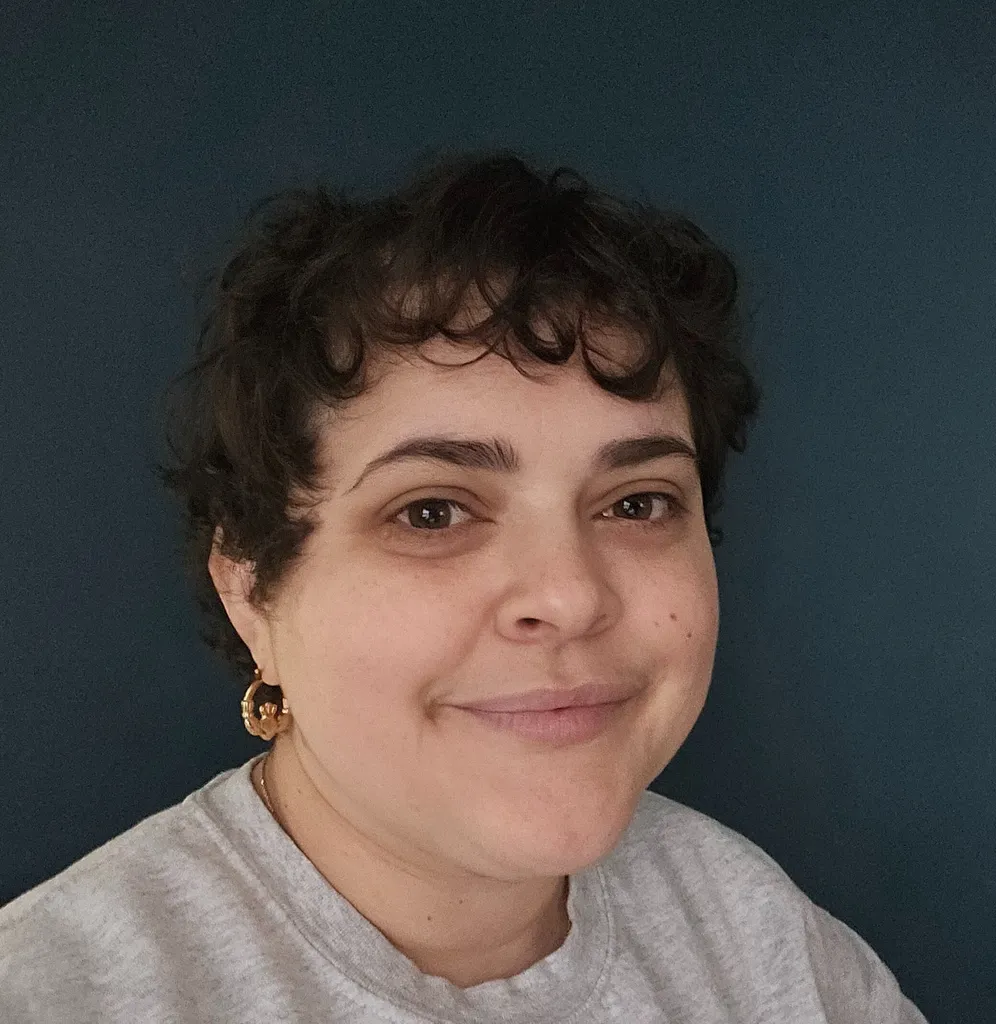
Leslie Fannon Zhang
Leslie Fannon Zhang is a health and science writer and editor who joined HealthTree in 2025. She is passionate about making information about cancer and cancer care as accessible as possible. Leslie has written for the American Society of Clinical Oncology, the American Cancer Society, and the American Association for the Advancement of Science.
More on Patient Stories
Trending Articles


Upcoming Events



Get the Latest Blood Cancer Updates, Delivered to You.
By subscribing to the HealthTree newsletter, you'll receive the latest research, treatment updates, and expert insights to help you navigate your health.
Together we care.
Together we cure.