![[logo] HealthTree Foundation](https://static.healthtree.org/icons/icon_spinner.svg)
![[logo] HealthTree Foundation](https://static.healthtree.org/logo_icon_only.svg)
Understanding Testicular Cancer

What Is Testicular Cancer? Types, Anatomy, and Risk Factors
Last updated and reviewed on June 28, 2026.
Testicular cancer is a disease in which cells inside one or both testicles begin to grow and divide in ways they should not. Every cell in your body carries instructions in its DNA that tell it when to grow, when to stop, and when to die. When something goes wrong with those instructions, a cell can start multiplying without stopping, eventually forming a mass called a tumor. When that tumor starts in a testicle, it is called testicular cancer.
Testicular cancer is one of the most treatable cancers in all of medicine, even when it has spread to other parts of the body. The five-year survival rate across all stages is over 95 percent, which makes it one of the most survivable cancer diagnoses a person can receive. Because it most commonly affects young men between the ages of 15 and 35, understanding what it is, how it starts, and how the body is affected is especially important for a population that may not expect to be thinking about cancer at that stage of life.
What Is the Testicle?
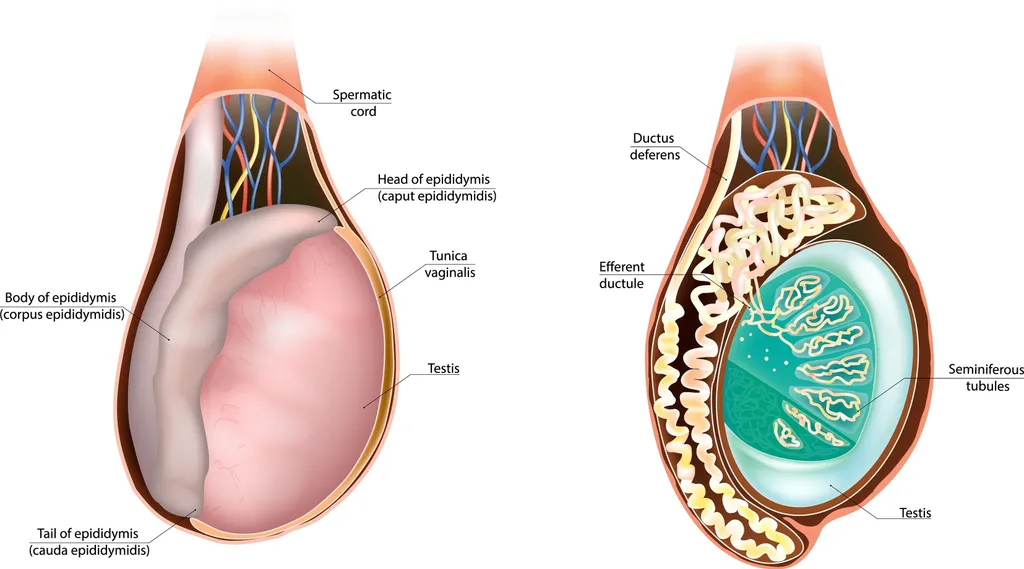
The testicles, also called testes, are two small, egg-shaped glands that sit inside the scrotum, the pouch of skin beneath the penis. Each testicle is roughly the size of a large marble in most adult men. The testicles have two main jobs: they produce testosterone, the primary male sex hormone, and they produce sperm, the cells needed for reproduction.
Inside each testicle are coiled tubes called seminiferous tubules. This is where sperm cells are made and mature. The testicles are also home to several other specialized cell types, including Leydig cells (which produce testosterone) and Sertoli cells (which support sperm production). Most testicular cancers arise from the cells in the seminiferous tubules, a group of cells called germ cells.
Attached to the back of each testicle is a coiled tube called the epididymis, where sperm finish maturing before they travel through the vas deferens toward the urethra. Above the testicles, a cord called the spermatic cord carries blood vessels, nerves, and the vas deferens. These surrounding structures are important in understanding how testicular cancer is treated and staged.
How Does Testicular Cancer Start?
Testicular cancer almost always begins in the germ cells, which are the cells responsible for making sperm. Something happens to the DNA inside a germ cell that causes it to grow and divide without the normal controls, eventually forming a tumor. In most cases, the exact reason why this happens is not known. It is not something a person caused through their behavior or choices.
Researchers have found that almost all testicular germ cell tumors have an extra copy of a part of chromosome 12, called isochromosome 12p. This chromosomal abnormality appears to be a key driver of germ cell tumor development, though researchers are still working to fully understand why it occurs and what triggers it. In some cases, precancerous cells called intratubular germ cell neoplasia (ITGCN, also called carcinoma in situ) exist in the testicle for years before developing into a true cancer.
One well-established connection is between undescended testicles and cancer risk. During normal fetal development, the testicles form inside the abdomen and then descend into the scrotum before birth or shortly after. When a testicle fails to descend, a condition called cryptorchidism, the germ cells in that testicle are exposed to a higher body temperature than normal, which may contribute to the DNA changes that lead to cancer. Even testicles that are surgically corrected still carry a modestly elevated risk compared to normally descended testicles.
Where Does Testicular Cancer Start?
Testicular cancer starts inside the testicle itself. In the great majority of cases, more than 95 percent, begin in the germ cells of the testicle, which is why the most common testicular cancers are called germ cell tumors (GCTs). These are divided into two main subtypes, seminomas and nonseminomas, based on the type of germ cell they arose from and how the cells look under a microscope.
Testicular cancer almost always affects only one testicle. Bilateral testicular cancer (cancer in both testicles at the same time) is rare, occurring in about 2 to 3 percent of cases, though men who have had testicular cancer in one testicle do have a somewhat higher lifetime risk of developing cancer in the other one.
Rarely, tumors can develop in other parts of the male reproductive system or along the path that the testicles traveled during fetal development, such as in the retroperitoneum (the space behind the abdominal organs) or the mediastinum (the space in the center of the chest). These are called extragonadal germ cell tumors and are treated similarly to testicular germ cell tumors.
How Does Testicular Cancer Affect the Body?
In its early stages, testicular cancer often causes few symptoms other than a painless lump or swelling in the affected testicle. Many men notice this themselves, sometimes after an injury, and it can be easy to dismiss or attribute it to something benign. As the tumor grows within the testicle, it can cause a feeling of heaviness or a dull ache in the scrotum or lower abdomen.
Some testicular tumors, particularly certain nonseminoma types, produce hormones or hormone-like proteins. If these proteins reach high enough levels, they can cause breast tissue to grow in men, a condition called gynecomastia. Tumors that produce very high levels of a hormone called human chorionic gonadotropin (hCG) can also cause symptoms like nausea or fatigue.
When testicular cancer spreads, it typically travels first to the lymph nodes at the back of the abdomen, called the retroperitoneal lymph nodes. If those lymph nodes become significantly enlarged, they can cause back pain or a dull abdominal ache. Further spread can reach the lungs, liver, brain, and bones, though most men with testicular cancer are diagnosed before the disease reaches this stage because the primary tumor is usually detectable with self-examination.
What Are the Types of Testicular Cancer?
Almost all testicular cancers are germ cell tumors. The two main categories behave quite differently and are treated with somewhat different approaches.
- Seminoma Seminomas account for roughly 50 to 55 percent of testicular germ cell tumors. They arise from germ cells that look more like primitive, undeveloped cells under the microscope. Seminomas tend to grow more slowly than nonseminomas and are more likely to stay within the testicle or spread only to nearby lymph nodes before being detected. They are highly sensitive to both radiation therapy and chemotherapy. Pure seminomas do not produce AFP (alpha-fetoprotein), a tumor marker, though they may produce modest elevations of hCG. Seminomas can be divided into classical seminoma (the most common) and spermatocytic seminoma (a rare variant that occurs in older men and has an excellent prognosis).
- Nonseminoma Nonseminomas account for the other roughly 45 to 50 percent of germ cell tumors. They tend to grow faster than seminomas and are more likely to have spread by the time of diagnosis, though they respond very well to platinum-based chemotherapy. Nonseminomas include several subtypes that can occur individually or in combination within the same tumor:
- Embryonal carcinoma is one of the most aggressive nonseminoma subtypes and is found in many mixed germ cell tumors.
- Yolk sac tumor is the most common testicular tumor in young children and infants, where it has an excellent prognosis. In adults, pure yolk sac tumors are rare but are found as a component of many mixed nonseminomas. Yolk sac tumors produce AFP, which is an important tumor marker used to track treatment response.
- Choriocarcinoma is a very rare but highly aggressive form of testicular cancer that spreads rapidly through the bloodstream. It produces very high levels of hCG.
- Teratoma consists of cells that have differentiated into tissues resembling normal body structures, like hair, muscle, or cartilage, but in abnormal locations. In children, teratomas are usually benign. In adults, they are considered malignant because they can spread and resist chemotherapy.
- Mixed Germ Cell Tumors. Many nonseminoma tumors are actually a mixture of two or more of the above subtypes. Mixed germ cell tumors are treated as nonseminomas.
- Non-Germ Cell Tumors: A small number of testicular tumors, about 5 percent, do not arise from germ cells. The most important types are Leydig cell tumors and Sertoli cell tumors. These are usually benign (not cancerous), though malignant forms exist. They often produce hormones and may cause symptoms related to hormonal imbalance. They do not respond well to radiation or chemotherapy the way germ cell tumors do, so surgery is the primary treatment.
What Are the Related Conditions to Testicular Cancer?
A few conditions are related to testicular cancer, either because they raise the risk of developing it or because they can sometimes be confused with it during evaluation.
- Cryptorchidism (undescended testicle): The most important related condition. A testicle that did not descend normally into the scrotum carries a significantly elevated risk of becoming cancerous later in life, even if it is surgically corrected with a procedure called orchiopexy. Men who have an undescended testicle should discuss their history with their doctor and be aware of what to watch for.
- Intratubular germ cell neoplasia (ITGCN, also called carcinoma in situ): A precancerous condition in which abnormal germ cells are found inside the seminiferous tubules but have not yet formed a true tumor. ITGCN is found in the other testicle in about 5 percent of men with a testicular germ cell tumor and is also found in men with a history of cryptorchidism. Left untreated, a significant proportion of ITGCN cases will progress to invasive cancer.
- Epididymo-orchitis: An infection or inflammation of the testicle and epididymis that can cause swelling, redness, and pain and can look similar to testicular cancer on initial examination. It is much more common than testicular cancer and is usually caused by a bacterial infection. Distinguishing epididymo-orchitis from testicular cancer promptly is important because the treatments are completely different.
- Hydrocele: A fluid-filled sac around the testicle that can cause painless scrotal swelling and can sometimes be a sign of an underlying testicular tumor, even though most hydroceles are benign.
What Are the Genetic and Risk Factors?
Most men who develop testicular cancer have no clearly identifiable genetic cause, but a few factors are known to meaningfully raise risk.
- A personal history: Cancer in the other testicle is one of the strongest risk factors. Men who have had testicular cancer in one testicle have roughly a 2 to 5 percent lifetime risk of developing cancer in the remaining testicle, compared to less than 0.5 percent in the general male population.
- A family history: Testicular cancer also raises risk, particularly having a father or brother who had the disease. Men with a father who had testicular cancer have about a 4 to 6 times higher risk, and men with a brother who had it have about an 8 to 10 times higher risk. This suggests a genetic component, though the specific genes responsible are still being studied.
- Klinefelter syndrome: A chromosomal condition in which men are born with an extra X chromosome (XXY instead of XY). It is associated with a modestly elevated risk of certain germ cell tumors, particularly extragonadal germ cell tumors in the mediastinum.
- Carney complex: Other rare inherited conditions have been associated with Sertoli cell and other non-germ cell testicular tumors.
- Race and ethnicity: Testicular cancer is approximately five times more common in white men than in Black men in the United States, and rates in Hispanic men fall in between. The reasons for these differences are not well understood.
What Are the Related Cancers to Testicular Cancer?
Testicular germ cell tumors are related to extragonadal germ cell tumors, which are tumors arising from germ cells outside the testicles, typically in the retroperitoneum or the mediastinum. These tumors are thought to arise from germ cells that migrated abnormally during fetal development and are treated with similar chemotherapy regimens as testicular germ cell tumors.
Because testicular cancer is associated with certain chromosomal abnormalities, particularly isochromosome 12p, and because germ cells exist in other parts of the body during development, germ cell tumors can also rarely arise in the ovaries, the brain, and other sites. Ovarian germ cell tumors share some molecular characteristics with testicular germ cell tumors, though the clinical behavior and management differ in some ways.
Men who have been treated for testicular cancer with certain chemotherapy agents (particularly bleomycin, etoposide, and cisplatin, the BEP regimen) or radiation therapy have a modestly elevated long-term risk of developing secondary cancers, including leukemia and solid tumors, many years after treatment. This is one reason that long-term follow-up after testicular cancer treatment is important.
Sources:
- American Cancer Society. Testicular Cancer. https://www.cancer.org/cancer/types/testicular-cancer.html
- National Cancer Institute. Testicular Cancer Treatment (PDQ) Patient Version. https://www.cancer.gov/types/testicular/patient/testicular-treatment-pdq
- Siegel RL, Miller KD, Jemal A. Cancer Statistics, 2024. CA: A Cancer Journal for Clinicians. 2024;74(1):12-49. https://acsjournals.onlinelibrary.wiley.com/doi/full/10.3322/caac.21820?_hsmi=290445218&utm_source=chatgpt.com
- Feldman DR, Bosl GJ, Sheinfeld J, Motzer RJ. Medical Treatment of Advanced Testicular Cancer. JAMA. 2008;299(6):672-684. https://jamanetwork.com/journals/jama/fullarticle/181433?utm_source=chatgpt.com
- Dieckmann KP, Pichlmeier U. Clinical Epidemiology of Testicular Germ Cell Tumors. World Journal of Urology. 2004;22(1):2-14. https://jamanetwork.com/journals/jama/fullarticle/181433?utm_source=chatgpt.com
- American Cancer Society. Key Statistics for Testicular Cancer. https://www.cancer.org/cancer/types/testicular-cancer/about/key-statistics.html
What Is Testicular Cancer? Types, Anatomy, and Risk Factors
Last updated and reviewed on June 28, 2026.
Testicular cancer is a disease in which cells inside one or both testicles begin to grow and divide in ways they should not. Every cell in your body carries instructions in its DNA that tell it when to grow, when to stop, and when to die. When something goes wrong with those instructions, a cell can start multiplying without stopping, eventually forming a mass called a tumor. When that tumor starts in a testicle, it is called testicular cancer.
Testicular cancer is one of the most treatable cancers in all of medicine, even when it has spread to other parts of the body. The five-year survival rate across all stages is over 95 percent, which makes it one of the most survivable cancer diagnoses a person can receive. Because it most commonly affects young men between the ages of 15 and 35, understanding what it is, how it starts, and how the body is affected is especially important for a population that may not expect to be thinking about cancer at that stage of life.
What Is the Testicle?
The testicles, also called testes, are two small, egg-shaped glands that sit inside the scrotum, the pouch of skin beneath the penis. Each testicle is roughly the size of a large marble in most adult men. The testicles have two main jobs: they produce testosterone, the primary male sex hormone, and they produce sperm, the cells needed for reproduction.
Inside each testicle are coiled tubes called seminiferous tubules. This is where sperm cells are made and mature. The testicles are also home to several other specialized cell types, including Leydig cells (which produce testosterone) and Sertoli cells (which support sperm production). Most testicular cancers arise from the cells in the seminiferous tubules, a group of cells called germ cells.
Attached to the back of each testicle is a coiled tube called the epididymis, where sperm finish maturing before they travel through the vas deferens toward the urethra. Above the testicles, a cord called the spermatic cord carries blood vessels, nerves, and the vas deferens. These surrounding structures are important in understanding how testicular cancer is treated and staged.
How Does Testicular Cancer Start?
Testicular cancer almost always begins in the germ cells, which are the cells responsible for making sperm. Something happens to the DNA inside a germ cell that causes it to grow and divide without the normal controls, eventually forming a tumor. In most cases, the exact reason why this happens is not known. It is not something a person caused through their behavior or choices.
Researchers have found that almost all testicular germ cell tumors have an extra copy of a part of chromosome 12, called isochromosome 12p. This chromosomal abnormality appears to be a key driver of germ cell tumor development, though researchers are still working to fully understand why it occurs and what triggers it. In some cases, precancerous cells called intratubular germ cell neoplasia (ITGCN, also called carcinoma in situ) exist in the testicle for years before developing into a true cancer.
One well-established connection is between undescended testicles and cancer risk. During normal fetal development, the testicles form inside the abdomen and then descend into the scrotum before birth or shortly after. When a testicle fails to descend, a condition called cryptorchidism, the germ cells in that testicle are exposed to a higher body temperature than normal, which may contribute to the DNA changes that lead to cancer. Even testicles that are surgically corrected still carry a modestly elevated risk compared to normally descended testicles.
Where Does Testicular Cancer Start?
Testicular cancer starts inside the testicle itself. In the great majority of cases, more than 95 percent, begin in the germ cells of the testicle, which is why the most common testicular cancers are called germ cell tumors (GCTs). These are divided into two main subtypes, seminomas and nonseminomas, based on the type of germ cell they arose from and how the cells look under a microscope.
Testicular cancer almost always affects only one testicle. Bilateral testicular cancer (cancer in both testicles at the same time) is rare, occurring in about 2 to 3 percent of cases, though men who have had testicular cancer in one testicle do have a somewhat higher lifetime risk of developing cancer in the other one.
Rarely, tumors can develop in other parts of the male reproductive system or along the path that the testicles traveled during fetal development, such as in the retroperitoneum (the space behind the abdominal organs) or the mediastinum (the space in the center of the chest). These are called extragonadal germ cell tumors and are treated similarly to testicular germ cell tumors.
How Does Testicular Cancer Affect the Body?
In its early stages, testicular cancer often causes few symptoms other than a painless lump or swelling in the affected testicle. Many men notice this themselves, sometimes after an injury, and it can be easy to dismiss or attribute it to something benign. As the tumor grows within the testicle, it can cause a feeling of heaviness or a dull ache in the scrotum or lower abdomen.
Some testicular tumors, particularly certain nonseminoma types, produce hormones or hormone-like proteins. If these proteins reach high enough levels, they can cause breast tissue to grow in men, a condition called gynecomastia. Tumors that produce very high levels of a hormone called human chorionic gonadotropin (hCG) can also cause symptoms like nausea or fatigue.
When testicular cancer spreads, it typically travels first to the lymph nodes at the back of the abdomen, called the retroperitoneal lymph nodes. If those lymph nodes become significantly enlarged, they can cause back pain or a dull abdominal ache. Further spread can reach the lungs, liver, brain, and bones, though most men with testicular cancer are diagnosed before the disease reaches this stage because the primary tumor is usually detectable with self-examination.
What Are the Types of Testicular Cancer?
Almost all testicular cancers are germ cell tumors. The two main categories behave quite differently and are treated with somewhat different approaches.
- Seminoma Seminomas account for roughly 50 to 55 percent of testicular germ cell tumors. They arise from germ cells that look more like primitive, undeveloped cells under the microscope. Seminomas tend to grow more slowly than nonseminomas and are more likely to stay within the testicle or spread only to nearby lymph nodes before being detected. They are highly sensitive to both radiation therapy and chemotherapy. Pure seminomas do not produce AFP (alpha-fetoprotein), a tumor marker, though they may produce modest elevations of hCG. Seminomas can be divided into classical seminoma (the most common) and spermatocytic seminoma (a rare variant that occurs in older men and has an excellent prognosis).
- Nonseminoma Nonseminomas account for the other roughly 45 to 50 percent of germ cell tumors. They tend to grow faster than seminomas and are more likely to have spread by the time of diagnosis, though they respond very well to platinum-based chemotherapy. Nonseminomas include several subtypes that can occur individually or in combination within the same tumor:
- Embryonal carcinoma is one of the most aggressive nonseminoma subtypes and is found in many mixed germ cell tumors.
- Yolk sac tumor is the most common testicular tumor in young children and infants, where it has an excellent prognosis. In adults, pure yolk sac tumors are rare but are found as a component of many mixed nonseminomas. Yolk sac tumors produce AFP, which is an important tumor marker used to track treatment response.
- Choriocarcinoma is a very rare but highly aggressive form of testicular cancer that spreads rapidly through the bloodstream. It produces very high levels of hCG.
- Teratoma consists of cells that have differentiated into tissues resembling normal body structures, like hair, muscle, or cartilage, but in abnormal locations. In children, teratomas are usually benign. In adults, they are considered malignant because they can spread and resist chemotherapy.
- Mixed Germ Cell Tumors. Many nonseminoma tumors are actually a mixture of two or more of the above subtypes. Mixed germ cell tumors are treated as nonseminomas.
- Non-Germ Cell Tumors: A small number of testicular tumors, about 5 percent, do not arise from germ cells. The most important types are Leydig cell tumors and Sertoli cell tumors. These are usually benign (not cancerous), though malignant forms exist. They often produce hormones and may cause symptoms related to hormonal imbalance. They do not respond well to radiation or chemotherapy the way germ cell tumors do, so surgery is the primary treatment.
What Are the Related Conditions to Testicular Cancer?
A few conditions are related to testicular cancer, either because they raise the risk of developing it or because they can sometimes be confused with it during evaluation.
- Cryptorchidism (undescended testicle): The most important related condition. A testicle that did not descend normally into the scrotum carries a significantly elevated risk of becoming cancerous later in life, even if it is surgically corrected with a procedure called orchiopexy. Men who have an undescended testicle should discuss their history with their doctor and be aware of what to watch for.
- Intratubular germ cell neoplasia (ITGCN, also called carcinoma in situ): A precancerous condition in which abnormal germ cells are found inside the seminiferous tubules but have not yet formed a true tumor. ITGCN is found in the other testicle in about 5 percent of men with a testicular germ cell tumor and is also found in men with a history of cryptorchidism. Left untreated, a significant proportion of ITGCN cases will progress to invasive cancer.
- Epididymo-orchitis: An infection or inflammation of the testicle and epididymis that can cause swelling, redness, and pain and can look similar to testicular cancer on initial examination. It is much more common than testicular cancer and is usually caused by a bacterial infection. Distinguishing epididymo-orchitis from testicular cancer promptly is important because the treatments are completely different.
- Hydrocele: A fluid-filled sac around the testicle that can cause painless scrotal swelling and can sometimes be a sign of an underlying testicular tumor, even though most hydroceles are benign.
What Are the Genetic and Risk Factors?
Most men who develop testicular cancer have no clearly identifiable genetic cause, but a few factors are known to meaningfully raise risk.
- A personal history: Cancer in the other testicle is one of the strongest risk factors. Men who have had testicular cancer in one testicle have roughly a 2 to 5 percent lifetime risk of developing cancer in the remaining testicle, compared to less than 0.5 percent in the general male population.
- A family history: Testicular cancer also raises risk, particularly having a father or brother who had the disease. Men with a father who had testicular cancer have about a 4 to 6 times higher risk, and men with a brother who had it have about an 8 to 10 times higher risk. This suggests a genetic component, though the specific genes responsible are still being studied.
- Klinefelter syndrome: A chromosomal condition in which men are born with an extra X chromosome (XXY instead of XY). It is associated with a modestly elevated risk of certain germ cell tumors, particularly extragonadal germ cell tumors in the mediastinum.
- Carney complex: Other rare inherited conditions have been associated with Sertoli cell and other non-germ cell testicular tumors.
- Race and ethnicity: Testicular cancer is approximately five times more common in white men than in Black men in the United States, and rates in Hispanic men fall in between. The reasons for these differences are not well understood.
What Are the Related Cancers to Testicular Cancer?
Testicular germ cell tumors are related to extragonadal germ cell tumors, which are tumors arising from germ cells outside the testicles, typically in the retroperitoneum or the mediastinum. These tumors are thought to arise from germ cells that migrated abnormally during fetal development and are treated with similar chemotherapy regimens as testicular germ cell tumors.
Because testicular cancer is associated with certain chromosomal abnormalities, particularly isochromosome 12p, and because germ cells exist in other parts of the body during development, germ cell tumors can also rarely arise in the ovaries, the brain, and other sites. Ovarian germ cell tumors share some molecular characteristics with testicular germ cell tumors, though the clinical behavior and management differ in some ways.
Men who have been treated for testicular cancer with certain chemotherapy agents (particularly bleomycin, etoposide, and cisplatin, the BEP regimen) or radiation therapy have a modestly elevated long-term risk of developing secondary cancers, including leukemia and solid tumors, many years after treatment. This is one reason that long-term follow-up after testicular cancer treatment is important.
Sources:
- American Cancer Society. Testicular Cancer. https://www.cancer.org/cancer/types/testicular-cancer.html
- National Cancer Institute. Testicular Cancer Treatment (PDQ) Patient Version. https://www.cancer.gov/types/testicular/patient/testicular-treatment-pdq
- Siegel RL, Miller KD, Jemal A. Cancer Statistics, 2024. CA: A Cancer Journal for Clinicians. 2024;74(1):12-49. https://acsjournals.onlinelibrary.wiley.com/doi/full/10.3322/caac.21820?_hsmi=290445218&utm_source=chatgpt.com
- Feldman DR, Bosl GJ, Sheinfeld J, Motzer RJ. Medical Treatment of Advanced Testicular Cancer. JAMA. 2008;299(6):672-684. https://jamanetwork.com/journals/jama/fullarticle/181433?utm_source=chatgpt.com
- Dieckmann KP, Pichlmeier U. Clinical Epidemiology of Testicular Germ Cell Tumors. World Journal of Urology. 2004;22(1):2-14. https://jamanetwork.com/journals/jama/fullarticle/181433?utm_source=chatgpt.com
- American Cancer Society. Key Statistics for Testicular Cancer. https://www.cancer.org/cancer/types/testicular-cancer/about/key-statistics.html

Get the Latest Testicular Cancer Updates, Delivered to You.
By subscribing to the HealthTree newsletter, you'll receive the latest research, treatment updates, and expert insights to help you navigate your health.
Together we care.
Together we cure.