![[logo] HealthTree Foundation](https://static.healthtree.org/icons/icon_spinner.svg)
![[logo] HealthTree Foundation](https://static.healthtree.org/logo_icon_only.svg)
From Chemical Weapon to Chemotherapy: The History of Mustard Gas
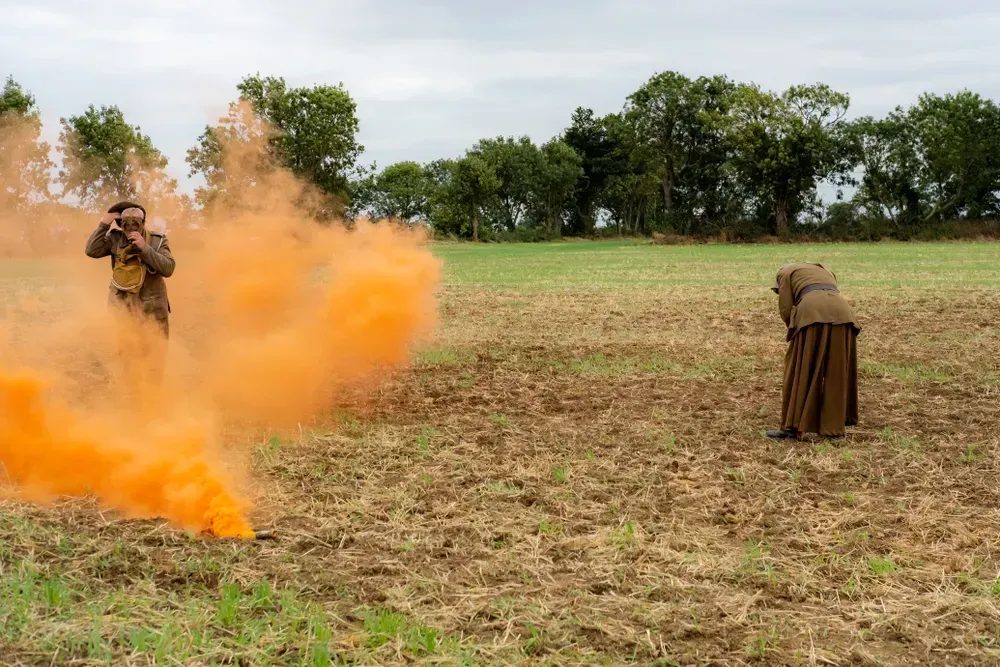


A century ago, mustard gas emerged as a lab curiosity. At first, it was intended as a chemical weapon to be used in wars. It could be absorbed through the lungs and skin, causing blisters, blindness, and respiratory failure. When rinsed with water, mustard gas turns to acid and causes further damage.
This chemical weapon caused a lot of suffering. Yet, from the same toxic origins, researchers would later discover a life-saving use: the beginning of chemotherapy. This story shows how science, depending on its purpose, can either harm or heal.
A weapon of war with lasting consequences
During World War I, the compound, known scientifically as sulfur mustard, affected more than 100,000 people. They experienced long-term health consequences, including chronic respiratory disease and various cancers.
Scientists later confirmed that mustard gas damages DNA, leading to mutations and potentially cancer through a process called alkylation. During alkylation, chemicals binds to DNA and disrupt normal cell function.
Chronic exposure, such as that experienced by factory workers who handled mustard gas, was linked to cancers of the lung, skin, and oral cavity. This tragic evidence revealed both the power and the danger of chemistry in human biology.
The turning point
After World War II, scientists sought to understand and defend against chemical warfare. At Yale University, pharmacologist Louis S. Goodman and physiologist Alfred Gilman began studying nitrogen mustard, a derivative of mustard gas, in animals. They noticed that tumors shrank when the compound was administered, suggesting that it could target rapidly dividing cancer cells.
In 1942, a man with advanced lymphoma, became the first person to receive nitrogen mustard as a cancer treatment. His tumors softened and temporarily disappeared, marking the first successful use of chemical therapy against cancer. This response demonstrated that targeted chemical treatment can effectively control cancer cell growth.
Science discoveries can sometimes be a double-edged sword
Mustard gas illustrates a central paradox of science: the same molecular mechanisms that cause harm can be redirected to heal. During wartime, researchers noticed that mustard gas destroyed the bone marrow and lymphatic tissue, organs essential for producing immune cells. Goodman and Gilman reasoned that this property could also suppress cancerous white blood cells, laying the foundation for chemotherapy.
Other researchers worked under military contracts, often testing mustard gas on soldiers or using it in cancer research. While these studies raised ethical questions, they led to the first generation of chemotherapy medications, such as mechlorethamine (Mustargen), still used today.
Fortunately the technology has advanced to avoid damage while researching for new compounds, using in-vitro testing, which is direct testing on live cells instead of animals or people. And close pharmacovigilance when a compound is tested in people ensures that participation is fair and that individuals can drop out at any time for any reason.
From mustard gas to modern medicine
After the war, British chemist Alexander Haddow continued the research, identifying which chemical structures in nitrogen mustard could be modified to make the compound safer and more effective. His work led to the development of chlorambucil, a treatment still used for chronic lymphocytic leukemia and non-Hodgkin lymphoma. This discovery marked the birth of modern oncology.
Yet, mustard gas’s toxic legacy also persists. Studies of veterans exposed during the Iraq–Iran war (1980–1988) show that long-term exposure to sulfur mustard is associated with lung cancer, leukemia, and other malignancies.
Science guided by purpose
The story of mustard gas shows us that scientific discovery itself is neutral; it is human intention that determines its outcome. What was once engineered for harm became a cornerstone of cancer treatment through curiosity, compassion, and persistence.
As patients and caregivers today, this history offers perspective: many effective cancer therapies began with difficult lessons from the past. Understanding the origins of chemotherapy deepens appreciation for how far cancer care has advanced, and why continued ethical and purposeful research is essential for future progress.
You can contribute to patient-centered care and research, start with HealthTree, the platform that powers life-saving research
Sources:
A century ago, mustard gas emerged as a lab curiosity. At first, it was intended as a chemical weapon to be used in wars. It could be absorbed through the lungs and skin, causing blisters, blindness, and respiratory failure. When rinsed with water, mustard gas turns to acid and causes further damage.
This chemical weapon caused a lot of suffering. Yet, from the same toxic origins, researchers would later discover a life-saving use: the beginning of chemotherapy. This story shows how science, depending on its purpose, can either harm or heal.
A weapon of war with lasting consequences
During World War I, the compound, known scientifically as sulfur mustard, affected more than 100,000 people. They experienced long-term health consequences, including chronic respiratory disease and various cancers.
Scientists later confirmed that mustard gas damages DNA, leading to mutations and potentially cancer through a process called alkylation. During alkylation, chemicals binds to DNA and disrupt normal cell function.
Chronic exposure, such as that experienced by factory workers who handled mustard gas, was linked to cancers of the lung, skin, and oral cavity. This tragic evidence revealed both the power and the danger of chemistry in human biology.
The turning point
After World War II, scientists sought to understand and defend against chemical warfare. At Yale University, pharmacologist Louis S. Goodman and physiologist Alfred Gilman began studying nitrogen mustard, a derivative of mustard gas, in animals. They noticed that tumors shrank when the compound was administered, suggesting that it could target rapidly dividing cancer cells.
In 1942, a man with advanced lymphoma, became the first person to receive nitrogen mustard as a cancer treatment. His tumors softened and temporarily disappeared, marking the first successful use of chemical therapy against cancer. This response demonstrated that targeted chemical treatment can effectively control cancer cell growth.
Science discoveries can sometimes be a double-edged sword
Mustard gas illustrates a central paradox of science: the same molecular mechanisms that cause harm can be redirected to heal. During wartime, researchers noticed that mustard gas destroyed the bone marrow and lymphatic tissue, organs essential for producing immune cells. Goodman and Gilman reasoned that this property could also suppress cancerous white blood cells, laying the foundation for chemotherapy.
Other researchers worked under military contracts, often testing mustard gas on soldiers or using it in cancer research. While these studies raised ethical questions, they led to the first generation of chemotherapy medications, such as mechlorethamine (Mustargen), still used today.
Fortunately the technology has advanced to avoid damage while researching for new compounds, using in-vitro testing, which is direct testing on live cells instead of animals or people. And close pharmacovigilance when a compound is tested in people ensures that participation is fair and that individuals can drop out at any time for any reason.
From mustard gas to modern medicine
After the war, British chemist Alexander Haddow continued the research, identifying which chemical structures in nitrogen mustard could be modified to make the compound safer and more effective. His work led to the development of chlorambucil, a treatment still used for chronic lymphocytic leukemia and non-Hodgkin lymphoma. This discovery marked the birth of modern oncology.
Yet, mustard gas’s toxic legacy also persists. Studies of veterans exposed during the Iraq–Iran war (1980–1988) show that long-term exposure to sulfur mustard is associated with lung cancer, leukemia, and other malignancies.
Science guided by purpose
The story of mustard gas shows us that scientific discovery itself is neutral; it is human intention that determines its outcome. What was once engineered for harm became a cornerstone of cancer treatment through curiosity, compassion, and persistence.
As patients and caregivers today, this history offers perspective: many effective cancer therapies began with difficult lessons from the past. Understanding the origins of chemotherapy deepens appreciation for how far cancer care has advanced, and why continued ethical and purposeful research is essential for future progress.
You can contribute to patient-centered care and research, start with HealthTree, the platform that powers life-saving research
Sources:

about the author
Jimena Vicencio
Jimena is an International Medical Graduate and a member of the HealthTree Writing team. Currently pursuing a bachelor's degree in journalism, she combines her medical background with a storyteller’s heart to make complex healthcare topics accessible to everyone. Driven by a deep belief that understanding health is a universal right, she is committed to translating scientific and medical knowledge into clear, compassionate language that empowers individuals to take control of their well-being.
More on Navigating Your Health








Get the Latest Hairy Cell Leukemia Updates, Delivered to You.
By subscribing to the HealthTree newsletter, you'll receive the latest research, treatment updates, and expert insights to help you navigate your health.
Together we care.
Together we cure.