![[logo] HealthTree Foundation](https://static.healthtree.org/icons/icon_spinner.svg)
![[logo] HealthTree Foundation](https://static.healthtree.org/logo_icon_only.svg)
Understanding Brain Cancer

Understanding Brain Cancer
This guide was developed by the HealthTree Education Team and was last updated and reviewed on June 17, 2026
What Is Brain Cancer?
Brain cancer is a disease in which cells inside the brain or its surrounding structures start to grow in ways they are not supposed to. Every cell in your body has a built-in set of instructions in its DNA that tells it when to grow, when to stop, and when to die. When something damages or changes those instructions, a cell can start multiplying without stopping. Over time, those out-of-control cells pile up and form a mass called a tumor. When that tumor starts in the brain itself, it is called a primary brain tumor.
Not every brain tumor is cancer; some are benign, meaning they grow slowly and do not spread, but malignant (cancerous) brain tumors can invade and destroy nearby brain tissue and can be life-threatening. Understanding what brain cancer is, where it starts, and how it affects the body is one of the first important steps after a diagnosis.
What Is the Brain?
The brain is the control center of the body. It lives inside your skull, protected by the bones of your head and surrounded by three layers of tissue called the meninges, as well as a clear fluid called cerebrospinal fluid (CSF) that acts like a cushion. The brain works together with the spinal cord to form the central nervous system (CNS), which controls nearly everything your body does, from breathing and heartbeat to memory, personality, movement, speech, and the ability to understand and feel emotions.
The brain is divided into several main regions, and each one is responsible for specific functions:
The cerebrum is the largest part of the brain. It is divided into two halves, called hemispheres, and further divided into lobes. The frontal lobe controls personality, decision-making, and movement. The parietal lobe handles sensation and spatial awareness. The temporal lobe manages hearing, memory, and language. The occipital lobe processes vision.
The cerebellum sits at the back and bottom of the brain. It coordinates balance, coordination, and fine movement, things like walking in a straight line or picking up a pencil without dropping it.
The brainstem connects the brain to the spinal cord and controls the most basic body functions that keep you alive, like breathing, heart rate, blood pressure, and swallowing.
The ventricles are fluid-filled spaces inside the brain that produce and circulate cerebrospinal fluid.
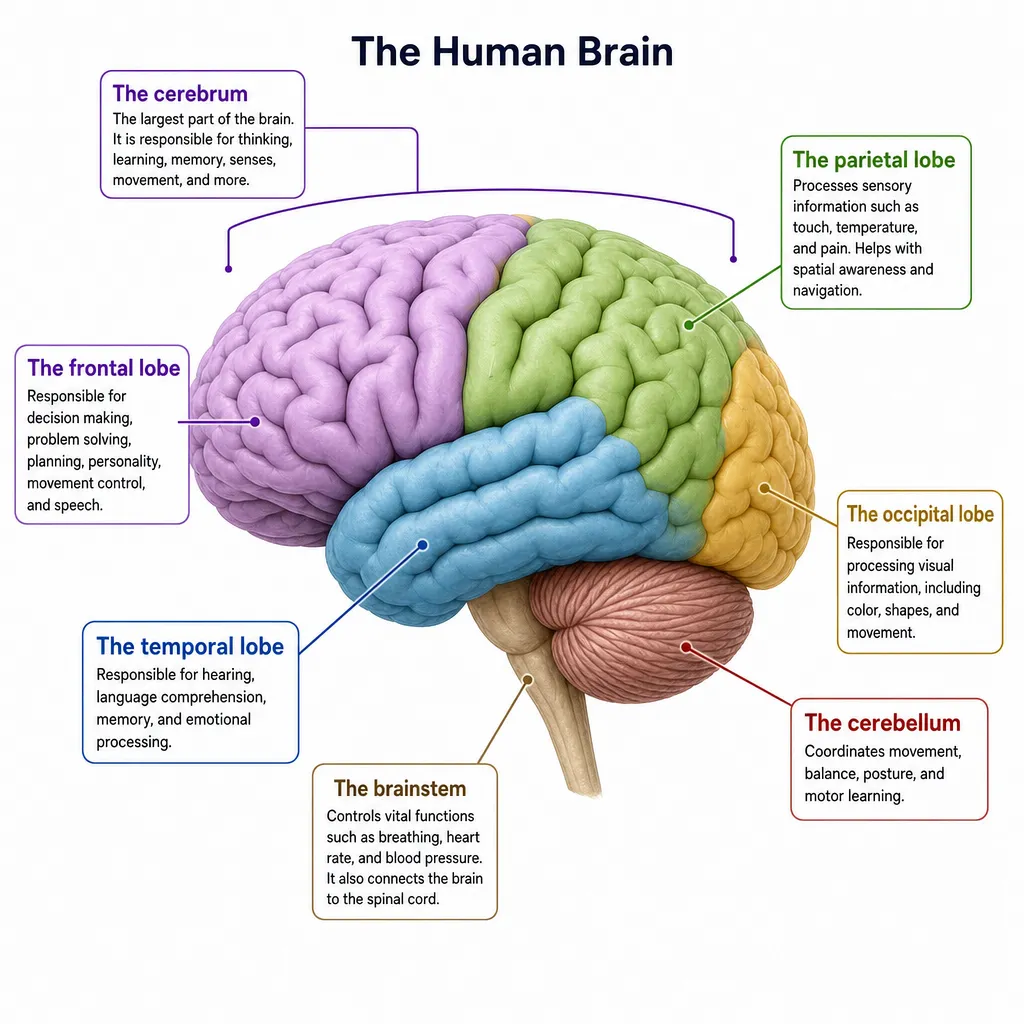
Because different parts of the brain do such different things, where a brain tumor is located matters enormously, as it affects what symptoms a person has and which treatments are possible.
How Does Brain Cancer Start?
Brain cancer starts when something goes wrong in the DNA of a brain cell. DNA is the chemical code inside every cell that tells it how to behave. When that code is damaged or changes, the cell may start growing and dividing when it should not, eventually forming a tumor. In most cases, the exact reason why the DNA changes happen is not known. It is not something a person did or did not do.
Brain tumors can develop from many different types of cells in the brain or spinal cord. The type of cell the tumor started in determines what kind of tumor it is and how it is likely to behave. Most brain tumors that start in the brain itself grow from glial cells, the support cells that surround, protect, and nourish the nerve cells (neurons) that do the actual thinking and signaling work of the brain.
One of the things that makes brain tumors different from many other cancers is that even a slow-growing, non-spreading tumor can be dangerous simply by pressing on surrounding brain tissue in a confined space because the skull has no room to expand.
Where Does Brain Cancer Start?
Brain tumors can start in almost any part of the brain or spinal cord. Where a tumor starts determines what it is called, how it behaves, and how it is treated.
Primary brain tumors start in the brain itself. The most common types start in the glial cells and are called gliomas. Within the category of gliomas, the most common is called a glioblastoma (GBM), which tends to be fast-growing and aggressive. Tumors can also start in the meninges (the tissue layers covering the brain), in the pituitary gland, in the pineal gland, or in the cells that form the lining of the brain's fluid-filled cavities.
Secondary brain tumors, also called brain metastases, are tumors that start somewhere else in the body and spread to the brain. The most common cancers that spread to the brain include lung cancer, breast cancer, colon cancer, kidney cancer, and melanoma (skin cancer). Secondary tumors are much more common in adults than primary brain tumors. This guide focuses primarily on primary brain tumors, those that start in the brain itself.
How Does Brain Cancer Affect the Body?
Because the brain controls so much of what the body does, a brain tumor can affect many different functions depending on where it is located. Even a small tumor in a critical area can cause noticeable changes. A growing tumor puts pressure on surrounding brain tissue, which can interfere with normal brain function.
Tumors in the frontal lobe may change a person's personality, mood, or ability to make decisions. Tumors in the temporal lobe can affect memory and language. Tumors in the occipital lobe may cause vision problems. A tumor pressing on or near the brainstem can affect swallowing, breathing, or coordination. Tumors can also cause swelling in the brain (called cerebral edema), which worsens pressure and symptoms.
As a tumor grows, symptoms typically get worse over time. Some tumors also block the flow of cerebrospinal fluid, causing a dangerous buildup of pressure inside the skull called hydrocephalus.
What Are the Types of Brain Cancer?
There are many different types of brain tumors. They are classified mainly by the type of cell they started in and by their grade, a measure of how abnormal the cells look and how fast they are likely to grow.
- Gliomas: Gliomas are the most common type of primary malignant brain tumor in adults. They start in glial cells, the support cells of the brain. There are several types:
- Astrocytoma: Starts in star-shaped glial cells called astrocytes. Astrocytomas range from low-grade (Grade 1 or 2, which grow slowly) to high-grade (Grade 3 or 4, which grow quickly). Grade 3 astrocytomas are sometimes called anaplastic astrocytomas.
- Glioblastoma (GBM): The most aggressive and most common malignant brain tumor in adults. Glioblastoma is a Grade 4 tumor, meaning the cells are very abnormal and grow rapidly. It is the most challenging brain cancer to treat.
- Pilocytic astrocytoma: A benign, slow-growing (Grade I) tumor most often seen in children or young adults.
- Oligodendroglioma: Starts in cells called oligodendrocytes, which form the myelin sheath (the protective covering around nerve fibers). Oligodendrogliomas are typically Grade 2 or 3. They often have specific genetic features (IDH mutation and 1p/19q codeletion) that make them more responsive to treatment and give them a somewhat better prognosis than other gliomas.
- Ependymoma: Starts in the cells that line the brain's ventricles and the central canal of the spinal cord. More common in children than in adults.
- Astrocytoma: Starts in star-shaped glial cells called astrocytes. Astrocytomas range from low-grade (Grade 1 or 2, which grow slowly) to high-grade (Grade 3 or 4, which grow quickly). Grade 3 astrocytomas are sometimes called anaplastic astrocytomas.
- Meningioma: Meningiomas start in the meninges, the three layers of tissue that cover and protect the brain and spinal cord. Most meningiomas are benign (not cancerous) and grow slowly. However, some are atypical or malignant and behave more aggressively. Meningiomas are the most common type of brain tumor overall, and they are more common in women.
- Medulloblastoma: Medulloblastoma is the most common malignant brain tumor in children. It starts in the cerebellum (the part of the brain that controls balance and coordination) and tends to spread through the cerebrospinal fluid to other parts of the brain and spinal cord. It is less common in adults.
- Pituitary Adenoma: These tumors start in the pituitary gland, a small gland at the base of the brain that makes hormones that control many body functions. Most pituitary adenomas are benign, but they can cause serious problems by pressing on nearby structures or producing excess hormones.
- Schwannoma (Acoustic Neuroma): These start in the Schwann cells that wrap around nerves. The most common type, acoustic neuroma (also called vestibular schwannoma), grows on the nerve that controls hearing and balance. Most are benign.
- Primary CNS Lymphoma: A rare type of cancer that starts in the lymph cells of the brain or spinal cord. It is more common in people with weakened immune systems.
What Are the Related Disorders to Brain Cancer?
Some conditions are associated with brain tumors or are sometimes confused with them:
Cerebral abscess: A collection of pus inside the brain caused by a bacterial infection. It can look like a brain tumor on imaging and causes similar symptoms.
- Brain metastases: Tumors that have spread to the brain from another cancer elsewhere in the body. These are far more common than primary brain tumors in adults, and distinguishing them from primary brain tumors is important for choosing the right treatment.
- Neurofibromatosis type 1 and 2 (NF1 and NF2): Genetic conditions that cause tumors to grow on nerves throughout the body, including in the brain and spinal cord.
- Tuberous sclerosis: A genetic condition that causes non-cancerous growths in the brain, skin, kidneys, and other organs.
- Multiple sclerosis (MS): A disease in which the immune system attacks the myelin sheath around nerve fibers. MS lesions on an MRI can sometimes look like brain tumors, though the two conditions are very different.
What Are the Genetic and Risk Factors?
In most cases, brain tumors develop in people who have no obvious genetic risk factors. However, certain inherited genetic conditions are known to raise a person's risk:
- Neurofibromatosis type 1 (NF1): Raises the risk of gliomas, especially optic nerve gliomas.
- Neurofibromatosis type 2 (NF2): Raises the risk of meningiomas, ependymomas, and schwannomas.
- Li-Fraumeni syndrome: A rare inherited condition that greatly raises the risk of many cancers, including brain tumors.
- Turcot syndrome: Linked to an increased risk of medulloblastoma and glioma.
- Von Hippel-Lindau (VHL) syndrome: Raises the risk of hemangioblastomas, benign blood-vessel tumors in the brain and spinal cord.
The only well-established environmental risk factor for brain tumors is exposure to ionizing radiation (such as radiation therapy to the head). Other factors like cell phone use, power lines, and certain foods have been studied but have not been proven to cause brain tumors.
What Are the Related Cancers to Brain Cancer?
Brain cancer has meaningful connections to several other cancers. Because the brain is a common site for metastases from other cancers, especially:
- Lung cancer
- Breast cancer
- Melanoma
- Colon cancer
- Kidney cancer
Patients with these diagnoses may also develop brain tumors as their disease progresses.
Primary CNS lymphoma is related to lymphoma found elsewhere in the body. And certain hereditary cancer syndromes raise the risk of brain tumors alongside other cancers. Because of these connections, doctors who treat brain cancer often work closely with oncologists managing these other cancer types related to lymphoma.
- Li-Fraumeni syndrome
- Turcot syndrome
|
What’s Next: The next page in this guide describes the Signs and Symptoms of Brain Cancer. If you would like to read another page in this guide, return to the Brain Cancer 101 Guides page and choose another topic. |
Sources:
- National Cancer Institute. Adult Central Nervous System Tumors Treatment (PDQ) – Patient Version. https://www.cancer.gov/types/brain/patient/adult-brain-treatment-pdq
- Louis DN, et al. The 2021 WHO Classification of Tumors of the Central Nervous System. Neuro-Oncology. 2021;23(8):1231–1251. https://pubmed.ncbi.nlm.nih.gov/34185076/
- Ostrom QT, et al. CBTRUS Statistical Report: Primary Brain and Other Central Nervous System Tumors Diagnosed in the United States in 2015–2019. Neuro-Oncology. 2022. https://pubmed.ncbi.nlm.nih.gov/36196752/
- Siegel RL, Miller KD, Jemal A. Cancer Statistics, 2024. CA: A Cancer Journal for Clinicians. 2024;74(1):12–49. https://pubmed.ncbi.nlm.nih.gov/38230766/
- National Cancer Institute. Cancer Stat Facts: Brain and Other Nervous System Cancer. SEER Program. https://seer.cancer.gov/statfacts/html/brain.html
- Cancer Research UK. Types of Brain and Spinal Cord Tumours. https://www.cancerresearchuk.org/about-cancer/brain-tumours/types/what-are-the-types
- Mellinghoff IK, et al. Glioblastoma and Other Primary Brain Malignancies in Adults: A Review. JAMA. 2023. PMC11445779. https://pubmed.ncbi.nlm.nih.gov/36809318/
- Komori T. Classification and Diagnosis of Adult Glioma. Brain Tumor Pathology. 2022. PMC9833487. https://pmc.ncbi.nlm.nih.gov/articles/PMC9833487/
- Louis DN, et al. The 2021 WHO Classification of Tumors of the Central Nervous System. Neuro-Oncology. 2021. PMC8328013. https://pubmed.ncbi.nlm.nih.gov/34185076/
- Ostrom QT, et al. Risk Factors for Childhood and Adult Primary Brain Tumors. Neuro-Oncology. 2019. PubMed: 31301133. https://pubmed.ncbi.nlm.nih.gov/31301133/
- NIH/NCBI StatPearls: Gliomas. NBK441874. Updated August 2024. https://www.ncbi.nlm.nih.gov/books/NBK441874/
- Mayo Clinic. Glioma vs. Glioblastoma. https://www.mayoclinic.org/diseases-conditions/glioma/expert-answers/glioma-vs-glioblastoma/faq-20593852
Understanding Brain Cancer
This guide was developed by the HealthTree Education Team and was last updated and reviewed on June 17, 2026
What Is Brain Cancer?
Brain cancer is a disease in which cells inside the brain or its surrounding structures start to grow in ways they are not supposed to. Every cell in your body has a built-in set of instructions in its DNA that tells it when to grow, when to stop, and when to die. When something damages or changes those instructions, a cell can start multiplying without stopping. Over time, those out-of-control cells pile up and form a mass called a tumor. When that tumor starts in the brain itself, it is called a primary brain tumor.
Not every brain tumor is cancer; some are benign, meaning they grow slowly and do not spread, but malignant (cancerous) brain tumors can invade and destroy nearby brain tissue and can be life-threatening. Understanding what brain cancer is, where it starts, and how it affects the body is one of the first important steps after a diagnosis.
What Is the Brain?
The brain is the control center of the body. It lives inside your skull, protected by the bones of your head and surrounded by three layers of tissue called the meninges, as well as a clear fluid called cerebrospinal fluid (CSF) that acts like a cushion. The brain works together with the spinal cord to form the central nervous system (CNS), which controls nearly everything your body does, from breathing and heartbeat to memory, personality, movement, speech, and the ability to understand and feel emotions.
The brain is divided into several main regions, and each one is responsible for specific functions:
The cerebrum is the largest part of the brain. It is divided into two halves, called hemispheres, and further divided into lobes. The frontal lobe controls personality, decision-making, and movement. The parietal lobe handles sensation and spatial awareness. The temporal lobe manages hearing, memory, and language. The occipital lobe processes vision.
The cerebellum sits at the back and bottom of the brain. It coordinates balance, coordination, and fine movement, things like walking in a straight line or picking up a pencil without dropping it.
The brainstem connects the brain to the spinal cord and controls the most basic body functions that keep you alive, like breathing, heart rate, blood pressure, and swallowing.
The ventricles are fluid-filled spaces inside the brain that produce and circulate cerebrospinal fluid.
Because different parts of the brain do such different things, where a brain tumor is located matters enormously, as it affects what symptoms a person has and which treatments are possible.
How Does Brain Cancer Start?
Brain cancer starts when something goes wrong in the DNA of a brain cell. DNA is the chemical code inside every cell that tells it how to behave. When that code is damaged or changes, the cell may start growing and dividing when it should not, eventually forming a tumor. In most cases, the exact reason why the DNA changes happen is not known. It is not something a person did or did not do.
Brain tumors can develop from many different types of cells in the brain or spinal cord. The type of cell the tumor started in determines what kind of tumor it is and how it is likely to behave. Most brain tumors that start in the brain itself grow from glial cells, the support cells that surround, protect, and nourish the nerve cells (neurons) that do the actual thinking and signaling work of the brain.
One of the things that makes brain tumors different from many other cancers is that even a slow-growing, non-spreading tumor can be dangerous simply by pressing on surrounding brain tissue in a confined space because the skull has no room to expand.
Where Does Brain Cancer Start?
Brain tumors can start in almost any part of the brain or spinal cord. Where a tumor starts determines what it is called, how it behaves, and how it is treated.
Primary brain tumors start in the brain itself. The most common types start in the glial cells and are called gliomas. Within the category of gliomas, the most common is called a glioblastoma (GBM), which tends to be fast-growing and aggressive. Tumors can also start in the meninges (the tissue layers covering the brain), in the pituitary gland, in the pineal gland, or in the cells that form the lining of the brain's fluid-filled cavities.
Secondary brain tumors, also called brain metastases, are tumors that start somewhere else in the body and spread to the brain. The most common cancers that spread to the brain include lung cancer, breast cancer, colon cancer, kidney cancer, and melanoma (skin cancer). Secondary tumors are much more common in adults than primary brain tumors. This guide focuses primarily on primary brain tumors, those that start in the brain itself.
How Does Brain Cancer Affect the Body?
Because the brain controls so much of what the body does, a brain tumor can affect many different functions depending on where it is located. Even a small tumor in a critical area can cause noticeable changes. A growing tumor puts pressure on surrounding brain tissue, which can interfere with normal brain function.
Tumors in the frontal lobe may change a person's personality, mood, or ability to make decisions. Tumors in the temporal lobe can affect memory and language. Tumors in the occipital lobe may cause vision problems. A tumor pressing on or near the brainstem can affect swallowing, breathing, or coordination. Tumors can also cause swelling in the brain (called cerebral edema), which worsens pressure and symptoms.
As a tumor grows, symptoms typically get worse over time. Some tumors also block the flow of cerebrospinal fluid, causing a dangerous buildup of pressure inside the skull called hydrocephalus.
What Are the Types of Brain Cancer?
There are many different types of brain tumors. They are classified mainly by the type of cell they started in and by their grade, a measure of how abnormal the cells look and how fast they are likely to grow.
- Gliomas: Gliomas are the most common type of primary malignant brain tumor in adults. They start in glial cells, the support cells of the brain. There are several types:
- Astrocytoma: Starts in star-shaped glial cells called astrocytes. Astrocytomas range from low-grade (Grade 1 or 2, which grow slowly) to high-grade (Grade 3 or 4, which grow quickly). Grade 3 astrocytomas are sometimes called anaplastic astrocytomas.
- Glioblastoma (GBM): The most aggressive and most common malignant brain tumor in adults. Glioblastoma is a Grade 4 tumor, meaning the cells are very abnormal and grow rapidly. It is the most challenging brain cancer to treat.
- Pilocytic astrocytoma: A benign, slow-growing (Grade I) tumor most often seen in children or young adults.
- Oligodendroglioma: Starts in cells called oligodendrocytes, which form the myelin sheath (the protective covering around nerve fibers). Oligodendrogliomas are typically Grade 2 or 3. They often have specific genetic features (IDH mutation and 1p/19q codeletion) that make them more responsive to treatment and give them a somewhat better prognosis than other gliomas.
- Ependymoma: Starts in the cells that line the brain's ventricles and the central canal of the spinal cord. More common in children than in adults.
- Astrocytoma: Starts in star-shaped glial cells called astrocytes. Astrocytomas range from low-grade (Grade 1 or 2, which grow slowly) to high-grade (Grade 3 or 4, which grow quickly). Grade 3 astrocytomas are sometimes called anaplastic astrocytomas.
- Meningioma: Meningiomas start in the meninges, the three layers of tissue that cover and protect the brain and spinal cord. Most meningiomas are benign (not cancerous) and grow slowly. However, some are atypical or malignant and behave more aggressively. Meningiomas are the most common type of brain tumor overall, and they are more common in women.
- Medulloblastoma: Medulloblastoma is the most common malignant brain tumor in children. It starts in the cerebellum (the part of the brain that controls balance and coordination) and tends to spread through the cerebrospinal fluid to other parts of the brain and spinal cord. It is less common in adults.
- Pituitary Adenoma: These tumors start in the pituitary gland, a small gland at the base of the brain that makes hormones that control many body functions. Most pituitary adenomas are benign, but they can cause serious problems by pressing on nearby structures or producing excess hormones.
- Schwannoma (Acoustic Neuroma): These start in the Schwann cells that wrap around nerves. The most common type, acoustic neuroma (also called vestibular schwannoma), grows on the nerve that controls hearing and balance. Most are benign.
- Primary CNS Lymphoma: A rare type of cancer that starts in the lymph cells of the brain or spinal cord. It is more common in people with weakened immune systems.
What Are the Related Disorders to Brain Cancer?
Some conditions are associated with brain tumors or are sometimes confused with them:
Cerebral abscess: A collection of pus inside the brain caused by a bacterial infection. It can look like a brain tumor on imaging and causes similar symptoms.
- Brain metastases: Tumors that have spread to the brain from another cancer elsewhere in the body. These are far more common than primary brain tumors in adults, and distinguishing them from primary brain tumors is important for choosing the right treatment.
- Neurofibromatosis type 1 and 2 (NF1 and NF2): Genetic conditions that cause tumors to grow on nerves throughout the body, including in the brain and spinal cord.
- Tuberous sclerosis: A genetic condition that causes non-cancerous growths in the brain, skin, kidneys, and other organs.
- Multiple sclerosis (MS): A disease in which the immune system attacks the myelin sheath around nerve fibers. MS lesions on an MRI can sometimes look like brain tumors, though the two conditions are very different.
What Are the Genetic and Risk Factors?
In most cases, brain tumors develop in people who have no obvious genetic risk factors. However, certain inherited genetic conditions are known to raise a person's risk:
- Neurofibromatosis type 1 (NF1): Raises the risk of gliomas, especially optic nerve gliomas.
- Neurofibromatosis type 2 (NF2): Raises the risk of meningiomas, ependymomas, and schwannomas.
- Li-Fraumeni syndrome: A rare inherited condition that greatly raises the risk of many cancers, including brain tumors.
- Turcot syndrome: Linked to an increased risk of medulloblastoma and glioma.
- Von Hippel-Lindau (VHL) syndrome: Raises the risk of hemangioblastomas, benign blood-vessel tumors in the brain and spinal cord.
The only well-established environmental risk factor for brain tumors is exposure to ionizing radiation (such as radiation therapy to the head). Other factors like cell phone use, power lines, and certain foods have been studied but have not been proven to cause brain tumors.
What Are the Related Cancers to Brain Cancer?
Brain cancer has meaningful connections to several other cancers. Because the brain is a common site for metastases from other cancers, especially:
- Lung cancer
- Breast cancer
- Melanoma
- Colon cancer
- Kidney cancer
Patients with these diagnoses may also develop brain tumors as their disease progresses.
Primary CNS lymphoma is related to lymphoma found elsewhere in the body. And certain hereditary cancer syndromes raise the risk of brain tumors alongside other cancers. Because of these connections, doctors who treat brain cancer often work closely with oncologists managing these other cancer types related to lymphoma.
- Li-Fraumeni syndrome
- Turcot syndrome
|
What’s Next: The next page in this guide describes the Signs and Symptoms of Brain Cancer. If you would like to read another page in this guide, return to the Brain Cancer 101 Guides page and choose another topic. |
Sources:
- National Cancer Institute. Adult Central Nervous System Tumors Treatment (PDQ) – Patient Version. https://www.cancer.gov/types/brain/patient/adult-brain-treatment-pdq
- Louis DN, et al. The 2021 WHO Classification of Tumors of the Central Nervous System. Neuro-Oncology. 2021;23(8):1231–1251. https://pubmed.ncbi.nlm.nih.gov/34185076/
- Ostrom QT, et al. CBTRUS Statistical Report: Primary Brain and Other Central Nervous System Tumors Diagnosed in the United States in 2015–2019. Neuro-Oncology. 2022. https://pubmed.ncbi.nlm.nih.gov/36196752/
- Siegel RL, Miller KD, Jemal A. Cancer Statistics, 2024. CA: A Cancer Journal for Clinicians. 2024;74(1):12–49. https://pubmed.ncbi.nlm.nih.gov/38230766/
- National Cancer Institute. Cancer Stat Facts: Brain and Other Nervous System Cancer. SEER Program. https://seer.cancer.gov/statfacts/html/brain.html
- Cancer Research UK. Types of Brain and Spinal Cord Tumours. https://www.cancerresearchuk.org/about-cancer/brain-tumours/types/what-are-the-types
- Mellinghoff IK, et al. Glioblastoma and Other Primary Brain Malignancies in Adults: A Review. JAMA. 2023. PMC11445779. https://pubmed.ncbi.nlm.nih.gov/36809318/
- Komori T. Classification and Diagnosis of Adult Glioma. Brain Tumor Pathology. 2022. PMC9833487. https://pmc.ncbi.nlm.nih.gov/articles/PMC9833487/
- Louis DN, et al. The 2021 WHO Classification of Tumors of the Central Nervous System. Neuro-Oncology. 2021. PMC8328013. https://pubmed.ncbi.nlm.nih.gov/34185076/
- Ostrom QT, et al. Risk Factors for Childhood and Adult Primary Brain Tumors. Neuro-Oncology. 2019. PubMed: 31301133. https://pubmed.ncbi.nlm.nih.gov/31301133/
- NIH/NCBI StatPearls: Gliomas. NBK441874. Updated August 2024. https://www.ncbi.nlm.nih.gov/books/NBK441874/
- Mayo Clinic. Glioma vs. Glioblastoma. https://www.mayoclinic.org/diseases-conditions/glioma/expert-answers/glioma-vs-glioblastoma/faq-20593852

Get the Latest Brain Cancer Updates, Delivered to You.
By subscribing to the HealthTree newsletter, you'll receive the latest research, treatment updates, and expert insights to help you navigate your health.
Together we care.
Together we cure.