![[logo] HealthTree Foundation](https://static.healthtree.org/icons/icon_spinner.svg)
![[logo] HealthTree Foundation](https://static.healthtree.org/logo_icon_only.svg)
Axi-cel Plus Rituximab for Refractory LBCL



Discover how axi-cel (Yescarta, Gilead/Kite) plus rituximab helped people with refractory large B-cell lymphoma (LBCL) in a clinical trial. You’ll learn why researchers paired these treatments, how well the combination worked, what side effects were seen, and other findings from the study that you can discuss with your LBCL specialist.
Why researchers combined CAR T-cell therapy with rituximab
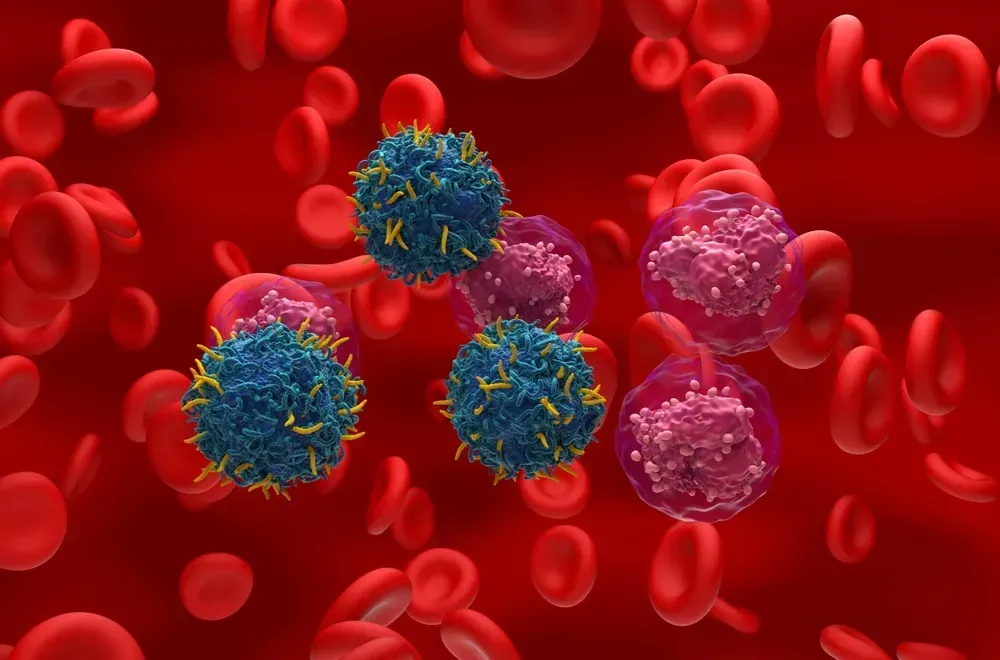
Axi-cel is a CAR T-cell therapy, which means your own T cells are collected, trained to recognize lymphoma, and then returned to your body. Axi-cel targets a marker on lymphoma cells called CD19.
One challenge is that some people who respond to axi-cel later relapse with lymphoma cells that no longer show CD19. This is sometimes called “antigen escape,” meaning the target the treatment looks for is missing.
Rituximab is a CD20-targeting antibody. Many LBCL cells still show CD20 even if CD19 is lost. The ZUMA-14 study tested whether aiming at both CD19 and CD20 could help patients’ responses last longer.
How well did the combination of axi-cel with rituximab work?
In the trial, 26 people with LBCL received axi-cel with rituximab. The median age of the patients was 62.5 years. The majority had stage III or IV lymphoma. Most were refractory to two or more prior treatments, meaning their lymphoma did not respond well to previous therapy.
The researchers found:
- 73% of patients experienced a complete response, meaning no active lymphoma was seen on scans
- 88% had an overall response (complete response or partial response)
- The median duration of response was 26 months
One important finding was that seven patients who experienced a partial response at first later moved to a complete response more than 100 days after the infusion. Many of these patients received all six doses of rituximab.
These insights are especially meaningful considering that the majority of the patients’ lymphoma was hard to treat.
What side effects were seen
Side effects in the trial included those commonly seen with CAR T-cell therapy, such as:
- Low blood counts after day 30 affected 54% of patients.
- Infections affected 35% of patients, and severe infections 23%.
- Cytokine release syndrome (CRS) affected 96% of patients. CRS is an immune reaction that often causes fever and low blood pressure. In this study, CRS was only grade 1 to 2, meaning no severe CRS was reported.
- Neurologic side effects affected 62% of patients, with 15% having grade 3 symptoms. All neurologic events resolved.
Click here to learn how side effects from CAR T-cell therapy are managed.
Early clues about who might benefit most
The study also looked at markers that may help predict outcomes:
- Minimal residual disease (MRD) using circulating tumor DNA (ctDNA) looked for tiny amounts of lymphoma DNA in the blood. Being MRD-negative early was linked with a lower chance of relapse.
- People with stronger CAR T-cell expansion in the blood and higher rituximab exposure were more likely to have complete or ongoing responses.
For patients, this points to a future where blood tests may help track response earlier and guide follow-up care. These tools are still being refined and are not yet used the same way everywhere.
Summary
In the ZUMA-14 study, axi-cel combined with rituximab led to a 73% complete response rate in a small group of people with refractory LBCL, with responses lasting a median of about two years. Side effects were common but manageable with supportive care. These findings show that targeting both CD19 and CD20 on lymphoma cells with different treatments may help reduce the risk of lymphoma cells escaping therapy.
Learn More About CAR-T for LBCL
Source:
Discover how axi-cel (Yescarta, Gilead/Kite) plus rituximab helped people with refractory large B-cell lymphoma (LBCL) in a clinical trial. You’ll learn why researchers paired these treatments, how well the combination worked, what side effects were seen, and other findings from the study that you can discuss with your LBCL specialist.
Why researchers combined CAR T-cell therapy with rituximab
Axi-cel is a CAR T-cell therapy, which means your own T cells are collected, trained to recognize lymphoma, and then returned to your body. Axi-cel targets a marker on lymphoma cells called CD19.
One challenge is that some people who respond to axi-cel later relapse with lymphoma cells that no longer show CD19. This is sometimes called “antigen escape,” meaning the target the treatment looks for is missing.
Rituximab is a CD20-targeting antibody. Many LBCL cells still show CD20 even if CD19 is lost. The ZUMA-14 study tested whether aiming at both CD19 and CD20 could help patients’ responses last longer.
How well did the combination of axi-cel with rituximab work?
In the trial, 26 people with LBCL received axi-cel with rituximab. The median age of the patients was 62.5 years. The majority had stage III or IV lymphoma. Most were refractory to two or more prior treatments, meaning their lymphoma did not respond well to previous therapy.
The researchers found:
- 73% of patients experienced a complete response, meaning no active lymphoma was seen on scans
- 88% had an overall response (complete response or partial response)
- The median duration of response was 26 months
One important finding was that seven patients who experienced a partial response at first later moved to a complete response more than 100 days after the infusion. Many of these patients received all six doses of rituximab.
These insights are especially meaningful considering that the majority of the patients’ lymphoma was hard to treat.
What side effects were seen
Side effects in the trial included those commonly seen with CAR T-cell therapy, such as:
- Low blood counts after day 30 affected 54% of patients.
- Infections affected 35% of patients, and severe infections 23%.
- Cytokine release syndrome (CRS) affected 96% of patients. CRS is an immune reaction that often causes fever and low blood pressure. In this study, CRS was only grade 1 to 2, meaning no severe CRS was reported.
- Neurologic side effects affected 62% of patients, with 15% having grade 3 symptoms. All neurologic events resolved.
Click here to learn how side effects from CAR T-cell therapy are managed.
Early clues about who might benefit most
The study also looked at markers that may help predict outcomes:
- Minimal residual disease (MRD) using circulating tumor DNA (ctDNA) looked for tiny amounts of lymphoma DNA in the blood. Being MRD-negative early was linked with a lower chance of relapse.
- People with stronger CAR T-cell expansion in the blood and higher rituximab exposure were more likely to have complete or ongoing responses.
For patients, this points to a future where blood tests may help track response earlier and guide follow-up care. These tools are still being refined and are not yet used the same way everywhere.
Summary
In the ZUMA-14 study, axi-cel combined with rituximab led to a 73% complete response rate in a small group of people with refractory LBCL, with responses lasting a median of about two years. Side effects were common but manageable with supportive care. These findings show that targeting both CD19 and CD20 on lymphoma cells with different treatments may help reduce the risk of lymphoma cells escaping therapy.
Learn More About CAR-T for LBCL
Source:

about the author
Megan Heaps
Megan joined HealthTree in 2022. She enjoys helping patients and their care partners understand the various aspects of the cancer. This understanding enables them to better advocate for themselves and improve their treatment outcomes.
More on Treatment Advances


Trending Articles







Get the Latest Blood Cancer Updates, Delivered to You.
By subscribing to the HealthTree newsletter, you'll receive the latest research, treatment updates, and expert insights to help you navigate your health.
Together we care.
Together we cure.